
Antibodies


YM155 is a potent survivin suppressant by inhibiting Survivin promoter activity with IC50 of 0.54 nM; does not significantly inhibit SV40 promoter activity, but is observed to slightly inhibit the interaction of Survivin with XIAP. Phase 1/2.
| Size | Price | Stock | Quantity | ||||||||||||||||||||
|---|---|---|---|---|---|---|---|---|---|---|---|---|---|---|---|---|---|---|---|---|---|---|---|
| |||||||||||||||||||||||
 Distributor Tel: +886-2-2827-1197jimmy@new.abscience.com.tw
| Description | YM155 is a potent survivin suppressant by inhibiting Survivin promoter activity with IC50 of 0.54 nM; does not significantly inhibit SV40 promoter activity, but is observed to slightly inhibit the interaction of Survivin with XIAP. Phase 1/2. | |||||
|---|---|---|---|---|---|---|
| Targets | Survivin | |||||
| IC50 | 0.54 nM [1] | |||||
| In vitro | YM155 is not sensitive to survivn gene promoter-driven luciferase reporter activity even at 30 μM. YM155 significantly inhibits endogenous survivin expression in PC-3 and PPC-1 human HRPC cells with deficient p53 through transcriptional inhibition of the survivin gene promoter. On the contrary YM155 shows no sufficient effect on protein expression of c-IAP2, XIAP, Bcl-2, Bcl-xL, Bad, α-actin, and β-tubulin at 100 nM. YM155 indicates great apoptosis in human cancer cell lines including PC-3 and PPC-1 with a concomitant increase in caspase-3 activity. YM155 potently inhibits human cancer cell lines (mutated or truncated p53) including PC-3, PPC-1, DU145, TSU-Pr1, 22Rv1, SK-MEL-5 and A375 with IC50 from 2.3 to 11 nM, respectively. [1] YM155 increases the sensitivity of NSCLC cells to γ-radiation. The combination of YM155 and γ-radiation increases both the number of apoptotic cells and the activity of caspase-3. YM155 delays the repair of radiation-induced double-strand breaks in nuclear DNA. [2] | |||||
| In vivo | YM155 completely inhibits the tumor growth of PC-3 s.c. xenografted prostate tumors at doses of 3 and 10 mg/kg, without body weight loss and blood cell count decrease. Pharmacokinetic analysis shows that YM155 is highly distributed to tumor tissue. Moreover, YM155 shows 80% TGI at a dose of 5 mg/kg in PC-3 orthotopic xenografts. [1] The combination therapy with YM155 and γ-radiation shows great antitumor activity against H460 or Calu6 xenografts in nude mice. [2] | |||||
| Features | ||||||
| Promoter-luciferase reporter assay | A 2,767-bp sequence of human survivin gene promoter is isolated from human genomic DNA by PCR using Pyrobest polymerase and the following primers: 5’-GCGCGCTCGAGTCTAGACATGCGGATATATTC-3’ and 5’-GCGCGAA-GCTTTGGCGGTTAATGGCGCGC-3’. The resulting PCR fragment is digested with XhoI/HindIII and ligated into the XhoI/HindIII cleavage site of the pGL3-Basic vector. The resulting plasmid is named pSUR-luc. DNA sequencing is done on all amplified sequences by a DNA sequencer. The activity of pSUR-luc is confirmed by luciferase assay with transiently transfected HeLa-S3 cells. Luciferase assay is done. The pGL3 control vector, which contains the SV40 promoter and enhancer sequences, is used. HeLa cells are stably transfected with pSUR-luc and pSV2bsr by Lipofect-AMINE 2000. After blasticidin selection at 10 μg/mL, a single colony is chosen based on appropriate luciferase signals and genetic stability over time and named HeLa-SURP-luc. CHO cells are stably transfected with pGL3-control and pSV2bsr. After blasticidin selection at 10 μg/mL, a single colony is chosen based on appropriate luciferase signals and genetic stability over time and named CHO-SV40-luc. Stocked cells from the HeLa-SURP-luc and CHO-SV40-luc clones are used for chemical screening and characterization of YM155. YM155 in DMSO are added to the cells, which had been seeded the previous day on 96-well plastic plates at 5 × 10³ per well. Luciferase activity is measured 24 hours later. IC50 is calculated by logistic analysis. |
|---|
| Cell lines | Hormone refractory prostate cancer cell lines (PC-3, PPC-1, DU145, TSU-Pr1 and 22Rv1) and malignant melanoma cell lines (SK-MEL-5 and A375) |
|---|---|
| Concentrations | ~ 100 nM |
| Incubation Time | 48 hours |
| Method | Cells are seeded in 96-well plates at a density of 5-40 × 103. YM155 is dissolved in DMSO and added to cells for 48 hours. Then the cell count is determined by sulforhodamine B assay. |
| Animal Models | PC-3 s.c. (orthotopic) xenografts in male nude mice (BALB/c nu/nu) |
|---|---|
| Dosages | 5 mg/kg |
| Administration | Subcutaneous injection as a 3-day continuous infusion per week for 3 weeks by an implanted micro-osmotic pump |
| Solubility | Saline, 30 mg/mL |
| NCT Number | Recruitment | Conditions | Sponsor /Collaborators | Start Date | Phases |
|---|---|---|---|---|---|
| NCT00818480 | Completed | Prostate Cancer|Melanoma|Non-Hodgkin’s Lymphoma | Astellas Pharma Inc | 2006-02 | Phase 2 |
| NCT00498914 | Terminated | Lymphoma, Large-Cell, Diffuse|Lymphoma, B-Cell Refractory | Astellas Pharma Inc | 2007-06 | Phase 2 |
| NCT01007292 | Active, not recruiting | Non-Hodgkin’s Lymphoma | Astellas Pharma Inc | 2009-11 | Phase 2 |
| NCT01009775 | Completed | Melanoma | Astellas Pharma Inc | 2009-11 | Phase 2 |
| NCT01038804 | Active, not recruiting | Breast Cancer | Astellas Pharma Inc | 2009-12 | Phase 2 |
Download YM155 (Sepantronium Bromide) SDF
| Molecular Weight (MW) | 443.29 |
|---|---|
| Formula | C20H19BrN4O3 |
| CAS No. | 781661-94-7 |
| Storage | 3 years -20℃Powder |
|---|---|
| 6 months-80℃in DMSO | |
| Syonnyms | N/A |
| Solubility (25°C) * | In vitro | DMSO | 55 mg/mL (124 mM) |
|---|---|---|---|
| Water | 89 mg/mL (200 mM) | ||
| Ethanol | 6 mg/mL (13 mM) | ||
| In vivo | Saline, | 30 mg/mL | |
| * <1 mg/ml means slightly soluble or insoluble. * Please note that Selleck tests the solubility of all compounds in-house, and the actual solubility may differ slightly from published values. This is normal and is due to slight batch-to-batch variations. | |||
| Chemical Name | 1H-Naphth[2,3-d]imidazolium, 4,9-dihydro-1-(2-methoxyethyl)-2-methyl-4,9-dioxo-3-(2-pyrazinylmethyl)-, bromide (1:1) |
|---|
 Click to enlarge | Rating | |
| Source | Basic Res Cardiol 2011 106(6), 1207-1220. YM155 (Sepantronium Bromide) purchased from Selleck | |
| Method | Western blot analysis, TUNEL assay, Immunostaining for survivin protein | |
| Cell Lines | Neonatal rat cardiomyocytes | |
| Concentrations | 5 mg/kg/day | |
| Incubation Time | 5 d | |
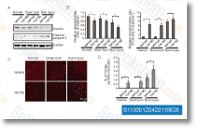
| Results | After the animals were pretreated with YM155 (5 mg/kg/day) for 5 days, the level of survivin decreased to 80, 78 and 52% of the baseline expression in non-injury, sham burn or burn injury hearts (Fig. a, top panel, and b, left panel). The basal cleaved caspase-3 level was almost undetectable, whereas after injection of YM155 for 5 days, the expression was signiï¬cantly elevated to 6.5-fold (Fig. a, middle panel, and b, right panel). After 6 h of burn injury, the level of cleaved caspase-3 increased to 9.0-fold. Furthermore, in the normal or sham rats, there were no apoptotic staining in the hearts examined (Fig. c). When animals were pretreated with YM155, the apoptotic staining was signiï¬cantly increased, particularly after the burn (0.61 ± 0.25% in normal group, 0.72 ± 0.17% in sham group, 2.18 ± 0.43% in YM155 group) (Fig. d), suggesting that the survivin is an important anti-apoptotic regulator of cardiomyocytes after burn injury. |
Targeting survivin and p53 in pediatric acute lymphoblastic leukemia. [Tyner JW, et al. Leukemia 2012;26(4):623-32]
Signal transducer and activator of transcription 3 (STAT3) and survivin induction by varicella-zoster virus promote replication and skin pathogenesis. [Sen N, et al. Proc Natl Acad Sci U S A 2012;109(2):600-5]
Accessory Cells of the Microenvironment Protect Multiple Myeloma from T Cell Cytotoxicity through Cell Adhesion-Mediated Immune Resistance. [de Haart SJ, et al. Clin Cancer Res 2013;19(20):5591-601]
