
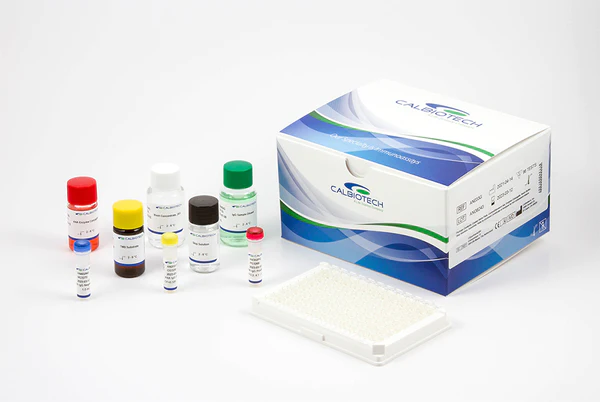
VZV IgG ELISA

- 貨號 Cat. No.
- VZ081G
- 規格 Size
- 96 Tests
- 品牌 Brand
- Calbiotech
Description
VZV IgG ELISA
Category Name
Infectious Diseases
Method
ELISA
Principle
ELISA
Controls Standards
Positive, Negative and Calibrator
Sensitivity
Not available
Sample
100 µl
Runtime
50 Minutes
Wavelength
450 nm
Safety
Please refer to MSDS
Shelflife
18 Months
INTENDED USE
The Calbiotech VZV IgG ELISA Kit is intended for the detection of IgG antibody to VZV in human serum or plasma.
SUMMARY AND EXPLANATION
Varicella zoster virus causes chickenpox a highly contagious disease acquired by touching the blisters or respiratory secretions, or through the air. A person is usually infectious 1-2 days before the rash to 4-5 days after the start of the rash, or until the blisters have formed crusts. Symptoms start about 2-3 weeks after exposure and include fever, tiredness, and an itchy rash with small blisters that dry up and form scabs in 2-4 days. More severe but rare problems or complications that could occur are pneumonia (especially in adults), skin infection, blood infection and encephalitis. Approximately 90% of chickenpox cases are in children 1-14 years of age, and 90% of people have had chickenpox by their early 20's. The reactivated form (herpes zoster: shingles) of VZV infection generally occurs in older adults whose immunity has waned, in infants or children exposed to VZV in the perinatal period or in the immunocompromised. VZV infection during pregnancy infrequently leads to maternal pneumonia. Chickenpox can occur during pregnancy in women seropositive for VZV, especially when seropositive at low titer, with low-avidity, largely IgG3 antibodies. Maternal VZV infection during pregnancy (especially between 13-20 weeks gestation) can be associated with outcomes ranging from skin scarring or limb hypoplasia to multi system involvement and death. Because VZV and herpes simplex virus (HSV) can cross-react, viral culture can be used to detect and differentiate HSV from VZV, but PCR testing may prove the most valuable for diagnosing and differentiating active infection. IgG antibodies can be detected 9 days after the onset of rash in varicella, 10 days in zoster; immunoreactivity peaks at an average 66 and 27 days, respectively. The IgM response to varicella is detected at 6-7 days post-onset and peaks at an average 14 days; IgM response to zoster is detectable at 8-10 days and peaks at 18-19 days.
