
Antibodies


Veliparib (ABT-888) is a potent inhibitor of PARP1 and PARP2 with Ki of 5.2 nM and 2.9 nM, respectively. It is inactive to SIRT2. Phase 1/2.
| Size | Price | Stock | Quantity | ||||||||||||||||
|---|---|---|---|---|---|---|---|---|---|---|---|---|---|---|---|---|---|---|---|
| |||||||||||||||||||
 Distributor Tel: +886-2-2827-1197jimmy@new.abscience.com.tw
| Description | Veliparib (ABT-888) is a potent inhibitor of PARP1 and PARP2 with Ki of 5.2 nM and 2.9 nM, respectively. It is inactive to SIRT2. Phase 1/2. | |||||
|---|---|---|---|---|---|---|
| Targets | PARP1 | PARP2 | ||||
| IC50 | 5.2 nM (Ki) | 2.9 nM (Ki) [1] | ||||
| In vitro | ABT-888 is inactive to SIRT2 (>5 μM). [1] ABT-888 inhibits the PARP activity with EC50 of 2 nM in C41 cells. [2]ABT-888 could decrease the PAR levels in both irradiated and nonirradiated H460 cells. ABT-888 also reduces clonogenic survival and inhibits DNA repair by PARP-1 inhibition in H460 cells. ABT-888 increases apoptosis and autophagy in H460 cells when combination with radiation. [3] ABT-888 also inhibits PARP activity in H1299, DU145 and 22RV1 cells and the inhibition is independent of p53 function. ABT-888 (10 μM) suppresses the surviving fraction (SF) by 43% in the clonogenic H1299 cells. ABT-888 shows effective radiosensitivity in oxic H1299 cells. Furthermore, ABT-888 could attenuate the SF of hypoxic-irradiated cells including H1299, DU145 and 22RV1. [4] | |||||
| In vivo | The oral bioavailability of ABT-888 is 56%-92% in mice, Sprague-Dawley rats, beagle dogs, and cynomolgus monkeys after oral administration. [1] ABT-888 (25 mg/kg i.p.) could improve tumor growth delay in a NCI-H460 xenograft model with well tolerated. Combination with radiation, ABT-888 decreases the tumor vessel formation. [3] ABT-888 reduces intratumor PAR levels by more than 95% at a dose of 3 and 12.5 mg/kg in A375 and Colo829 xenograft models and the suppression could be maintained over time. [4] | |||||
| Features | Increases the efficacy of common cancer therapies such as radiation and alkylating agents. | |||||
| In vitro PARP assays | PARP assays are conducted in a buffer containing 50 mM Tris (pH 8.0), 1 mM DTT, 1.5 μM [3H]NAD+ (1.6 μCi/mmol), 200 nM biotinylated histone H1, 200 nM slDNA, and 1 nM PARP-1 or 4 nM PARP-2 enzyme. Reactions are terminated with 1.5 mM benzamide, transferred to streptavidin Flash plates, and counted using a TopCount microplate scintillation counter. |
|---|
| Animal Models | NCI-H460, H460, B16F10 and 9L xenografts in C57BL/6 mice |
|---|---|
| Dosages | ~25 mg/kg |
| Administration | Orally administered |
| Solubility | 0.5% methylcellulose/0.2% Tween 80 5 mg/mL |
| NCT Number | Recruitment | Conditions | Sponsor /Collaborators | Start Date | Phases |
|---|---|---|---|---|---|
| NCT01690598 | Recruiting | Ovarian Cancer | Vejle Hospital|Abbott | 2012-11 | Phase 1|Phase 2 |
| NCT01749397 | Recruiting | Recurrent Fallopian Tube Cancer|Recurrent Ovarian Epithelial Cancer|Recurrent Primary Peritoneal Cavity Cancer|Stage IV Fallopian Tube Cancer|Stage IV Ovarian Epithelial Cancer|Stage IV Primary Peritoneal Cavity Cancer | National Cancer Institute (NCI) | 2012-12 | Phase 1 |
| NCT01827384 | Not yet recruiting | Neoplasms | National Institutes of Health Clinical Center (CC)|National Cancer Institute (NCI) | 2013-03 | Phase 2 |
| NCT01853306 | Recruiting | Oncology|BRCA Mutated|High Grade Serous Ovarian Cancer|BRCA Mutated Breast Cancer | AbbVie | 2013-03 | Phase 1 |
| NCT01818063 | Recruiting | Estrogen Receptor-negative Breast Cancer|HER2-negative Breast Cancer|Progesterone Receptor-negative Breast Cancer|Stage II Breast Cancer etc. | Thomas Jefferson University|Susan G. Komen Breast Cancer Foundation | 2013-04 | Phase 2 |
Download Veliparib (ABT-888) SDF
| Molecular Weight (MW) | 244.29 |
|---|---|
| Formula | C13H16N4O |
| CAS No. | 912444-00-9 |
| Storage | 3 years -20℃Powder |
|---|---|
| 6 months-80℃in DMSO | |
| Syonnyms | N/A |
| Solubility (25°C) * | In vitro | DMSO | 17 mg/mL (69 mM) |
|---|---|---|---|
| Water | <1 mg/mL (<1 mM) | ||
| Ethanol | <1 mg/mL (<1 mM) | ||
| In vivo | 0.5% methylcellulose/0.2% Tween 80 | 5 mg/mL | |
| * <1 mg/ml means slightly soluble or insoluble. * Please note that Selleck tests the solubility of all compounds in-house, and the actual solubility may differ slightly from published values. This is normal and is due to slight batch-to-batch variations. | |||
| Chemical Name | (R)-2-(2-methylpyrrolidin-2-yl)-1H-benzo[d]imidazole-4-carboxamide |
|---|
| Stock Solution (1ml DMSO) | 1mM | 10mM | 20mM | 30mM |
|---|---|---|---|---|
| Mass(mg) | 0.24429 | 2.4429 | 4.8858 | 7.3287 |
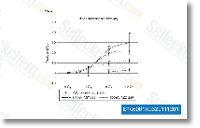 Click to enlarge | Rating | |
| Source | Nuclear Medicine Communications, 2011, 32, 1046–1051.Veliparib (ABT-888) purchased from Selleck | |
| Method | Laser confocal microscopy/fluorescent H2AX Antibody Staining | |
| Cell Lines | Epstein–Barr virus-infected Raji lymphocyte tumor cells | |
| Concentrations | 500 nM | |
| Incubation Time | 2 h | |
| Results | The Fluor-647 anti-H2A.X-phosphorylated (Ser139) antibody stained significantly more double-stranded breaks in cells treated with ABT-888 and AZD-2281 compared with controls at 8 and 12 Gy (P<0.05). |
Poly(ADP-Ribose) polymerase inhibition synergizes with 5-Fluorodeoxyuridine but not 5-Fluorouracil in ovarian cancer cells. [Huehls AM, et al. Cancer Res 2011;71(14):4944-54]
The PARP3- and ATM-dependent phosphorylation of APLF facilitates DNA double-strand break repair. [Fenton AL, et al. Nucleic Acids Res 2013;41(7):4080-92]
Functional, genetic and epigenetic aspects of base and nucleotide excision repair in colorectal carcinomas. [Slyskova J, et al. Clin Cancer Res 2012;18(21):5878-87]
