
Antibodies


U0126-EtOH is a highly selective inhibitor of MEK1/2 with IC50 of 0.07 μM/0.06 μM, 100-fold higher affinity for ΔN3-S218E/S222D MEK than PD098059.
| Size | Price | Stock | Quantity | ||||||||||||||||
|---|---|---|---|---|---|---|---|---|---|---|---|---|---|---|---|---|---|---|---|
| |||||||||||||||||||
 Distributor Tel: +886-2-2827-1197jimmy@new.abscience.com.tw
| Description | U0126-EtOH is a highly selective inhibitor of MEK1/2 with IC50 of 0.07 μM/0.06 μM, 100-fold higher affinity for ΔN3-S218E/S222D MEK than PD098059. | |||||
|---|---|---|---|---|---|---|
| Targets | MEK1 | MEK2 | ||||
| IC50 | 0.07 μM | 0.06 μM [1] | ||||
| In vitro | U0126-EtOH functionally antagonizes AP- 1 transcriptional activity and blocks the production of a variety of cytokines and metalloproteinases involved in the inflammatory response. [1] U0126-EtOH inhibits T cell proliferation in response to antigenic stimulation or cross-linked anti-CD3 plus anti-CD28 Abs without effect on IL-2-induced proliferation by down-regulating IL-2 mRNA levels. [2] A recent study shows that U0126-EtOH antagonizes resveratrol-induced apoptosis in castration-resistant human prostate cancer C4-2 cells, inhibits mitochondrial function and shifts cells to aerobic glycolysis independently of MEK. [3] | |||||
| In vivo | U0126-EtOH, as the inhibitor of intracellular Raf/MEK/ERK signaling pathway, demonstrates antiviral activity by suppressing propagation of the 2009 pandemic IV H1N1 variant and highly pathogenic avian influenza viruses (HPAIV) in vivo in the mouse lung by inhibiting. [4] U0126-EtOH shows the potential neuroprotective effect and improving spatial learning in Morris water maze (MWM) by activating peroxisome proliferator-activated receptor gamma coactivator-1a, nuclear respiratory factor 1, and mitochondrial transcription factor A in Aβ-injected rats.[5] | |||||
| Features | A chemically synthesized and highly selective inhibitor of both MEK1 and MEK2. | |||||
| In Vitro Kinase Assays | The amount of immunoprecipitated wild type MEK used in these assays is adjusted to give a similar amount of activity units as obtained with 10 nM recombinant MEK. Reaction velocities are measured using a 96-well nitrocellulose filter apparatus as described below. Unless otherwise noted, reactions are carried out at an enzyme concentration of 10 nM, in 20 mM Hepes, 10 mM MgCl2, 5 mM β-mercaptoethanol, 0.1 mg/mL BSA, pH 7.4, at room temperature. Reactions are initiated by the addition of [γ-33P]ATP into the premixed MEK/ERK/inhibitor reaction mixture, and an aliquot of 100 μL is taken every 6 minutes and transferred to the 96-well nitrocellulose membrane plate which has 50 mM EDTA to stop the reaction. The membrane plate is drawn and washed 4 times with buffer under vacuum. Wells are then filled with 30 μL of Microscint-20 scintillation fluid, and the radioactivity of 33P-phosphorylated ERK is counted with a Top Count scintillation counter. Velocities are obtained from the slopes of radioactivity versus time plots. Concentrations of ERK and ATP are 400 nM and 40 μM, respectively, unless otherwise indicated. For all of the in vitro enzyme assays, the percent inhibition is calculated 100 (1 −Vi/Vo) where Vi and Vo are the initial reaction velocities in the presence and absence of inhibitor, respectively. The data are then plotted as percent inhibition as a function of inhibitor concentration and fit, by nonlinear least squares regression, to the standard equation for a Langmuir isotherm to determine the IC50. As reported, enzyme concentrations are based upon molecular weights and mass of protein used in the final assay volume and not on active site titration. Thus, the actual enzyme active site concentration may differ from that reported. |
|---|
| Cell lines | A.E7 or Th17 cells |
|---|---|
| Concentrations | 0 to 10 μM |
| Incubation Time | 48 hours |
| Method | A.E7 or Th17 cells are incubated with mitomycin C-treated B10.BR or BALB/c splenocytes plus varying concentrations of pigeon cytochrome c or PR8 Ag, or with 5 U/mL human rIL-2. In addition, some assays contains U0126 or an inactive analogue, U0124, to determine direct effects of MEK inhibition on T cell proliferation. Two days after culture initiation, each well is pulsed with 1 µCi of [3H]TdR and harvested the following day. The incorporation of [3H]TdR into DNA is quantitated on a Packard Matrix 96 direct beta counter without the use of liquid scintillation mixtures. |
| Animal Models | Female C57Bl/6 mice infected by Mouse-adapted highly pathogenic avian influenza A/FPV/Bratislava/79 (H7N7; FPV) virus and swine origin human influenza A virus (SOIV) A/Regensburg/D6/2009 (H1N1v; RB1). |
|---|---|
| Dosages | ≤10 mM |
| Administration | Administered via aerosol. |
| Solubility | 2% Cremophor EL, 2% N,N-dimethylacetamide, 30 mg/mL |
| Molecular Weight (MW) | 426.56 |
|---|---|
| Formula | C18H16N6S2.C2H6O |
| CAS No. | 1173097-76-1 |
| Storage | 3 years -20℃Powder |
|---|---|
| 6 months-80℃in DMSO | |
| Syonnyms | UO126 EtOH |
| Solubility (25°C) * | In vitro | DMSO | 85 mg/mL (199 mM) |
|---|---|---|---|
| Water | <1 mg/mL (<1 mM) | ||
| Ethanol | <1 mg/mL (<1 mM) | ||
| In vivo | 2% Cremophor EL, 2% N,N-dimethylacetamide, | 30 mg/mL | |
| * <1 mg/ml means slightly soluble or insoluble. * Please note that Selleck tests the solubility of all compounds in-house, and the actual solubility may differ slightly from published values. This is normal and is due to slight batch-to-batch variations. | |||
| Chemical Name | (2Z,3Z)-2,3-bis(amino(2-aminophenylthio)methylene)succinonitrile,ethanol |
|---|
| Stock Solution (1ml DMSO) | 1mM | 10mM | 20mM | 30mM |
|---|---|---|---|---|
| Mass(mg) | 0.42656 | 4.2656 | 8.5312 | 12.7968 |
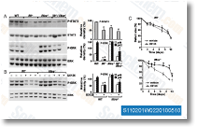 Click to enlarge | Rating | |
| Source | J. Immunol 2010 184, 7219-7228. U0126-EtOH purchased from Selleck | |
| Method | Western blotting | |
| Cell Lines | Il6ra-/-mice | |
| Concentrations | 0.4 μg/μL | |
| Incubation Time | 0-10 d | |
| Results | Stat3 phosphorylation was reduced to a similar extent in Il6-/-, Il6ra-/-, and Il6-/-/Il6ra-/-mice (Fig. A) compared with WT mice. phosphorylation of the MAPK ERK1/2 was undetectable in Il6-/-mice yet increased in Il6ra-/-relative to WT mice 1 d after wounding (Fig. A). Topical application of U0126 reduced ERK phosphorylation in wounds of both WT and Il6ra-/- mice compared with vehicle-treated controls (Fig. B). The difference in wound contraction rates was signiï¬cantly delayed in Il6ra-/-mice treated with U0126 compared with vehicle control-treated mice but did not reach signiï¬cance in WT mice (Fig. C). |
Exome sequencing identifies recurrent somatic MAP2K1 and MAP2K2 mutations in melanoma. [Nikolaev SI, et al. Nat Genet 2011;44(2):133-9]
The mTORC1 pathway stimulates glutamine metabolism and cell proliferation by repressing SIRT4. [Csibi A, et al. Cell 2013;153(4):840-54]
Insulin-like growth factor 1 receptor (IGF1R) as a novel target in chronic lymphocytic leukemia. [Yaktapour N, et al. Blood 2013;122(9):1621-33]
