
Antibodies


Trichostatin A (TSA) is an HDAC inhibitor with IC50 of ~1.8 nM – HDAC8 is the only known member of the HDAC-family that is not affected by TSA. Phase 3.
| Size | Price | Stock | Quantity | ||||||||||||||||
|---|---|---|---|---|---|---|---|---|---|---|---|---|---|---|---|---|---|---|---|
| |||||||||||||||||||
 Distributor Tel: +886-2-2827-1197jimmy@new.abscience.com.tw
| Description | Trichostatin A (TSA) is an HDAC inhibitor with IC50 of ~1.8 nM – HDAC8 is the only known member of the HDAC-family that is not affected by TSA. Phase 3. | |||||
|---|---|---|---|---|---|---|
| Targets | HDAC | |||||
| IC50 | ~1.8 nM [1] | |||||
| In vitro | Trichostatin A inhibits the proliferation of eight breast carcinoma cell lines including MCF-7, T-47D, ZR-75-1, BT-474, MDA-MB-231, MDA-MB-453, CAL 51, and SK-BR-3 with mean IC50 of 124.4 nM (range, 26.4-308.1 nM), with more potency against cell lines that express ERα than the ERα-negative cell lines. Trichostatin A inhibits HDAC activity similarly in all the breast cancer cell lines with mean IC50 of 2.4 nM (range, 0.6-2.6 nM), and results in pronounced histone H4 hyperacetylation. [1] Unlike Trapoxin (TPX) and Chlamydocin which potently inhibit HDAC1 or HDAC4 but not HDAC6, Trichostatin A inhibits these HDACs to a similar extent with IC50 of 6 nM, 38 nM, and 8.6 nM, respectively. [2] Trichostatin A (100 ng/mL) treatment induces the expression of transforming growth factor β type II receptor (TβRII) in MIA PaCa-2 cells through the recruitment of p300 and PCAF into a Sp1-NF-Y HDAC complex that binds the DNA element of TβRII promoter, which is associated with a concomitant acetylation of Sp1 and an overall decrease in the amount of HDAC associated with the complex. [4] | |||||
| In vivo | Administration of Trichostatin A at 0.5 mg/kg for 4 weeks displays potent antitumor activity in the N-methyl-N-nitrosourea carcinogen-induced rat mammary carcinoma model, without any measurable toxicity at doses up to 5 mg/kg. [1] Single intraperitoneal doses of 10 mg/kg Trichostatin A in nontransgenic and spinal muscular atrophy (SMA) model mice results in increased levels of acetylated H3 and H4 histones and modest increases in survival motor neuron (SMN) gene expression. Administration of Trichostatin A at 10 mg/kg/day improves survival, attenuates weight loss, and enhances motor behavior in the SMA model mice. [5] | |||||
| Features | ||||||
| In vitro HDAC activity | Total cellular extracts are prepared from each breast cancer cell line (MCF-7, T-47D, ZR-75-1, BT-474, MDA-MB-231, MDA-MB-453, CAL 51, or SK-BR-3). A 20 μL crude cell extract (~2.5 ×10⁵ cells), in the presence of varying concentrations of Trichostatin A in 0.1% (v/v) ethanol or 0.1% (v/v) ethanol as vehicle control, are incubated for 60 minutes at 25 °C with 1 μL (~1.5 × 10⁶ cpm) of [3H]acetyl-labeled histone H4 peptide substrate (NH2-terminal residues 2-20) that has been acetylated with [3H]acetic acid, sodium salt (3.7 GBq/mmol) by an in vitro incorporation method. Each 200 μL reaction is quenched with 50 μL of 1 M HCl/0.16 M acetic acid and extracted with 600 μL of ethyl acetate, and released [3H]acetate is quantified by scintillation counting. IC50 values are determined graphically using nonlinear regression to fit inhibition data to the appropriate dose-response curve. |
|---|
| Cell lines | MCF-7, T-47D, ZR-75-1, BT-474, MDA-MB-231, MDA-MB-453, CAL 51, and SK-BR-3 |
|---|---|
| Concentrations | Dissolved in absolute ethanol, final concentrations ~10 μM |
| Incubation Time | 96 hours |
| Method | Cells are exposed to various concentrations of Trichostatin A for 96 hours. After treatment, cell proliferation is estimated using the sulforhodamine B colorimetric assay. Cell viability is determined by trypan blue exclusion. |
| Animal Models | Inbred virgin female (Ludwig/Wistar/Olac) rats bearing tumors induced with NMU |
|---|---|
| Dosages | ~5 mg/kg/day |
| Administration | Injection s.c. |
| Solubility | 1% DMSO/30% polyethylene glycol/1% Tween 80, pH 4 6 mg/mL |
Download Trichostatin A (TSA) SDF
| Molecular Weight (MW) | 302.4 |
|---|---|
| Formula | C17H22N2O3 |
| CAS No. | 58880-19-6 |
| Storage | 3 years -20℃Powder |
|---|---|
| 6 months-80℃in DMSO | |
| Syonnyms | N/A |
| Solubility (25°C) * | In vitro | DMSO | 23 mg/mL (76 mM) |
|---|---|---|---|
| Water | <1 mg/mL (<1 mM) | ||
| Ethanol | <1 mg/mL (<1 mM) | ||
| In vivo | 1% DMSO/30% polyethylene glycol/1% Tween 80, pH 4 | 6 mg/mL | |
| * <1 mg/ml means slightly soluble or insoluble. * Please note that Selleck tests the solubility of all compounds in-house, and the actual solubility may differ slightly from published values. This is normal and is due to slight batch-to-batch variations. | |||
| Chemical Name | (R,2E,4E)-6-(4-(dimethylamino)benzoyl)-N-hydroxy-4-methylhepta-2,4-dienamide |
|---|
| Stock Solution (1ml DMSO) | 1mM | 10mM | 20mM | 30mM |
|---|---|---|---|---|
| Mass(mg) | 0.3024 | 3.024 | 6.048 | 9.072 |
 Click to enlarge | Rating | |
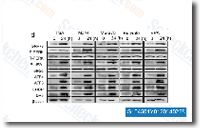
| Source | Biochem Biophys Res Commun, 2014, 10.1016/j.bbrc.2014.01.184. Trichostatin A (TSA) purchased from Selleck | |
| Method | Western blot | |
| Cell Lines | HCT116 p53 null cells | |
| Concentrations | 1 uM | |
| Incubation Time | 24 h | |
| Results | TSA causes ER stress and increase the expression of ATF4, ATF3, CHOP. |
Combining association mapping and transcriptomics identify HD2B histone deacetylase as a genetic factor associated with seed dormancy in Arabidopsis thaliana. [Yano R, et al. Plant J 2013;74(5):815-28]
Epigenetic modifications and p21-cyclin B1 nexus in anticancer effect of histone deacetylase inhibitors in combination with silibinin on non-small cell lung cancer cells. [Mateen S, et al. Epigenetics 2012;7(10):1161-72]
Natural indoles, indole-3-carbinol and 3,3’-diindolymethane, inhibit T cell activation by staphylococcal enterotoxin B through epigenetic regulation involving HDAC expression. [Busbee PB, et al. Toxicol Appl Pharmacol 2014;274(1):7-16]
