
Antibodies


Tivozanib (AV-951) is a potent and selective VEGFR inhibitor for VEGFR1/2/3 with IC50 of 30 nM/6.5 nM/15 nM, and also inhibits PDGFR and c-Kit, low activity observed against FGFR-1, Flt3, c-Met EGFR and IGF-1R. Phase 3.
| Size | Price | Stock | Quantity | ||||||||||||||||
|---|---|---|---|---|---|---|---|---|---|---|---|---|---|---|---|---|---|---|---|
| |||||||||||||||||||

| Description | Tivozanib (AV-951) is a potent and selective VEGFR inhibitor for VEGFR1/2/3 with IC50 of 30 nM/6.5 nM/15 nM, and also inhibits PDGFR and c-Kit, low activity observed against FGFR-1, Flt3, c-Met EGFR and IGF-1R. Phase 3. | |||||
|---|---|---|---|---|---|---|
| Targets | VEGFR1/2/3 | PDGFR-α/β | c-Kit | EphB2 | Tie2 | |
| IC50 | 30 nM/6.5 nM/15 nM | 40 nM/49 nM | 78 nM | 24 nM | 78 nM [1] | |
| In vitro | AV-951 is a novel quinoline-urea derivative. AV-951 blocks VEGF-dependent activation of mitogen-activated protein kinases and proliferation of endothelial cells. [1] | |||||
| In vivo | In vivo studies show that AV-951 also decreases the micro vessel density and suppresses VEGFR2 phosphorylation levels in tumor xenografts, especially at a concentration of 1mg/kg (p.o. administration). AV-951 shows almost complete inhibition of tumor xenografts growth (TGI>85%) in athymic rats. [1] Another study in rat peritoneal disseminated tumor model shows that AV-951 could prolong the survival of the tumor-bearing rats with the MST of 53.5 days. AV-951 displays antitumor activity against many human tumor xenografts including lung, breast, colon, ovarian, pancreas and prostate cancer. [2] | |||||
| Features | ||||||
| Kinase Assays | Cell-free kinase assays are done in quadruplicate with 1 μM ATP to determine the IC50 values of AV-951 against a variety of recombinant receptor and nonreceptor tyrosine kinases including VEGFR1, VEGFR2, VEGFR3, c-Kit, PDGFRβ, Flt-3 and FGFR1. |
|---|
| Cell lines | Human umbilical vein endothelial cells (HUVEC) and normal human dermal fibroblasts |
|---|---|
| Concentrations | 1 μM |
| Incubation Time | 15 minutes |
| Method | Human umbilical vein endothelial cells (HUVEC) and normal human dermal fibroblasts-based assays are done to determine the ability of AV-951 to inhibit ligand-dependent phosphorylation of tyrosine kinase receptors. The cells are starved overnight in appropriate basic medium containing 0.5% fetal bovine serum (FBS). The cells are incubated for 1 hour following the addition of AV-951 or 0.1% DMSO, and then stimulated with the cognate ligand at 37 °C. Receptor phosphorylation is induced for 5 minutes except for VEGFR3 (10 minutes), c-Met (10 minutes), and c-Kit (15 minutes). All the ligands used in the assays are human recombinant proteins, except for VEGF-C, a rat recombinant protein. Following cell lysis, receptors are immunoprecipitated with appropriate antibodies and subjected to immunoblotting with phosphotyrosine. Quantification of the blots and calculation of IC50 values are carried ou |
| Animal Models | A549 xenografts in Athymic rats (RH-rnu/rnu) |
|---|---|
| Dosages | 1 mg/kg |
| Administration | Oral administration |
| Solubility | 0.5% methylcellulose, 30 mg/mL |
| NCT Number | Recruitment | Conditions | Sponsor /Collaborators | Start Date | Phases |
|---|---|---|---|---|---|
| NCT01835223 | Not yet recruiting | Adult Primary Hepatocellular Carcinoma|Advanced Adult Primary Liver Cancer|Localized Unresectable Adult Primary Liver Cancer|Recurrent Adult Primary Liver Cancer | Roswell Park Cancer Institute|National Cancer Institute (NCI) | 2013-04 | Phase 2 |
| NCT01853644 | Not yet recruiting | Recurrent Epithelial Ovarian Cancer|Recurrent Fallopian Tube Cancer|Recurrent Primary Peritoneal Cancer | Northwestern University|National Comprehensive Cancer Network | 2013-05 | Phase 2 |
| NCT01834183 | Not yet recruiting | Renal Cell Carcinoma | Dana-Farber Cancer Institute | 2013-06 | Phase 2 |
| NCT01846871 | Not yet recruiting | Glioblastoma | Massachusetts General Hospital | 2013-06 | Phase 2 |
| NCT01728181 | Not yet recruiting | Non-small Cell Lung Cancer|Stage IV Disease|EGFR Unknown or Wild-type | University of Utah | 2013-11 | Phase 1|Phase 2 |
Download Tivozanib (AV-951) SDF
| Molecular Weight (MW) | 454.86 |
|---|---|
| Formula | C22H19ClN4O5 |
| CAS No. | 475108-18-0 |
| Storage | 3 years -20℃Powder |
|---|---|
| 6 months-80℃in DMSO | |
| Syonnyms | N/A |
| Solubility (25°C) * | In vitro | DMSO | 20 mg/mL (43 mM) |
|---|---|---|---|
| Water | <1 mg/mL (<1 mM) | ||
| Ethanol | <1 mg/mL (<1 mM) | ||
| In vivo | 0.5% methylcellulose, | 30 mg/mL | |
| * <1 mg/ml means slightly soluble or insoluble. * Please note that Selleck tests the solubility of all compounds in-house, and the actual solubility may differ slightly from published values. This is normal and is due to slight batch-to-batch variations. | |||
| Chemical Name | 1-(2-chloro-4-(6,7-dimethoxyquinolin-4-yloxy)phenyl)-3-(5-methylisoxazol-3-yl)urea |
|---|
| Stock Solution (1ml DMSO) | 1mM | 10mM | 20mM | 30mM |
|---|---|---|---|---|
| Mass(mg) | 0.45486 | 4.5486 | 9.0972 | 13.6458 |
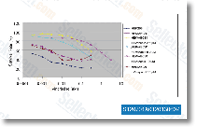 Click to enlarge | Rating | |
| Source | Tivozanib (AV-951) purchased from Selleck | |
| Method | MTT Assay | |
| Cell Lines | HEK293 cells | |
| Concentrations | 2.5-10 μM | |
| Incubation Time | ||
| Results | Reversal effect of Tivozanib on the sensitivity of HEK/ABCB1 cells to vincrstine. |
Berberine Suppresses TPA-Induced Fibronectin Expression through the Inhibition of VEGF Secretion in Breast Cancer Cells [Kim S, et al. Cell Physiol Biochem 2013;32(5):1541-50]
Antiangiogenic effects of tivozanib, an oral VEGF receptor tyrosine kinase inhibitor, on experimental choroidal neovascularization in mice. [Kang S, et al. Exp Eye Res 2013;112:125-33]
