
Antibodies


SU11274 is a selective Met inhibitor with IC50 of 10 nM, no effects on PGDFRβ, EGFR or Tie2.
| Size | Price | Stock | Quantity | ||||||||||||||||||||
|---|---|---|---|---|---|---|---|---|---|---|---|---|---|---|---|---|---|---|---|---|---|---|---|
| |||||||||||||||||||||||
 Distributor Tel: +886-2-2827-1197jimmy@new.abscience.com.tw
| Description | SU11274 is a selective Met inhibitor with IC50 of 10 nM, no effects on PGDFRβ, EGFR or Tie2. | |||||
|---|---|---|---|---|---|---|
| Targets | Met | |||||
| IC50 | 10 nM [1] | |||||
| In vitro | SU11274 exhibits greater than 50-fold selectivity for Met versus Flk and more than 500 times selectivity versus other tyrosine kinases such as FGFR-1, c-src, PDGFbR, and EGFR. SU11274 inhibits the phosphorylation of key regulators of the PI3K pathway, including AKT, FKHR, or GSK3β. SU11274 treatment inhibits the growth of TPR-MET-transformed BaF3 cells in a dose-dependent manner with IC50 of <3 μM in the absence of interleukin 3, without growth inhibition of BaF3 cells transformed by other oncogenic tyrosine kinases, including BCR-ABL, TEL-JAK2, TEL-ABL, and TEL-PDGFβR. In addition to cell growth, SU11274 treatment significantly inhibits the migration of BaF3. TPR-MET cells by 44.8% and 80% at 1 μM and 5 μM, respectively. SU11274 inhibits HGF-dependent phosphorylation of Met as well as HGF-dependent cell proliferation and motility with an IC50 of 1-1.5 μM. In H69 and H345 cells which have functional Met receptor, SU11274 inhibits the HGF-induced cell growth with IC50 of 3.4 μM and 6.5 μM, respectively. SU11274 induces G1 cell cycle arrest with cells in G1 phase increased from 42.4% to 70.6% at 5 μM, and induces caspase-dependent apoptosis by 24% at 1 μM. [2]SU11274 inhibits cell viability in c-Met-expressing non-small cell lung cancer (NSCLC) cells with IC50 values of 0.8-4.4 μM, and abrogates hepatocyte growth factor-induced phosphorylation of c-Met and its downstream signaling. [3] | |||||
| In vivo | ||||||
| Features | ||||||
| In vitro Met kinase assay | A chimeric protein is constructed containing the cytoplasmic domain of human c-Met fused to Glutathione S-transferase (GST) and expressed in SF9 cells. The c-Met kinase GST-fusion protein is used for an ELISA-based Met biochemical assay using the random copolymer poly(Glu:Tyr) (4:1) immobilized on microtiter plates as a substrate. IC50 value is determined with various concentrations of SU11274 in a buffer containing 5 μM ATP and 10 mM MnCl2, 50 mM HEPES (pH 7.5), 25 mM NaCl, 0.01% BSA, and 0.1 mM Na orthovanadate. The kinase reaction is performed for 5 minutes at room temperature. The extent of substrate phosphorylation is measured using horseradish peroxidase-conjugated anti-pTyr antibodies. |
|---|
| Cell lines | BaF3.TPR-MET, H69 and H345 cells |
|---|---|
| Concentrations | Dissolved in DMSO, final concentrations ~10 μM |
| Incubation Time | 24, 48, and 72 hours |
| Method | Cells are exposed to various concentrations of SU11274 in the presence or absence of HGF for 24, 48, and 72 hours. The number of viable cells is determined using the MTT assay or trypan blue exclusion. Cell Cycle and apoptosis are measured by fluorescence-activated cell sorter analysis via propidium iodide staining and Annexin V-positive staining, respectively. |
| Molecular Weight (MW) | 568.09 |
|---|---|
| Formula | C28H30CIN5O4S |
| CAS No. | 658084-23-2 |
| Storage | 3 years -20℃Powder |
|---|---|
| 6 months-80℃in DMSO | |
| Syonnyms | PKI-SU11274 |
| Solubility (25°C) * | In vitro | DMSO | 92 mg/mL (161 mM) |
|---|---|---|---|
| Water | <1 mg/mL (<1 mM) | ||
| Ethanol | 2 mg/mL (3 mM) | ||
| In vivo | 30% PEG400/0.5% Tween80/5% propylene glycol, | 30 mg/mL | |
| * <1 mg/ml means slightly soluble or insoluble. * Please note that Selleck tests the solubility of all compounds in-house, and the actual solubility may differ slightly from published values. This is normal and is due to slight batch-to-batch variations. | |||
| Chemical Name | (Z)-N-(3-chlorophenyl)-3-((3,5-dimethyl-4-(1-methylpiperazine-4-carbonyl)-1H-pyrrol-2-yl)methylene)-N-methyl-2-oxoindoline-5-sulfonamide |
|---|
| Stock Solution (1ml DMSO) | 1mM | 10mM | 20mM | 30mM |
|---|---|---|---|---|
| Mass(mg) | 0.56809 | 5.6809 | 11.3618 | 17.0427 |
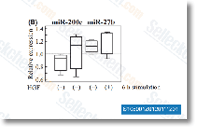 Click to enlarge | Rating | |
| Source | Cancer Sci, 2011, 102(12), 2164-71.. SU11274 purchased from Selleck | |
| Method | qRT-PCR analysis | |
| Cell Lines | HSC3 cells | |
| Concentrations | 10 mM | |
| Incubation Time | 6 h | |
| Results | Downregulation of miR-200c and miR-27b by HGF stimulation was almost completely inhibited by adding MET kinase-specific inhibitor SU11274 before HGF stimulation. |
Autocrine activation of the MET receptor tyrosine kinase in acute myeloid leukemia. [Kentsis A, et al. Nat Med 2012;18(7):1118-22]
Mutant p53 enhances MET trafficking and signalling to drive cell scattering and invasion. [Muller PA, et al. Oncogene 2013;32(10):1252-65]
Acquired MET expression confers resistance to EGFR inhibition in a mouse model of glioblastoma multiforme. [HJ Jun, et al. Oncogene 2012;31(25):3039-50]
