
Antibodies


SRT1720 is a selective SIRT1 activator with EC50 of 0.16 μM, but is >230-fold less potent for SIRT2 and SIRT3.
| Size | Price | Stock | Quantity | ||||||||||||||||||||
|---|---|---|---|---|---|---|---|---|---|---|---|---|---|---|---|---|---|---|---|---|---|---|---|
| |||||||||||||||||||||||
 Distributor Tel: +886-2-2827-1197jimmy@new.abscience.com.tw
| Description | SRT1720 is a selective SIRT1 activator with EC50 of 0.16 μM, but is >230-fold less potent for SIRT2 and SIRT3. | |||||
|---|---|---|---|---|---|---|
| Targets | SIRT1 | |||||
| IC50 | 0.16 μM (EC50) [1] | |||||
| In vitro | The maximum activation ratio of SRT1720 versus the closest sirtuin homologues, SIRT2 (EC1.5 = 37 μM) and SIRT3 (EC1.5 > 300 μM) is up to 781%. SRT1720 binds to the SIRT1 enzyme-peptide substrate complex at an allosteric site amino-terminal to the catalytic domain and lower the Michaelis constant for acetylated substrates. SRT1720 could reduce fed glucose levels. Glucose excursion during an intraperitoneal glucose tolerance test is also significantly reduced in the SRT1720 group, and comparable to rosiglitazone, a PPARγ activator that has been used to treat type 2 diabetes. SRT1720 does not have an effect on fasting glucose in chow-fed mice, revealing that pharmacological SIRT1 activation is unlikely to induce hypoglycaemia. SRT1720 significantly reduces the hyperinsulinaemia after 4 weeks, partially normalizing increased insulin levels similar to rosiglitazone treatment. SRT1720 treatment increases mitochondrial capacity by 15% in gastrocnemius muscle as measured by citrate synthase activity. [1] Higher concentrations of SRT1720 (15 μM) induces a modest (10-20%) decrease in normal cell viability. SRT1720 also significantly inhibits VEGF-dependent MM cell migration.[2] | |||||
| In vivo | In DIO mice SRT1720 mimics several of the effects observed after calorie restriction including improved insulin sensitivity, normalized glucose and insulin levels, and increased mitochondrial capacity. In addition, in diet-induced obese and genetically obese mice, SRT1720 improves insulin sensitivity, lower plasma glucose, and increase mitochondrial capacity. Thus, SRT1720 is a promising new therapeutic agent for treating diseases of ageing such as type 2 diabetes. Consistent with improved glucose tolerance, the glucose infusion rate required to maintain euglycaemia is approximately 35% higher in SRT1720-treated fa/fa rats, and the total glucose disposal rate is increased by approximately 20%. [1] SRT1720 also prevents multiple myeloma tumor growth. SRT1720 increases the cytotoxic activity of bortezomib or dexamethasone. [2] | |||||
| Features | ||||||
| SIRT1 fluorescence polarization assay | In the SIRT1 FP assay, SIRT1 activity is monitored using a 20 amino acid peptide (Ac-Glu-Glu-Lys(biotin)-Gly-Gln-Ser-Thr-Ser-Ser-His-Ser-Lys(Ac)-Nle-Ser-Thr-Glu-Gly–Lys(MR121 or Tamra)-Glu-Glu-NH2) derived from the sequence of p53. The peptide is N-terminally linked to biotin and C-terminally modified with a fluorescent tag. The reaction for monitoring enzyme activity is a coupled enzyme assay where the first reaction is the deacetylation reaction catalyzed by SIRT1 and the second reaction is cleavage by trypsin at the newly exposed lysine residue. The reaction is stopped and streptavidin is added in order to accentuate the mass differences between substrate and product. The sensitivity of the FP assay allows identification of SRT1720. The fluorescence polarization reaction conditions are as follows: 0.5 μM peptide substrate, 150 μM βNAD+, 0-10 nM SIRT1, 25 mM Tris-acetate pH 8, 137 mM Na-Ac, 2.7 mM K-Ac, 1 mM Mg-Ac, 0.05% Tween-20, 0.1% Pluronic F127, 10 mM CaCl 2, 5 mM DTT, 0.025% BSA, and 0.15 mM nicotinamide. The reaction is incubated at 37 °C and stopped by addition of nicotinamide, and trypsin is added to cleave the deacetylated substrate. This reaction is incubated at 37 °C in the presence of 1 μM streptavidin. Fluorescent polarization is determined at excitation (650 nm) and emission (680 nm) wavelengths. |
|---|
| Cell lines | Human vascular endothelial cells (HUVECs) |
|---|---|
| Concentrations | 5 μM |
| Incubation Time | 2 hours |
| Method | Transwell Insert Assays are utilized to measure migration. In vitro angiogenesis is assessed by Matrigel capillary-like tube structure formation assay. For endothelial tube formation assay, human vascular endothelial cells (HUVECs) are obtained from Clonetics and maintained in endothelial cell growth medium-2 containing 5% FBS. After three passages, HUVEC cell viability is measured with the trypan blue exclusion assay, and <5% of cell death is observed with SRT1720 treatment. |
| Animal Models | Chase-SCID mice with MM.1S cells |
|---|---|
| Dosages | 200 mg/kg |
| Administration | Orally |
| Solubility | 30% PEG400/0.5% Tween80/5% propylene glycol, 30 mg/mL |
| Molecular Weight (MW) | 506.02 |
|---|---|
| Formula | C25H23N7OS.HCl |
| CAS No. | 1001645-58-4 |
| Storage | 3 years -20℃Powder |
|---|---|
| 6 months-80℃in DMSO | |
| Syonnyms | N/A |
| Solubility (25°C) * | In vitro | DMSO | 38 mg/mL (75 mM) |
|---|---|---|---|
| Water | <1 mg/mL (<1 mM) | ||
| Ethanol | <1 mg/mL (<1 mM) | ||
| In vivo | 30% PEG400/0.5% Tween80/5% propylene glycol, | 30 mg/mL | |
| * <1 mg/ml means slightly soluble or insoluble. * Please note that Selleck tests the solubility of all compounds in-house, and the actual solubility may differ slightly from published values. This is normal and is due to slight batch-to-batch variations. | |||
| Chemical Name | N-(2-(3-(piperazin-1-ylmethyl)imidazo[2,1-b]thiazol-6-yl)phenyl)quinoxaline-2-carboxamide hydrochloride |
|---|
| Stock Solution (1ml DMSO) | 1mM | 10mM | 20mM | 30mM |
|---|---|---|---|---|
| Mass(mg) | 0.50602 | 5.0602 | 10.1204 | 15.1806 |
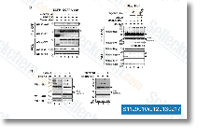 Click to enlarge | Rating | |
| Source | EMBO J, 2013, ahead of print. SRT1720 purchased from Selleck | |
| Method | Western blots | |
| Cell Lines | 293T cells | |
| Concentrations | 20 μM | |
| Incubation Time | 4 h | |
| Results | Treatment with SIRT1 activator resveratrol or SRT1720 reduced Ubc9 acetylation(Figure D). 293T cells treated with SRT1720 showed increased Elk-1 sumoylation (Figure H). treatment of SRT1720 failed to enhance Elk-1 sumoylation in Ubc9 K65R-transfected cells, compared to Ubc9 WT-transfected cells (Figure I). |
Ubc9 acetylation modulates distinct SUMO target modification and hypoxia response. [Hsieh YL, et al. EMBO J 2013;32(6):791-804]
SIRT1 and AMPK mediate hypoxia-induced resistance of non-small cell lung cancers to cisplatin and doxorubicin. [Shin DH, et al. Cancer Res 2013;74(1):298-308]
Suberoylanilide hydroxamic acid (Vorinostat) up-regulates progranulin transcription: rational therapeutic approach to frontotemporal dementia. [Cenik B, et al. J Biol Chem 2011;286(18):16101-8]
