
Antibodies


S-Ruxolitinib is the chirality of INCB018424, which is the first potent, selective, JAK1/2 inhibitor to enter the clinic with IC50 of 3.3 nM/2.8 nM, >130-fold selectivity for JAK1/2 versus JAK3. Phase 3.
| Size | Price | Stock | Quantity | ||||||||||||||||||||
|---|---|---|---|---|---|---|---|---|---|---|---|---|---|---|---|---|---|---|---|---|---|---|---|
| |||||||||||||||||||||||
 Distributor Tel: +886-2-2827-1197jimmy@new.abscience.com.tw
| Description | S-Ruxolitinib is the chirality of INCB018424, which is the first potent, selective, JAK1/2 inhibitor to enter the clinic with IC50 of 3.3 nM/2.8 nM, >130-fold selectivity for JAK1/2 versus JAK3. Phase 3. | |||||
|---|---|---|---|---|---|---|
| Targets | JAK1 | JAK2 | ||||
| IC50 | 3.3 nM | 2.8 nM [1] | ||||
| In vitro | INCB018424 potently and selectively inhibits JAK2V617F-mediated signaling and proliferation in Ba/F3 cells and HEL cells. INCB018424 markedly increases apoptosis in a dose dependent manner in Ba/F3 cells. INCB018424 (64 nM) results in a doubling of cells with depolarized mitochondria in Ba/F3 cells. INCB018424 inhibits proliferating of erythroid progenitors from normal donors and polycythemia vera patients with IC50 of 407 nM and 223 nM, respectively. INCB018424 demonstrates remarkable potency against erythroid colony formation with IC50 of 67nM. [1] | |||||
| In vivo | INCB018424 (180 mg/kg, orally, twice a day) results in survive rate of greater than 90% by day 22 in a JAK2V617F-driven mouse model. INCB018424 (180 mg/kg, orally, twice a day) markedly reduces splenomegaly and circulating levels of inflammatory cytokines, and preferentially eliminated neoplastic cells, resulting in significantly prolonged survival without myelosuppressive or immunosuppressive effects in a JAK2V617F-driven mouse model. [1] The primary end point is reached in 41.9% of patients in the Ruxolitinib group as compared with 0.7% in the placebo group in the double-blind trial of myelofibrosis. Ruxolitinib results in maintaining of reduction in spleen volume and improvement of 50% or more in the total symptom score. [2] A total of 28% of the patients in the Ruxolitinib (15 mg twice daily) group has at least a 35% reduction in spleen volume at week 48 in patients with myelofibrosis, as compared with 0% in the group receiving the best available therapy. The mean palpable spleen length has decreased by 56% with Ruxolitinib but has increased by 4% with the best available therapy at week 48. Patients in the ruxolitinib group has an improvement in overall quality-of-life measures and a reduction in symptoms associated with myelofibrosis. [3] | |||||
| Features | ||||||
| Binding assay | Recombinant proteins are expressed using Sf21 cells and baculovirus vectors and purified with affinity chromatography. JAK kinase assays use a homogeneous time-resolved fluorescence assay with the peptide substrate (-EQEDEPEGDYFEWLE). Each enzyme reaction is carried out with Ruxolitinib or control, JAK enzyme, 500 nM peptide, adenosine triphosphate (ATP; 1mM), and 2% dimethyl sulfoxide (DMSO) for 1 hour. The 50% inhibitory concentration (IC50) is calculated as INCB018424 concentration required for inhibition of 50% of the fluorescent signal. |
|---|
| Cell lines | Ba/F3 and HEL cells |
|---|---|
| Concentrations | 3 μM |
| Incubation Time | 48 hours |
| Method | Cells are seeded at 2 × 10³/well of white bottom 96-well plates, treated with INCB018424 from DMSO stocks (0.2% final DMSO concentration), and incubated for 48 hours at 37 ℃ with 5% CO2. Viability is measured by cellular ATP determination using the Cell-Titer Glo luciferase reagent or viable cell counting. Values are transformed to percent inhibition relative to vehicle control, and IC50 curves are fitted according to nonlinear regression analysis of the data using PRISM GraphPad. |
| Animal Models | JAK2V617F-driven mouse model |
|---|---|
| Dosages | 180 mg/kg |
| Administration | Oral gavage |
| Solubility | 0.5% CMC/0.25% Tween 80, 30 mg/mL |
Download S-Ruxolitinib (INCB018424) SDF
| Molecular Weight (MW) | 306.37 |
|---|---|
| Formula | C17H18N6 |
| CAS No. | 941685-37-6 |
| Storage | 3 years -20℃Powder |
|---|---|
| 6 months-80℃in DMSO | |
| Syonnyms | N/A |
| Solubility (25°C) * | In vitro | DMSO | 61 mg/mL (199 mM) |
|---|---|---|---|
| Water | 5 mg/mL (16 mM) | ||
| Ethanol | 61 mg/mL (199 mM) | ||
| In vivo | 0.5% CMC/0.25% Tween 80, | 30 mg/mL | |
| * <1 mg/ml means slightly soluble or insoluble. * Please note that Selleck tests the solubility of all compounds in-house, and the actual solubility may differ slightly from published values. This is normal and is due to slight batch-to-batch variations. | |||
| Chemical Name | 1H-Pyrazole-1-propanenitrile, β-cyclopentyl-4-(7H-pyrrolo[2,3-d]pyrimidin-4-yl)-, (βS)- |
|---|
| Stock Solution (1ml DMSO) | 1mM | 10mM | 20mM | 30mM |
|---|---|---|---|---|
| Mass(mg) | 0.30637 | 3.0637 | 6.1274 | 9.1911 |
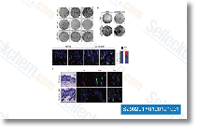 Click to enlarge | Rating | |
| Source | Genes Dev, 2012, 26(19), 2144-2153 . S-Ruxolitinib (INCB018424) purchased from Selleck | |
| Method | Colony assays/ Immunofluorescence/ histological images | |
| Cell Lines | keratinocytes | |
| Concentrations | 500 nM | |
| Incubation Time | ||
| Results | These data uncover a complex relation-ship between epidermal stem cell proliferation and self-renewal in aged skin and show that aspects of this relationship can be partially restored through inhibition of the Jak–Stat pathway by tofacitinib or ruxolitinib. |
