
Antibodies


R406 (free base) is a potent Syk inhibitor with IC50 of 41 nM, strongly inhibits Syk but not Lyn, 5-fold less potent to Flt3. Phase 2.
| Size | Price | Stock | Quantity | ||||||||||||
|---|---|---|---|---|---|---|---|---|---|---|---|---|---|---|---|
| |||||||||||||||
 Distributor Tel: +886-2-2827-1197jimmy@new.abscience.com.tw
| Description | R406 (free base) is a potent Syk inhibitor with IC50 of 41 nM, strongly inhibits Syk but not Lyn, 5-fold less potent to Flt3. Phase 2. | |||||
|---|---|---|---|---|---|---|
| Targets | Syk | |||||
| IC50 | 41 nM [1] | |||||
| In vitro | R406 is an ATP-competitive inhibitor of Syk with a Ki value of 30 nM. R406 selectively inhibits Syk-dependent signaling with EC50 values ranging from 33 nM to 171 nM, more potently than Syk-independent pathways in different cells. [1] R406 inhibits cellular proliferation of a large panel of diffuse large B-cell lymphoma (DLBCL) cell lines at EC50 values ranging from 0.8 μM to 8.1 μM. R406 treatment (1 μM or 4 μM) induces the activation of caspases 9 and 3, but not caspase 8, leading to significant apoptosis of the majority of DLBCL cell lines. Pretreatment of R406 completely blocks the phosphorylation of SYK525/526 and the SYK-dependent phosphorylation of BLNK in R406-sensitive DLBCLs following B-cell receptor (BCR) crosslinking. [2] R406 potently decreases MMP-9 mRNA levels by 2.8- and 4.3-fold lower than controls after 24 and 48 hours treatment, respectively, and reduces the invasive capacity of the RL cells. [3] | |||||
| In vivo | R406 has shown efficacy in a number of animal models of immune disorders. Oral administration of R406 in mice with immune complex-mediated inflammation significantly inhibits the cutaneous reverse passive Arthus reaction by approximately 72% and 86% at 1 mg/kg and 5 mg/kg, respectively, compared with the control. R406 treatment at 10 mg/kg significantly reduces inflammation and swelling, decreases the progressive arthritis to a lower level in the passive anticollagen antibody-challenged mice, and delays the onset and reduces paw thickening and clinical arthritis by approximately 50% in the K/BxN serum transfer mice model. [1] | |||||
| Features | ||||||
| In-vitro Fluorescence Polarization Kinase Assays | R406 is serially diluted in DMSO and then diluted to 1% DMSO in kinase buffer (20 mM HEPES, pH 7.4, 5 mM MgCl2, 2 mM MnCl2, 1 mM DTT, 0.1 mg/mL acetylated BGG). ATP and substrate in kinase buffer are added at room temperature, resulting in a final DMSO concentration on 0.2%. The kinase reactions are performed in a final volume of 20 μL containing 5 μM HS1 peptide substrate and 4 μM ATP and started by addition of 0.125 ng of Syk in kinase buffer. The reaction is allowed to proceed for 40 minutes at room temperature. The reaction is stopped by the addition of 20 μL of PTK quench mix containing EDTA/anti-phosphotyrosine antibody (1X final)/fluorescent phosphopeptide tracer (0.5X final) diluted in FP Dilution Buffer. The plate is incubated for 30 minutes in the dark at room temperature and then read on a Polarion fluorescence polarization plate reader. Data are converted to amount of phosphopeptide present using a calibration curve generated by competition with the phosphopeptide competitor provided in the Tyrosine Kinase Assay Kit. For IC50 determination, R406 is tested at eleven concentrations in duplicate and curve-fitting is performed by non-linear regression analysis using Prism GraphPad Software. |
|---|
| Cell lines | DHL4, DHL6, DHL8, DHL10, Wsu-NHL, Karpas422 (K422), OCI LY1, LY3, LY4, LY7, LY10, LY18, LY19, Pfeiffer, and Toledo |
|---|---|
| Concentrations | Dissolved in DMSO at a concentration of 10 mM, final concentrations ~ 5 μM |
| Incubation Time | 72 or 96 hours |
| Method | DLBCL cell lines are treated with serial dilutions of R406 (0.3, 0.6, 1.25, 2.5, or 5 μM) for 72 or 96 hours. Thereafter, cellular proliferation is determined by MTT assay, and cell apoptosis is assessed by using annexin V–FITC/propidium iodide (PI) staining. For the determination of caspase 9, 8, and 3, cells are lysed, size-fractionated by polyacrylamide gel electrophoresis (PAGE), and immunoblotted. |
| Animal Models | Female C57BL/6 mice challenged intravenously with 1% ovalbumin (OVA) in saline (10 mg/kg) containing 1% Evans blue dye, female Balb/c mice with the anticollagen antibody-induced arthritis, and female C57BL/6 mice with arthritis induced by intraperitoneal injection of pooled sera from adult K/BxN mice |
|---|---|
| Dosages | ~10 mg/kg/day |
| Administration | Orally (prodrug R788) |
| Solubility | 1% DMSO/30% polyethylene glycol/1% Tween 80, 30 mg/mL |
| NCT Number | Recruitment | Conditions | Sponsor /Collaborators | Start Date | Phases |
|---|---|---|---|---|---|
| NCT01387308 | Completed | Healthy | AstraZeneca | 2011-08 | Phase 1 |
| NCT01598571 | Completed | Healthy | AstraZeneca | 2012-05 | Phase 1 |
| NCT01645085 | Completed | Healthy Volunteers | AstraZeneca | 2012-07 | Phase 1 |
| NCT01682408 | Completed | Pharmacokinetics | AstraZeneca | 2012-09 | Phase 1 |
| NCT01725230 | Completed | Rheumatoid Arthritis | AstraZeneca | 2012-11 | Phase 1 |
| Molecular Weight (MW) | 470.45 |
|---|---|
| Formula | C22H23FN6O5 |
| CAS No. | 841290-80-0 |
| Storage | 3 years -20℃Powder |
|---|---|
| 6 months-80℃in DMSO | |
| Syonnyms | N/A |
| Solubility (25°C) * | In vitro | DMSO | 21 mg/mL (44 mM) |
|---|---|---|---|
| Water | <1 mg/mL (<1 mM) | ||
| Ethanol | <1 mg/mL (<1 mM) | ||
| In vivo | 1% DMSO/30% polyethylene glycol/1% Tween 80, | 30 mg/mL | |
| * <1 mg/ml means slightly soluble or insoluble. * Please note that Selleck tests the solubility of all compounds in-house, and the actual solubility may differ slightly from published values. This is normal and is due to slight batch-to-batch variations. | |||
| Chemical Name | 6-(5-fluoro-2-(3,4,5-trimethoxyphenylamino)pyrimidin-4-ylamino)-2,2-dimethyl-2H-pyrido[3,2-b][1,4]oxazin-3(4H)-one |
|---|
| Stock Solution (1ml DMSO) | 1mM | 10mM | 20mM | 30mM |
|---|---|---|---|---|
| Mass(mg) | 0.47045 | 4.7045 | 9.409 | 14.1135 |
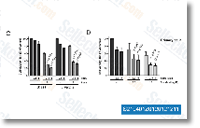 Click to enlarge | Rating | |
| Source | Clin Cancer Res, 2013, 19(3), 586-597. R406 (free base) purchased from Selleck | |
| Method | Annexin V/PI staining | |
| Cell Lines | Z-138/JEKO-1 cells | |
| Concentrations | 2.5/5 µM | |
| Incubation Time | 48 h | |
| Results | The combination was found to be considerably more potent than each agent alone in both cell lines, with CI values of 0.594 and 0.560 for the combination of sorafenib 5 µM with R406 2.5 and 5 µM respectively for Z-138, and 0.551 and 0.586 for JEKO-1 (Figure 1C). Importantly, this effect was also found in primary MCL cells, where combination of sorafenib (7.5 and 10 µM) with R406 (2.5 and 5 µM) revealed a strong synergy in all the samples studied (n= 7), with a mean CI of 0.681 and 0.648 for the combination of sorafenib 7.5 µM with R406 2.5 and 5 µM respectively, and 0.635 and 0.611 with sorafenib 10 µM (Figure D). |
