
Antibodies


Palbociclib (PD-0332991) HCl
PD0332991 is a highly selective inhibitor of CDK4/6 with IC50 of 11 nM/16 nM. It shows no activity against CDK1/2/5, EGFR, FGFR, PDGFR, InsR, etc. Phase 2/3.
| Size | Price | Stock | Quantity | ||||||||||||||||
|---|---|---|---|---|---|---|---|---|---|---|---|---|---|---|---|---|---|---|---|
| |||||||||||||||||||
 Distributor Tel: +886-2-2827-1197jimmy@new.abscience.com.tw
| Description | PD0332991 is a highly selective inhibitor of CDK4/6 with IC50 of 11 nM/16 nM. It shows no activity against CDK1/2/5, EGFR, FGFR, PDGFR, InsR, etc. Phase 2/3. | |||||
|---|---|---|---|---|---|---|
| Targets | CDK4/cyclin D1 | CDK6/cyclin D2 | ||||
| IC50 | 11 nM | 16 nM [1] | ||||
| In vitro | PD 0332991 has little effect on other protein kinases including EGFR, FGFR, PGFR, IR. PD 0332991 is a non-ATP competitive inhibitor of Cdk4. PD 0332991 inhibits MDA-MB-435 breast carcinoma cells with IC50 of 66 nM, which is due to reduced Rb phosphorylation at Ser780. PD 0332991 inhibits thymidine incorporation into the DNA of Rb-positive human breast, colon, and lung carcinomas as well as human leukemias, with IC50 values ranging from 0.04-0.17 μM. PD 0332991 shows no activity in Rb-negative cells. PD 0332991 causes an accumulation of cells in G1 in MDA-MB-453 breast and Colo-205 carcinoma cells. [1] PD 0332991 also shows activity in 5T33MM myeloma cells (immunocompetent model) and sensitizes the cells to killing by bortezomib.[2] PD 0332991 inhibits luminal ER-positive as well as HER2-amplified breast cancer cell lines including MDA-MB-175, ZR-75-30, CAMA-1, MDA-MB-134, HCC-202 and UACC-893. PD 0332991 enhances the activity of tamoxifen and trastuzumab in these cell lines. PD 0332991 enhances the sensitivity of tamoxifen in the MCF7 tamoxifen-resistant cells. [3] A recent study shows that PD 0332991 could suppress malignant rhabdoid tumor (MRT) cell lines including MP-MRT-AN, KP-MRT-RY, G401, KP-MRT-NS and the sensitivity of the MRT cell lines to PD 0332991 is inversely correlated with expression of p16. [4] | |||||
| In vivo | PD 0332991 indicates complete tumor stasis in a MDA-MB-435 xenograft at 150 mg/kg. PD 0332991 also shows broad-spectrum antitumor activity in multiple human tumor xenografts by eliminating phospho-Rb and the proliferative marker Ki-67 from tumor tissue and down-regulation of genes under the transcriptional control of E2F. [1] | |||||
| Features | Non-cytotoxic, and halts cancer cell growth & could be used in glioblastoma that has relapsed after temozolomide treatment (a chemotherapeutic used to treat many cancers). | |||||
| Cdk Assays | A stock solution of PD0332991 is prepared in DMSO. CDK assays are performed in 96-well filter plates. All CDK-cyclin kinase complexes are expressed in insect cells through baculovirus infection and purified. The substrate for the assays is a fragment (amino acids 792–928) of pRb fused to GST (GST·RB-Cterm). The total volume in each well is 0.1 mL containing a final concentration of 20 mM Tris-HCl, pH 7.4, 50 mM NaCl, 1 mM dithiothreitol, 10 mM MgCl2, 25 μM ATP (for CDK4-cyclin D1, CDK6-cyclin D2, and CDK6-cyclin D3) or 12 μM ATP (for CDK2-cyclin E, CDK2-cyclin A, and CDC2-cyclin B) containing 0.25 μCi of [γ-32P]ATP, 20 ng of enzyme, 1 μg of GST·RB-Cterm, and PD 0332991 (0.001-0.1μM). All components except the [γ-32P]ATP are added to the wells, and the plate is placed on a plate mixer for 2 min. The reaction is started by adding the [γ-32P]ATP and the plate is incubated at 25 °C for 15 min. The reaction is terminated by addition of 0.1 mL of 20% trichloroacetic acid and the plate is kept at 4 °C for at least 1 hour to allow the substrate to precipitate. The wells are then washed 5 times with 0.2 mL of 10% trichloroacetic acid and radioactive incorporation is determined with a β plate counter. |
|---|
| Cell lines | Tumor cell lines including MDA-MB-435, ZR-75-1, T-47D, MCF-7, H1299, Colo-205, MDA-MB-468, H2009, CRRF-CEM and K562 |
|---|---|
| Concentrations | 0.01-1 μM |
| Incubation Time | 24 hours |
| Method | Cells are seeded at 2 × 10⁴ per well in a 96-well plate and incubated overnight. PD 0332991 (0.01-1 μM) is added to the wells and incubated at 37 °C for another 24 hours. [14C]Thymidine (0.1 μCi) is added to each well and incorporation of the radiolabel is allowed to proceed for 72 hours. Incorporated radioactivity is determined with a β plate counter. |
| Animal Models | Advanced stage human tumor xenografts including Colo-205, MDA-MB-435 breast, SF-295 glioblastoma, ZR-75-1 breast, PC-3 prostate, H125 lung, SW-620 colon, H23 lung and MDA-MB-468 breast (Rb negative) are established in severe combined immunodeficient mice. |
|---|---|
| Dosages | 0-150 mg/kg |
| Administration | Given by gavage |
| Solubility | Saline, 20 mg/mL |
| NCT Number | Recruitment | Conditions | Sponsor /Collaborators | Start Date | Phases |
|---|---|---|---|---|---|
| NCT01942135 | Recruiting | Metastatic Breast Cancer | Pfizer|AstraZeneca | 2013-09 | Phase 3 |
| NCT01976169 | Not yet recruiting | Advanced HER2-positive Breast Cancer | University of Texas Southwestern Medical Center|Pfizer|University of Pennsylvania | 2013-10 | Phase 1 |
| NCT01953731 | Recruiting | Healthy | Pfizer | 2013-10 | Phase 1 |
| NCT02008734 | Active, not recruiting | Untreated HR-positive Operable Early Breast Cancer | Gustave Roussy, Cancer Campus, Grand Paris | 2013-11 | Phase 2 |
| NCT01864746 | Recruiting | Luminal A Breast Cancer|Luminal B Breast Cancer|CPS-EG Score|Postneoadjuvant Treatment With CDK 4/6 Inhibitor|Hormonreceptor Positive | German Breast Group|Pfizer | 2013-11 | Phase 3 |
Download Palbociclib (PD-0332991) HCl SDF
| Molecular Weight (MW) | 483.99 |
|---|---|
| Formula | C24H29N7O2.HCl |
| CAS No. | 827022-32-2 |
| Storage | 3 years -20℃Powder |
|---|---|
| 6 months-80℃in DMSO | |
| Syonnyms | N/A |
| Solubility (25°C) * | In vitro | DMSO | 3 mg/mL (6 mM) |
|---|---|---|---|
| Water | 30 mg/mL (61 mM) | ||
| Ethanol | <1 mg/mL (<1 mM) | ||
| In vivo | Saline, | 20 mg/mL | |
| * <1 mg/ml means slightly soluble or insoluble. * Please note that Selleck tests the solubility of all compounds in-house, and the actual solubility may differ slightly from published values. This is normal and is due to slight batch-to-batch variations. | |||
| Chemical Name | 6-acetyl-8-cyclopentyl-5-methyl-2-(5-(piperazin-1-yl)pyridin-2-ylamino)pyrido[2,3-d]pyrimidin-7(8H)-one hydrochloride |
|---|
| Stock Solution (1ml DMSO) | 1mM | 10mM | 20mM | 30mM |
|---|---|---|---|---|
| Mass(mg) | 0.48399 | 4.8399 | 9.6798 | - |
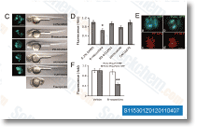 Click to enlarge | Rating | |
| Source | PNAS 2011 108, 8417. Palbociclib (PD-0332991) HCl purchased from Selleck | |
| Method | Fluorescent Microscopy and Confocal Imaging | |
| Cell Lines | Tg:Pomc-Pttg embryo, Pomc-eGFP embryo | |
| Concentrations | 50 μM | |
| Incubation Time | 18-48 h | |
| Results | Although flavopiridol retarded early embryonic development before corticotroph ontogeny occurred, in vivo treatment of zebraï¬sh embryos with R-roscovitine, olomoucine, PD-0332991, and CAY10572 starting at 18 hpf caused no apparent growth defect by 40 hpf . Strikingly, R-roscovitine-treated embryos exhibited approximately 40% reduction in pituitary POMC-eGFP expression compared with controls. A modest, approximately 20%, reduction of POMC-eGFP expression was also observed in the olomoucine-treated group (1.0 ± 0.08 vs. 0.8 ± 0.07, mean ± SE; n = 7 for each group; P = 0.07), whereas PD-0332991 and CAY10572 caused no signiï¬cant change in pituitary POMC-eGFP expression compared with controls. |
Targeting zebraï¬sh and murine pituitary corticotroph tumors with a cyclin-dependent kinase (CDK) inhibitor. [Liu NA, et al. Proc Natl Acad Sci U S A 2011;108(20):8414-9]
Early gene expression changes by Epstein-Barr virus infection of B-cells indicate CDKs and survivin as therapeutic targets for post-transplant lymphoproliferative diseases [Bernasconi M,et al. Int J Cancer 2013;133(10):2341-50]
p16(INK) (4a) deficiency promotes DNA hyper-replication and genetic instability in melanocytes. [Fung C, et al. Pigment Cell Melanoma Res 2012;26(2):236-46]
