
Antibodies


OSI-930 is a potent inhibitor of Kit, KDR and CSF-1R with IC50 of 80 nM, 9 nM and 15 nM, respectively; also potent to Flt-1, c-Raf and Lck and low activity against PDGFRα/β, Flt-3 and Abl. Phase 1.
| Size | Price | Stock | Quantity | ||||||||||||||||
|---|---|---|---|---|---|---|---|---|---|---|---|---|---|---|---|---|---|---|---|
| |||||||||||||||||||
 Distributor Tel: +886-2-2827-1197jimmy@new.abscience.com.tw
| Description | OSI-930 is a potent inhibitor of Kit, KDR and CSF-1R with IC50 of 80 nM, 9 nM and 15 nM, respectively; also potent to Flt-1, c-Raf and Lck and low activity against PDGFRα/β, Flt-3 and Abl. Phase 1. | |||||
|---|---|---|---|---|---|---|
| Targets | Kit (activated) | KDR | Flt1 | CSF-1R | c-Raf | Lck |
| IC50 | 80 nM | 9 nM | 8 nM | 15 nM | 41 nM | 22 nM [1] |
| In vitro | OSI-930 inhibits the cell proliferation in the HMC-1 cell line with IC50 of 14 nM without significant effect on growth of the COLO-205 cell line that does not express a constitutively active mutant receptor tyrosine kinase. Moreover, OSI-930 also induces apoptosis in HMC-1 cell line with EC50 of 34 nM. [1] A recent study shows that OSI-930 inactivates purified, recombinant cytochrome P450 (P450) 3A4 with a Ki of 24 μM in a time- and concentration-dependent mode. [2] | |||||
| In vivo | OSI-930, administrated at the maximally efficacious dose of 200 mg/kg by oral gavage, exhibits potent antitumor activity in a broad range of preclinical xenograft models including HMC-1, NCI-SNU-5, COLO-205 and U251 xenograft models. [1] | |||||
| Features | ||||||
| Protein kinase assays | Protein kinase assays are either done in-house by ELISA-based assay methods (Kit, KDR, PDGFRα, and PDGFRβ) or by a radiometric method. In-house ELISA assays used poly(Glu:Tyr) as the substrate bound to the surface of 96-well assay plates; phosphorylation is then detected using an antiphosphotyrosine antibody conjugated to HRP. The bound antibody is then quantitated using ABTS as the peroxidase substrate by measuring the absorbance at 405/490 nm. All assays uses purified recombinant kinase catalytic domains that are either expressed in insect cells or in bacteria. The Kit and EGFR protein used for in-house assays are prepared internally; other enzymes are obtained. Recombinant Kit protein is expressed as an NH2-terminal glutathione S-transferase fusion protein in insect cells and is initially purified as a nonphosphorylated (nonactivated) enzyme with a relatively high Km for ATP (400 μM). In some assays, an activated (tyrosine phosphorylated) form of the enzyme is prepared by incubation with 1 mM ATP for 1 hour at 30 °C. The phosphorylated protein is then passed through a desalting column to remove the majority of the ATP and stored at −80 °C in buffer containing 50% glycerol. The resultant preparation has a considerably higher specific activity and a lower Km for ATP (25 μM) than the initial nonphosphorylated preparation. The inhibition of Kit autophosphorylation by OSI-930 is assayed by incubation of the nonphosphorylated enzyme at 30 °C in the presence of 200 μM ATP and various concentrations of OSI-930. The reaction is stopped by removal of aliquots into SDS-PAGE sample buffer followed by heating to 100 °C for 5 minutes. The degree of phosphorylation of Kit is then determined by immunoblotting for both total Kit and phosphorylated Kit. |
|---|
| Cell lines | HMC-1 and COLO-205 |
|---|---|
| Concentrations | 0--1 μM |
| Incubation Time | 48 hours |
| Method | For assays of cell proliferation and apoptosis, cells are seeded into 96-well plates and incubated for 2 to 3 days in the presence of OSI-930 at various concentrations. Inhibition of cell growth is determined by luminescent quantitation of the intracellular ATP content using CellTiterGlo. Induction of caspase-dependent apoptosis by OSI-930 is quantitated by an enzymatic caspase 3/7 assay. Inhibition of angiogenesis by OSI-930 is monitored using the rat aortic ring endothelial sprout outgrowth assay. Sections of aorta are prepared from CO2-euthanized male rats and cultured in vitro in a collagen matrix in the presence or absence of OSI-930. The collagen matrix is prepared from type 1 rat tail collagen solubilized in 0.1% acetic acid at 3 mg/mL, which is combined with 0.125 volume collagen buffer (0.05 N NaOH, 200 mM HEPES, 260 mM NaHCO3), 0.125 volume of medium 199, 0.0125 volume of 1 M NaOH, and 1% GlutaMax. Aortic rings are embedded in 0.4 mL of this matrix in six-well plates, to which 0.5 mL endothelial basal medium and the appropriate amount of OSI-930 is added; the rings are then incubated for 10 days and the resultant angiogenic sprout outgrowth is digitally quantitated from images by measurement of the sprout-containing area within a series of concentric rings around the aortic tissue area. |
| Animal Models | HMC-1, NCI-SNU-5, COLO-205 and U251 cells are injected s.c. into the right flank of CD1 nu/nu mice. |
|---|---|
| Dosages | ≤200 mg/kg |
| Administration | Administered via p.o. |
| Solubility | 30% PEG400/0.5% Tween80/5% propylene glycol, 5 mg/mL |
| NCT Number | Recruitment | Conditions | Sponsor /Collaborators | Start Date | Phases |
|---|---|---|---|---|---|
| NCT00513851 | Completed | Advanced Solid Tumors | Astellas Pharma Inc|OSI Pharmaceuticals | 2006-04 | Phase 1 |
| NCT00603356 | Completed | Advanced Solid Tumors | Astellas Pharma Inc|OSI Pharmaceuticals | 2007-11 | Phase 1 |
| Molecular Weight (MW) | 443.44 |
|---|---|
| Formula | C22H16F3N3O2S |
| CAS No. | 728033-96-3 |
| Storage | 3 years -20℃Powder |
|---|---|
| 6 months-80℃in DMSO | |
| Syonnyms | N/A |
| Solubility (25°C) * | In vitro | DMSO | 89 mg/mL (200 mM) |
|---|---|---|---|
| Water | <1 mg/mL (<1 mM) | ||
| Ethanol | 3 mg/mL (6 mM) | ||
| In vivo | 30% PEG400/0.5% Tween80/5% propylene glycol, | 5 mg/mL | |
| * <1 mg/ml means slightly soluble or insoluble. * Please note that Selleck tests the solubility of all compounds in-house, and the actual solubility may differ slightly from published values. This is normal and is due to slight batch-to-batch variations. | |||
| Chemical Name |
|---|
| Stock Solution (1ml DMSO) | 1mM | 10mM | 20mM | 30mM |
|---|---|---|---|---|
| Mass(mg) | 0.44344 | 4.4344 | 8.8688 | 13.3032 |
 Click to enlarge | Rating | |
| Source | OSI-930 purchased from Selleck | |
| Method | ||
| Cell Lines | HEK293-pcDNA3.1/HEK293-ABCG2-482-R2 cells | |
| Concentrations | 10 µM | |
| Incubation Time | ||
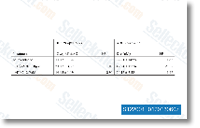
| Results | Table 2. shows the reversal effect of OSI-930 and Fumitremorgin C (FTC) on the cytotoxicity of mitoxantrone to HEK293/pcDNA3.1 and HEK293-ABCG2-482-R2. |
OSI-930 analogues as novel reversal agents for ABCG2-mediated multidrug resistance. [Kuang Y, et al. Biochem Pharmacol 2012;84(6):766-74]
c-KIT signaling is targeted by pathogenic Yersinia to suppress the host immune response. [Micheva-Viteva SN, et al. BMC Microbiol 2013;13(1):249]
