
Antibodies


Olaparib (AZD2281, KU0059436) is a selective inhibitor of PARP1/2 with IC50 of 5 nM/1 nM, 300-times less effective against tankyrase-1. Phase 1/2.
| Size | Price | Stock | Quantity | ||||||||||||||||||||
|---|---|---|---|---|---|---|---|---|---|---|---|---|---|---|---|---|---|---|---|---|---|---|---|
| |||||||||||||||||||||||
 Distributor Tel: +886-2-2827-1197jimmy@new.abscience.com.tw
| Description | Olaparib (AZD2281, KU0059436) is a selective inhibitor of PARP1/2 with IC50 of 5 nM/1 nM, 300-times less effective against tankyrase-1. Phase 1/2. | |||||
|---|---|---|---|---|---|---|
| Targets | PARP1 | PARP2 | ||||
| IC50 | 5 nM | 1 nM [1] | ||||
| In vitro | Olaparib would act against BRCA1 or BRCA2 mutations. Olaparib is not sensitive to tankyrase-1 (IC50 >1 μM). Olaparib could ablate the PARP-1 activity at concentrations of 30-100 nM in SW620 cells. Olaparib is hypersensitive to BRCA1-deficient cell lines (MDA-MB-463 and HCC1937), compared with BRCA1- and BRCA2-proficient cell lines (Hs578T, MDA-MB-231, and T47D). [1] Olaparib is strongly sensitive to KB2P cells due to suppression of base excision repair by PARP inhibition, which may result in the conversion of single-strand breaks to double-strand breaks during DNA replication, thus activating BRCA2-dependent recombination pathways. [2] | |||||
| In vivo | Combining with temozolomide, Olaparib (10 mg/kg, p.o.) significantly suppresses tumor growth in SW620 xenografts. [1] Olaparib shows great response to Brca1-/-;p53-/- mammary tumors (50 mg/kg i.p. per day), while no responses to HR-deficient Ecad-/-;p53-/- mammary tumors. Olaparib even does not show dose-limiting toxicity in tumor-bearing mice. [3] Olaparib has been used to treat with BRCA mutated tumors, such as ovarian, breast and prostate cancers. Moreover, Olaparib shows selectively inhibition to ATM (Ataxia Telangiectasia Mutated)-deficient tumor cells, which indicates to be a potential agent for treating ATM mutant lymphoid tumors.[4] | |||||
| Features | A potent PARP inhibitor (currently in late stage clinical trials). | |||||
| FlashPlate assay (96-well screening assay) | To columns 1 through 10, 1 μL of Olaparib (in DMSO) is added, and 1 μL DMSO only is added to the positive (POS) and negative (NEG) control wells (columns 11 and 12, respectively) of a pretreated FlashPlate. PARP-1 is diluted 1:40 in buffer (buffer B: 10% glycerol (v/v), 25 mM HEPES, 12.5 mM MgCl2,50 mM KCl, 1 mM DTT, 0.01% NP-40 (v/v), pH 7.6) and 40 μL added to all 96 wells (final PARP-1 concentration in the assay is ~1 ng/μL). The plate is sealed and shaken at RT for 15 min. Following this, 10 μL of positive reaction mix (0.2 ng/μL of double-stranded oligonucleotide [M3/M4] DNA per well, 5 μM of NAD+ final assay concentration, and 0.075 μCi3H-NAD+ per well) is added to the appropriate wells (columns 1-11). The negative reaction mix, lacking the DNA oligonucleotide, is added to column 12 (with the mean negative control value used as the background). The plate is resealed and shaken for a further 60 min at RT to allow the reaction to continue. Then, 50 μL of ice-cold acetic acid (30%) is added to each well to stop the reaction, and the plate is sealed and shaken for a further 60 min at RT. Tritiated signal bound to the FlashPlate is then determined in counts per minute (CPM) using the TopCount plate reader. |
|---|---|
| In vitro isolated enzyme assay | PARP-2 activity inhibition uses a variation of the PARP-1 assay in which PARP-2 protein (recombinant) is bound down by a PARP-2 specific antibody in a 96-well white-walled plate. PARP-2 activity is measured following 3H-NAD+ DNA additions. After washing, scintillant is added to measure 3H-incorporated ribosylations. For tankyrase-1, a α-Screen assay is developed in which HIS-tagged recombinant TANK-1 protein is incubated with biotinylated NAD+in a 384-well ProxiPlate assay. Alpha beads are added to bind the HIS and biotin tags to create proximity signal, whereas the inhibition of TANK-1 activity is directly proportional to the loss of this signal. |
| Cell lines | Breast cancer cell lines including SW620 colon, A2780 ovarian, HCC1937, Hs578T, MDA-MB-231, MDA-MB-436, and T47D |
|---|---|
| Concentrations | 1-300 nM |
| Incubation Time | 7-14 days |
| Method | The cytotoxicity of Olaparib is measured by clonogenic assay. Olaparib is dissolved in DMSO and diluted by culture media before use. The cells are seeded in six well plates and left to attach overnight. Then Olaparib is added at various concentrations and the cells are incubated for 7-14 days. After that the surviving colonies are counted for calculating the IC50. |
| Animal Models | Brca1-/-;p53-/- mammary tumors are generated in K14cre;Brca1F/F;p53F/F mice. |
|---|---|
| Dosages | 50 mg/kg |
| Administration | Administered via i.p. injection at 10 μL/g of body weight |
| Solubility | 15% Captisol, 15 mg/mL |
| NCT Number | Recruitment | Conditions | Sponsor /Collaborators | Start Date | Phases |
|---|---|---|---|---|---|
| NCT01562210 | Recruiting | NSCLC | The Netherlands Cancer Institute|AstraZeneca | 2012-04 | Phase 1 |
| NCT01650376 | Recruiting | Stage III Ovarian Cancer|Stage IV Ovarian Cancer|Uterine Cancer | Swedish Medical Center|AstraZeneca | 2012-08 | Phase 1|Phase 2 |
| NCT01661868 | Withdrawn | Ovarian Cancer|Peritoneal Cancer|Fallopian Tube Cancer | Dana-Farber Cancer Institute | 2012-08 | Phase 2 |
| NCT01788332 | Not yet recruiting | Non-small Cell Lung Cancer | Velindre NHS Trust|Lisette Nixon|AstraZeneca | 2013-05 | Phase 2 |
| NCT01858168 | Not yet recruiting | Ewing Sarcoma | Massachusetts General Hospital | 2013-05 | Phase 1 |
| Molecular Weight (MW) | 434.46 |
|---|---|
| Formula | C24H23FN4O3 |
| CAS No. | 763113-22-0 |
| Storage | 3 years -20℃Powder |
|---|---|
| 6 months-80℃in DMSO | |
| Syonnyms | KU-0059436 |
| Solubility (25°C) * | In vitro | DMSO | 87 mg/mL (200 mM) |
|---|---|---|---|
| Water | 0.002 mg/mL (<1 mM) | ||
| Ethanol | <1 mg/mL (<1 mM) | ||
| In vivo | 15% Captisol, | 15 mg/mL | |
| * <1 mg/ml means slightly soluble or insoluble. * Please note that Selleck tests the solubility of all compounds in-house, and the actual solubility may differ slightly from published values. This is normal and is due to slight batch-to-batch variations. | |||
| Chemical Name | 4-(3-(1-(cyclopropanecarbonyl)piperazine-4-carbonyl)-4-fluorobenzyl)phthalazin-1(2H)-one |
|---|
| Stock Solution (1ml DMSO) | 1mM | 10mM | 20mM | 30mM |
|---|---|---|---|---|
| Mass(mg) | 0.43446 | 4.3446 | 8.6892 | 13.0338 |
 Click to enlarge | Rating | |
| Source | Nucl Med Commun, 2011, 32(11), 1046-51. Olaparib (AZD2281, Ku-0059436) purchased from Selleck | |
| Method | Cell growth assay | |
| Cell Lines | human Burkitt lymphoma cells | |
| Concentrations | 500 nmol/L | |
| Incubation Time | 0-5 d | |
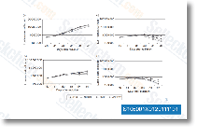
| Results | A volume of 500 nmol/l ABT-888 and AZD-2281 showed a moderate intrinsc effect on cell proliferation on days 3–5 (Fig. a). ABT-888 and AZD-2281 showed a significant ( P < 0.05) reduction in lymphoma cell growth on days 2–5 (Fig. b–d). |
Double-strand break repair-independent role for BRCA2 in blocking stalled replication fork degradation by MRE11. [Schlacher K, et al. Cell 2011;145(4):529-42]
53BP1 regulates DSB repair using Rif1 to control 5’ end resection. [Zimmermann M, et al. Science 2013;339(6120):700-4]
Site-specific characterization of the Asp- and Glu-ADP-ribosylated proteome. [Zhang Y, et al. Nat Methods 2013;10(10):981-4]
