
Antibodies


Nilotinib (AMN-107) is a Bcr-Abl inhibitor with IC50 less than 30 nM.
| Size | Price | Stock | Quantity | ||||||||||||||||
|---|---|---|---|---|---|---|---|---|---|---|---|---|---|---|---|---|---|---|---|
| |||||||||||||||||||
 Distributor Tel: +886-2-2827-1197jimmy@new.abscience.com.tw
| Description | Nilotinib (AMN-107) is a Bcr-Abl inhibitor with IC50 less than 30 nM. | |||||
|---|---|---|---|---|---|---|
| Targets | Bcr-Abl | |||||
| IC50 | 30 nM [1] | |||||
| In vitro | Nilotinib inhibits proliferation, migration, and actin filament formation, as well as the expression of α-SMA and collagen in activated HSCs. Nilotinib induces apoptosis of HSCs, which is correlated with reduced bcl-2 expression, increases p53 expression, cleavage of PARP, as well as increases expression of PPARγ and TRAIL-R. Nilotinib also induces cell cycle arrest, accompanied by increased expression of p27 and downregulation of cyclin D1. Interestingly, Nilotinib not only inhibits activation of PDGFR, but also TGFRII through Src. Nilotinib significantly inhibits PDGF and TGFβ-simulated phosphorylation of ERK and Akt. Furthermore, PDGF- and TGFβ-activated phosphorylated form(s) of Abl in human HSCs are inhibited by Nilotinib. [2] Nilotinib inhibits most imatinib-resistant Bcr-Abl mutations, except for T315I. [3] Nilotinib inhibits PDGF-DD-mediated ERK1/2 activation, basal and PDGF-DD-mediated activation of PDGFRβ and Akt, and schwannoma proliferation. Nilotinib is more potent than imatinib, exerting its maximal inhibitory effect at concentrations lower than steady-state trough plasma levels. [4] Nilotinib also significantly reduces the expression levels of the genes for TGF-β1 and platelet-derived growth factor (PDGF). Nilotinib treatment also significantly inhibits the PDGF-induced proliferation of lung fibroblasts. [5] Nilotinib inhibits the proliferation of Ba/F3 cells expressing p210- and p190-Bcr-Abl, or K562 and Ku-812F cells with IC50 values ≤12 nM. [6] | |||||
| In vivo | Nilotinib reduces collagen deposition and α-SMA expression in CCl4 and BDL-induced fibrosis. Nilotinib could induce HSC undergoing apoptosis, which is correlated with downregulation of bcl-2. [2] Nilotinib attenuates the extent of lung injury and fibrosis. Nilotinib therapy significantly reduces the levels of hydroxyproline on days 14 and 21, which is accompanied by decreased expression levels of transforming growth factor (TGF)-β1 and PDGFRβ. [5] AMN107 prolongs survival of mice injected with Bcr-Abl-transformed hematopoietic cell lines or primary marrow cells, and prolongs survival in imatinib-resistant CML mouse models. [6] | |||||
| Features | A selective inhibitor of native and mutant Bcr-Abl. | |||||
| Cell lines | Human primary Schwann and schwannoma cells |
|---|---|
| Concentrations | 1-10 μM |
| Incubation Time | 72 hours |
| Method | Human primary Schwann and schwannoma cells are seeded on precoated 96-well plates. Nilotinib is added 40 minutes before stimulation with 100 ng/mL PDGF-DD, and cells are cultured for 72 hours (3 days). Because the half-life of Nilotinib is 18 hours, one-half of the originally added concentrations are added freshly every day. In addition to DAPI staining and determination of the total cell number, the more sensitive and accurate BrdU incorporation method is used to detect proliferating cells. Total cell amount (DAPI) and number of dividing cells (BrdU-positive) are blindly counted using an inverted fluorescent microscope and 200 × magnification. All cells in every well are counted. The total cell number per well differed between various cell batches and is 100–300 cells/well. |
| Animal Models | Systemic 32D Bcr-Abl leukemia model in Female BALB/c mice, Bioluminescent Bcr-Abl model of CML in Female NOD-SCID mice and Bone marrow transplant Bcr-Abl model of CML in syngeneic Balb/c recipient mice |
|---|---|
| Dosages | 75 mg/kg, 100 mg/kg |
| Administration | Oral administration |
| Solubility | 0.5% methylcellulose/0.2% Tween 80 30 mg/mL |
| NCT Number | Recruitment | Conditions | Sponsor /Collaborators | Start Date | Phases |
|---|---|---|---|---|---|
| NCT01744665 | Recruiting | CML | Novartis|Novartis Pharmaceuticals | 2013-05 | Phase 2 |
| NCT01863745 | Active, not recruiting | Gastrointestinal Stromal Tumors | Novartis|Novartis Pharmaceuticals | 2013-06 | Phase 2 |
| NCT01806571 | Recruiting | Adult Acute Basophilic Leukemia|Adult Acute Eosinophilic Leukemia|Adult Acute Megakaryoblastic Leukemia (M7)|Adult Acute Minimally Differentiated Myeloid Leukemia (M0)|Adult Acute Monoblastic Leukemia | Mayo Clinic | 2013-07 | Phase 2 |
| NCT01844765 | Recruiting | Leukemia|Leukemia,Pediatric|Leukemia, Myleiod|Leukemia, Mylegenous, Chronic|Leukemia, Mylegenous, Accelerated|BCR-ABL Positive|Myeloproliferative Disorder|Bone Marrow Disease|Hematologic Diseases|Neop | Novartis|Novartis Pharmaceuticals|Children’s Oncology Group|Innovative Therapies for Children with Cancer, European Consortium | 2013-08 | Phase 2 |
| NCT01605981 | Not yet recruiting | Chronic Myeloid Leukemia (CML) | Novartis|Novartis Pharmaceuticals | 2014-02 | Phase 4 |
Download Nilotinib (AMN-107) SDF
| Molecular Weight (MW) | 529.52 |
|---|---|
| Formula | C28H22F3N7O |
| CAS No. | 641571-10-0 |
| Storage | 3 years -20℃Powder |
|---|---|
| 6 months-80℃in DMSO | |
| Syonnyms | Tasigna |
| Solubility (25°C) * | In vitro | DMSO | 27 mg/mL (50 mM) |
|---|---|---|---|
| Water | <1 mg/mL (<1 mM) | ||
| Ethanol | <1 mg/mL (<1 mM) | ||
| In vivo | 0.5% methylcellulose/0.2% Tween 80 | 30 mg/mL | |
| * <1 mg/ml means slightly soluble or insoluble. * Please note that Selleck tests the solubility of all compounds in-house, and the actual solubility may differ slightly from published values. This is normal and is due to slight batch-to-batch variations. | |||
| Chemical Name | 4-methyl-N-(3-(4-methyl-1H-imidazol-1-yl)-5-(trifluoromethyl)phenyl)-3-(4-(pyridin-3-yl)pyrimidin-2-ylamino)benzamide |
|---|
| Stock Solution (1ml DMSO) | 1mM | 10mM | 20mM | 30mM |
|---|---|---|---|---|
| Mass(mg) | 0.52952 | 5.2952 | 10.5904 | 15.8856 |
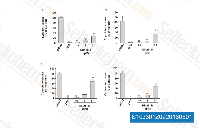 Click to enlarge | Rating | |
| Source | Leukemia Research, 36 (2012) 1311– 1314. Nilotinib (AMN-107) purchased from Selleck | |
| Method | Thymidine uptake Uptake assay | |
| Cell Lines | K562, MEG-01 cells | |
| Concentrations | 0.1-10uM | |
| Incubation Time | 20 min | |
| Results | Nilotinib was much more potent than imatinib to inhibit nucleoside transport. It prevented the uptake of thymidine in K562 cells by 97% at 10 uM, a level that was similar to the one obtained with the vasodilatator molecule dipyridamole. Nilotinib was also very efficient at 1 and 0.1 uM; it blocked the entry of thymidine by 90 and 74%, respectively (Fig. 2a). With the MEG-01 cell line, nilotinib was also extremely potent and blocked the entry of thymidine by 96, 92 and 60% with 10, 1 and 0.1 uM nilotinib, respectively (Fig. 2b). |
Glucosylceramide synthase inhibitor PDMP sensitizes chronic myeloid leukemia T315I mutant to Bcr-Abl inhibitor and cooperatively induces glycogen synthase kinase-3-regulated apoptosis. [Huang WC, et al. FASEB J 2011;25(10):3661-73]
Simultaneous quantification of ruxolitinib and nilotinib in rat plasma by LC–MS/MS: Application to a pharmacokinetic study [Sridhar Veeraraghavan J PHARMACEUT BIOMED 2014;10.1016/j.jpba.2014.01.040]
Imatinib and Nilotinib inhibit Bcr-Abl-induced ROS through targeted degradation of the NADPH oxidase subunit p22phox. [Landry WD, et al. Leuk Res 2012;37(2):183-9]
