
Antibodies


Motesanib Diphosphate (AMG-706) is a potent ATP-competitive inhibitor of VEGFR1/2/3 with IC50 of 2 nM/3 nM/6 nM, respectively; similar activity against Kit, ~10-fold more selective for VEGFR than PDGFR and Ret. Phase 1/2.
| Size | Price | Stock | Quantity | ||||||||||||||||||||
|---|---|---|---|---|---|---|---|---|---|---|---|---|---|---|---|---|---|---|---|---|---|---|---|
| |||||||||||||||||||||||
 Distributor Tel: +886-2-2827-1197jimmy@new.abscience.com.tw
| Description | Motesanib Diphosphate (AMG-706) is a potent ATP-competitive inhibitor of VEGFR1/2/3 with IC50 of 2 nM/3 nM/6 nM, respectively; similar activity against Kit, ~10-fold more selective for VEGFR than PDGFR and Ret. Phase 1/2. | |||||
|---|---|---|---|---|---|---|
| Targets | VEGFR1 | VEGFR2 | VEGFR3 | PDGFR | c-Kit | Ret |
| IC50 | 2 nM | 3 nM | 6 nM | 84 nM | 8 nM | 59 nM [1] |
| In vitro | Motesanib Diphosphate has broad activity against the human VEGFR family, and displays >1000 selectivity against EGFR, Src, and p38 kinase. Motesanib Diphosphate significantly inhibits VEGF-induced cellular proliferation of HUVECs with an IC50 of 10 nM, while displaying little effect at bFGF-induced proliferation with an IC50 of >3,000 nM. Motesanib Diphosphate also potently inhibits PDGF-induced proliferation and SCF-induced c-kit phosphorylation with IC50 of 207 nM and 37 nM, respectively, but not effective against the EGF-induced EGFR phosphorylation and cell viability of A431 cells. [1] Althouth displaying little antiproliferative activity on cell growth of HUVECs alone, Motesanib Diphosphate treatment significantly sensitizes the cells to fractionated radiation. [2] | |||||
| In vivo | Administration of Motesanib Diphosphate at 100 mg/kg significantly inhibits VEGF-induced vascular permeability in a time-dependent manner. Oral administration of Motesanib Diphosphate twice daily or once daily potently inhibits, in a dose-dependent manner, VEGF-induced angiogenesis using the rat corneal model with ED50 of 2.1 mg/kg and 4.9 mg/kg, respectively. Motesanib Diphosphate induces a dose-dependent tumor regression of established A431 xenografts by selectively targeting neovascularization in tumor cells. [1]Administration of Motesanib Diphosphate in combination with radiation displays significant anti-tumor activity in head and neck squamous cell carcinoma (HNSCC) xenograft models. [2] Motesanib Diphosphate treatment also induces significant dose-dependent reductions in tumor growth and blood vessel density of MCF-7, MDA-MB-231, or Cal-51 xenografts, which can be markedly enhanced when combined with docetaxel or tamoxifen.[3] | |||||
| Features | ||||||
| In vitro kinase assays | Optimal enzyme, ATP, and substrate (gastrin peptide) concentrations are established for each enzyme using homogeneous time-resolved fluorescence (HTRF) assays. Motesanib Diphosphate is tested in a 10-point dose-response curve for each enzyme using an ATP concentration of two-thirds Km for each. Most assays consist of enzyme mixed with kinase reaction buffer [20 mM Tris-HCl (pH 7.5), 10 mM MgCl2, 5 mM MnCl2, 100 mM NaCl, 1.5 mM EGTA]. A final concentration of 1 mM DTT, 0.2 mM NaVO4, and 20 μg/mL BSA is added before each assay. For all assays, 5.75 mg/mL streptavidin-allophycocyanin and 0.1125 nM Eu-PT66 are added immediately before the HTRF reaction. Plates are incubated for 30 minutes at room temperature and read on a Discovery instrument. IC50 values are calculated using the Levenberg-Marquardt algorithm into a four-parameter logistic equation. |
|---|
| Cell lines | A431, MO7e, HUVEC and NHDF cells |
|---|---|
| Concentrations | Dissolved in DMSO, final concentrations ~25 μM |
| Incubation Time | 2 hours |
| Method | Cells are preincubated for 2 hours with different concentrations of Motesanib Diphosphate, and exposed with 50 ng/mL VEGF or 20 ng/mL bFGF for an additional 72 hours. Cells are washed twice with DPBS, and plates are frozen at -70 °C for 24 hours. Proliferation is assessed by the addition of CyQuant dye, and plates are read on a Victor 1420 workstation. IC50 data are calculated using the Levenberg-Marquardt algorithm into a four-parameter logistic equatio |
| Animal Models | Female Sprague-Dawley rats with induced corneal angiogenesis, and female CD-1 nu/nu mice injected s.c. with A431 cells |
|---|---|
| Dosages | ~100 mg/kg |
| Administration | Orally administered twice daily or once daily |
| Solubility | Saline, 30 mg/mL |
| NCT Number | Recruitment | Conditions | Sponsor /Collaborators | Start Date | Phases |
|---|---|---|---|---|---|
| NCT00574951 | Active, not recruiting | Fallopian Tube Cancer|Ovarian Cancer|Primary Peritoneal Cavity Cancer | National Cancer Institute (NCI)|Gynecologic Oncology Group | 2007-12 | Phase 2 |
| NCT00427349 | Active, not recruiting | Gastrointestinal Carcinoid Tumor|Islet Cell Tumor|Neoplastic Syndrome | National Cancer Institute (NCI)|Eastern Cooperative Oncology Group | 2008-09 | Phase 2 |
| NCT01386866 | Completed | Advanced Solid Tumors | Amgen | 2009-05 | Phase 1 |
| NCT01700699 | Recruiting | Differentiated Thyroid Cancer | University of Salerno | 2012-10 | |
| NCT01349088 | Not yet recruiting | Breast Cancer|Metastatic Breast Cancer|Stage IV Breast Cancer | Thomas Jefferson University|Susan G. Komen Breast Cancer Foundation|Amgen | 2013-12 | Phase 1|Phase 2 |
Download Motesanib Diphosphate (AMG-706) SDF
| Molecular Weight (MW) | 569.44 |
|---|---|
| Formula | C22H23N5O.2H3PO4 |
| CAS No. | 857876-30-3 |
| Storage | 3 years -20℃Powder |
|---|---|
| 6 months-80℃in DMSO | |
| Syonnyms | N/A |
| Solubility (25°C) * | In vitro | DMSO | 100 mg/mL (175 mM) |
|---|---|---|---|
| Water | 100 mg/mL (175 mM) | ||
| Ethanol | <1 mg/mL (<1 mM) | ||
| In vivo | Saline, | 30 mg/mL | |
| * <1 mg/ml means slightly soluble or insoluble. * Please note that Selleck tests the solubility of all compounds in-house, and the actual solubility may differ slightly from published values. This is normal and is due to slight batch-to-batch variations. | |||
| Chemical Name | 3-Pyridinecarboxamide, N-(2,3-dihydro-3,3-dimethyl-1H-indol-6-yl)-2-[(4-pyridinylmethyl)amino]-, phosphate (1:2) |
|---|
| Stock Solution (1ml DMSO) | 1mM | 10mM | 20mM | 30mM |
|---|---|---|---|---|
| Mass(mg) | 0.56944 | 5.6944 | 11.3888 | 17.0832 |
 Click to enlarge | Rating | |
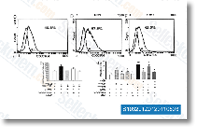
| Source | Cardiovasc Res. Motesanib Diphosphate (AMG-706) purchased from Selleck | |
| Method | FACS analysis | |
| Cell Lines | cardiac stem cell (CSC) | |
| Concentrations | 2 nM | |
| Incubation Time | 30 min | |
| Results | All VEGFR inhibitors (incuding AMG-706, inhibited VEGFCM-mediated CSC migration. |
VEGF/SDF-1 promotes cardiac stem cell mobilization and myocardial repair in the infarcted heart. [Tang JM, et al. Cardiovasc Res 2011;91(3):402-11]
Ponatinib is a potent inhibitor of wild-type and drug-resistant gatekeeper mutant RET kinase. [Mologni L, et al. Mol Cell Endocrinol 2013;377(1-2):1-6]
