
Antibodies


Mocetinostat (MGCD0103) is a potent HDAC inhibitor with most potency for HDAC1 with IC50 of 0.15 μM, 2- to 10- fold selectivity against HDAC2, 3, and 11, and no activity to HDAC4, 5, 6, 7, and 8. Phase 1/2.
| Size | Price | Stock | Quantity | ||||||||||||||||||||
|---|---|---|---|---|---|---|---|---|---|---|---|---|---|---|---|---|---|---|---|---|---|---|---|
| |||||||||||||||||||||||
 Distributor Tel: +886-2-2827-1197jimmy@new.abscience.com.tw
| Description | Mocetinostat (MGCD0103) is a potent HDAC inhibitor with most potency for HDAC1 with IC50 of 0.15 μM, 2- to 10- fold selectivity against HDAC2, 3, and 11, and no activity to HDAC4, 5, 6, 7, and 8. Phase 1/2. | |||||
|---|---|---|---|---|---|---|
| Targets | HDAC1 | HDAC2 | HDAC3 | |||
| IC50 | 0.15 μM | 0.29 μM | 1.66 μM [1] | |||
| In vitro | MGCD0103 inhibits only a subset of the nine human recombinant HDACs, including HDAC1, HDAC2, HDAC3, and HDAC11 at nanomolar or low micromolar concentrations, in a dose-dependent manner. MGCD0103 reveals most potent inhibitory activity against human HDAC1 and HDAC2 enzymes in vitro, and it does not inhibit class II HDACs. The exocyclic amino group in MGCD0103 is necessary for enzyme inhibitory activity because HDAC-inhibitory activity against HDAC1 and HDAC2 is completely abolished with the desamino analogue. The inhibitory activity of MGCD0103 reaches the maximum plateau at 6 μM, and the maximal inhibitable enzyme pool affected by MGCD0103 is 75% of the total enzyme activity in HCT116 cells whereas NVP-LAQ824 inhibits almost 100% of that in these cells. In A549 cells, MGCD0103 also exhibits dose-dependent inhibition of HDAC activity in whole cells. [1] | |||||
| In vivo | MGCD0103 significantly inhibites growth of human tumor xenografts in nude mice and the antitumor activity correlated with induction of histone acetylation in tumors. P.O. administration of MGCD0103 (2HBr salt) significantly decreases growth of implanted advanced A549 tumors in nude mice in a dose-dependent manner after 13 days of daily administration. MGCD0103 (170 mg/kg for 2HBr salt, corresponding to 120 mg/kg of free base) significantly blockes growth of tumors compared with vehicle treatment alone with no change in body weight. In addition, MGCD0103 does not reduce WBC counts and is well tolerated. MGCD0103 is also orally active in many other human tumor xenograft models including NSCLC H1437. MGCD0103 at 80 mg/kg (free base) almost completely blocks the growth of H1437 tumors after 13 days of daily p.o. administration with no reduction of body weight in animals. [1] MGCD0103 reduces pulmonary arterial pressure more dramatically than tadalafil, a standard-of-care therapy for human pulmonary hypertension that functions as a vasodilator. Moreover, MGCD0103 improves pulmonary artery acceleration time and reduced systolic notching of the pulmonary artery flow envelope, which suggests a positive impact of the HDAC inhibitor on pulmonary vascular remodeling and stiffening. [2] | |||||
| Features | ||||||
| HDAC enzyme assay in vitro | The deacetylase enzyme assay is based on a homogeneous fluorescence release assay. Purified recombinant HDAC enzymes are incubated with MGCD0103 diluted in various concentrations for 10 minutes in assay buffer [25 mM HEPES (pH 8.0), 137 mM NaCl, 1 mM MgCl2, 2.7 mM KCl] at room temperature. The substrate Boc-Lys(ε-Ac)-AMC is added to the reaction for further incubation at 37 °C. The concentration of the substrate and the incubation time varies for different isotypes of HDAC enzymes. A 20-min trypsin incubation at room temperature allows the release of the fluorophore from the deacetylated substrate. The fluorescent signal is detected by fluorometer at excitation of 360 nm, emission of 470 nm, and cutoff at 435 nm. |
|---|
| Cell lines | Human mammary epithelial cells (HMEC), human foreskin fibroblasts (MRHF) cells |
|---|---|
| Concentrations | 0-60 μM |
| Incubation Time | 72 hours |
| Method | Human mammary epithelial cells (HMEC) and human foreskin fibroblasts (MRHF) cells in 96-well plates are incubated with MGCD0103 at various concentrations for 72 hours at 37 °C in 5% CO2. MTT is added at a final concentration of 0.5 mg/ml and incubated with the cells for 4 hours before an equal volume of solubilization buffer [50% N,N-dimethylformamide, 20% SDS (pH 4.7)] is added. After overnight incubation, solubilized dye is quantified by reading at 570 nm using a reference at 630 nm. Absorbance values are converted to cell numbers according to a standard growth curve of the relevant cell line. The concentration which reduces cell numbers to 50% relative to DMSO-treated cells is determined as MTT IC5 |
| Animal Models | Female CD-1 nude mice bearing H1437 tumors |
|---|---|
| Dosages | 80 mg/kg |
| Administration | Administered via p.o. |
| Solubility | 30% PEG400/0.5% Tween80/5% propylene glycol, 30 mg/mL |
| NCT Number | Recruitment | Conditions | Sponsor /Collaborators | Start Date | Phases |
|---|---|---|---|---|---|
| NCT00431873 | Completed | Lymphocytic Leukemia, Chronic | MethylGene Inc. | 2007-01 | Phase 2 |
| NCT00511576 | Terminated | Breast Cancer|Lung Cancer|Pulmonary Cancer|Non-Small-Cell Lung Carcinoma|Prostate Cancer|Prostatic Cancer|Gastric Cancer|Stomach Cancer | MethylGene Inc. | 2007-08 | Phase 1 |
| NCT00543582 | Terminated | Hodgkin Lymphoma|Non-Hodgkin Lymphoma (Follicular or Large Diffuse B-cell Lymphoma or Mantle Cell Lymphoma) | MethylGene Inc. | 2007-10 | Phase 2 |
| NCT00666497 | Terminated | Acute Myeloid Leukemia (AML)|Myelodysplastic Syndrome (MDS) | MethylGene Inc. | 2008-06 | Phase 2 |
| NCT02018926 | Recruiting | Myelodysplastic Syndrome | MethylGene Inc. | 2013-12 | Phase 1 |
Download Mocetinostat (MGCD0103) SDF
| Molecular Weight (MW) | 396.44 |
|---|---|
| Formula | C23H20N6O |
| CAS No. | 726169-73-9 |
| Storage | 3 years -20℃Powder |
|---|---|
| 6 months-80℃in DMSO | |
| Syonnyms | N/A |
| Solubility (25°C) * | In vitro | DMSO | 13 mg/mL (32 mM) |
|---|---|---|---|
| Water | <1 mg/mL (<1 mM) | ||
| Ethanol | <1 mg/mL (<1 mM) | ||
| In vivo | 30% PEG400/0.5% Tween80/5% propylene glycol, | 30 mg/mL | |
| * <1 mg/ml means slightly soluble or insoluble. * Please note that Selleck tests the solubility of all compounds in-house, and the actual solubility may differ slightly from published values. This is normal and is due to slight batch-to-batch variations. | |||
| Chemical Name | N-(2-aminophenyl)-4-((4-(pyridin-3-yl)pyrimidin-2-ylamino)methyl)benzamide |
|---|
| Stock Solution (1ml DMSO) | 1mM | 10mM | 20mM | 30mM |
|---|---|---|---|---|
| Mass(mg) | 0.39644 | 3.9644 | 7.9288 | 11.8932 |
 Click to enlarge | Rating | |
| Source | PLoS ONE 7(12), e52095. Mocetinostat (MGCD0103) purchased from Selleck | |
| Method | Western blot | |
| Cell Lines | PANC1/AsPc-1/BxPC-3/HPDE cells | |
| Concentrations | 0.125-1uM | |
| Incubation Time | 96 h | |
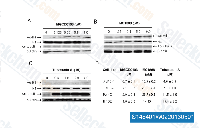
| Results | Treatments of PANC-1 cells with variable concentrations of MGCD0103 (0–1.0 uM) resulted in a dose-dependent hyperacetylation of histone H4, while having no effects on alpha-tubulin (a HDAC6 substrate) acetylation or total H4 levels (Figure 2A). Treatments with MC1568 also resulted in acetylation of histone H4 (obvious at 5 and 10 uM), however, to a much lesser extent compared to MGCD0103, and the levels of acetylated histone H4 plateaued at 5 and 10 uM. Further, these treatments had no impact on alpha-tubulin acetylation. |
Acetylation limits 53BP1 association with damaged chromatin to promote homologous recombination. [Tang J, et al. Nat Struct Mol Biol 2013;20(3):317-25]
Selective class I histone deacetylase inhibition suppresses hypoxia-induced cardiopulmonary remodeling through an antiproliferative mechanism. [Cavasin MA, et al. Circ Res 2012;110(5):739-48]
Selective cancer targeting with prodrugs activated by histone deacetylases and a tumour-associated protease. [Ueki N, et al. Nat Commun 2013;4:2735]
