
- 貨號 Cat. No.
- S2181
- 規格 Size
- 5~200mg
- 品牌 Brand
- Selleckchem
Description
MLN9708
MLN9708 immediately hydrolyzed to MLN2238, the biologically active form, on exposure to aqueous solutions or plasma. MLN2238 inhibits the chymotrypsin-like proteolytic (β5) site of the 20S proteasome with IC50/Ki of 3.4 nM/0.93 nM, less potent to β1 and little activity to β2. Phase 3.
Size |
Price |
Stock |
Quantity |
|
|---|
10mM/1mLIn DMSO |
USD 441 |
In stock |
0
1
2
3
4
5
6
7
8
9
10
|
5mg |
USD 214 |
In stock |
0
1
2
3
4
5
6
7
8
9
10
|
10mg |
USD 403 |
In stock |
0
1
2
3
4
5
6
7
8
9
10
|
50mg |
USD 1222 |
In stock |
0
1
2
3
4
5
6
7
8
9
10
|
200mg |
USD 3112 |
In stock |
0
1
2
3
4
5
6
7
8
9
10
|
|
 Distributor Tel: +886-2-2827-1197jimmy@new.abscience.com.tw
Biological Activity
Description |
MLN9708 immediately hydrolyzed to MLN2238, the biologically active form, on exposure to aqueous solutions or plasma. MLN2238 inhibits the chymotrypsin-like proteolytic (β5) site of the 20S proteasome with IC50/Ki of 3.4 nM/0.93 nM, less potent to β1 and little activity to β2. Phase 3. |
|---|
Targets |
20S proteasome |
|
|
|
|
|
|---|
IC50 |
3.4 nM (IC50), 0.93 nM(Ki) [1] |
|
|
|
|
|
|---|
In vitro |
MLN9708 is a selective, orally bioavailable, second-generation proteasome inhibitor. MLN9708 has a shorter proteasome dissociation half-life and improved pharmacokinetics, pharmacodynamics, and antitumor activity compared with bortezomib, which we believe plays an important role in its improved tissue distribution. MLN9708 has a larger blood volume distribution at steady state, and analysis of 20S proteasome inhibition and markers of the unfolded protein response confirms that MLN9708 has greater pharmacodynamic effects in tissues than bortezomib. MLN9708 is a second-generation small-molecule proteasome inhibitor being developed for the treatment of a broad range of human malignancies. [1] Upon exposure to aqueous solutions or plasma, MLN9708 rapidly hydrolyzes to its biologically active form MLN2238. [2] MLN2238 is the biologically active form of MLN9708. [3] |
|---|
In vivo |
MLN9708 shows superior antitumor activity in both solid tumor and hematologic preclinical xenograft models when administered via multiple dosing routes and regimens. [1] Recent preclinical pharmacology studies shows that MLN9708 has a shorter proteasome dissociation half-life than bortezomib, as well as improved pharmacokinetics, pharmacodynamics, and antitumor activity in xenograft models [2] MLN9708 has shown antitumor efficacy in a wide range of tumor xenografts. [4] |
|---|
Features |
The 1st oral proteasome inhibitor in early stage clinical trials for Multiple Myeloma. |
|---|
Protocol(Only for Reference)
Kinase Assay: [1]
Kinase assay |
Calu-6 cells are cultured in MEM containing 10% fetal bovine serum and 1% penicillin/streptomycin and plated 1 day before the start of the experiment at 1 × 10⁴ cells per well in a 384-well plate. Proteasome activity is assessed by monitoring hydrolysis of the chymotrypsin-like substrate Suc-LLVY-aminoluciferin in the presence of luciferase using the Proteasome-Glo assay reagents according to the manufacturer’s instructions. Luminescence is measured using a LEADseeker instrument. |
|---|
Cell Assay: [1]
Cell lines |
Calu-6 cells |
|---|
Concentrations |
~10 nM |
|---|
Incubation Time |
1 hour or 30 minutes |
|---|
Method |
Calu-6 cells are cultured in MEM containing 10% FBS and 1% penicillin/streptomycin and plated 1 day before the start of the experiment at 1 × 10⁴ cells per well in a 384-well plate. For IC50 determinations, cells are treated with varying concentrations of Bortezomib or MLN2238 in DMSO (0.5% final, v/v) for 1 hour at 37 °C. For reversibility experiments, cells are treated with either 1 μM Bortezomib or MLN2238 for 30 minutes at 37 °C and then washed thrice in medium to remove the Bortezomib or MLN2238. Cells are incubated for an additional 4 hours at 37 °C, after which the medium is removed and replaced with fresh medium. |
|---|
Animal Study: [2]
Animal Models |
CB-17 SCID mice are subcutaneously inoculated with MM.1S cells |
|---|
Dosages |
11 mg/kg |
|---|
Administration |
Twice weekly for 3 weeks (i.v.) |
|---|
Solubility |
0.5% hyroxyethylcellulose., 30 mg/mL |
|---|
1
References
Clinical Trial Information( data from http://clinicaltrials.gov)
NCT Number |
Recruitment |
Conditions |
Sponsor
/Collaborators |
Start Date |
Phases |
|---|
NCT01645930 |
Recruiting |
Multiple Myeloma |
Millennium Pharmaceuticals, Inc. |
2012-12 |
Phase 1 |
NCT01718743 |
Recruiting |
Myeloma |
M.D. Anderson Cancer Center|Millennium Pharmaceuticals, Inc. |
2012-12 |
Phase 1 |
NCT01830816 |
Recruiting |
Multiple Myeloma |
Millennium Pharmaceuticals, Inc. |
2013-05 |
Phase 1 |
NCT01850524 |
Recruiting |
Multiple Myeloma |
Millennium Pharmaceuticals, Inc. |
2013-05 |
Phase 3 |
NCT01864018 |
Not yet recruiting |
Stage I Multiple Myeloma|Stage II Multiple Myeloma|Stage III Multiple Myeloma |
Mayo Clinic|National Cancer Institute (NCI) |
2013-07 |
Phase 1|Phase 2 |
Download MLN9708 SDF
Molecular Weight (MW) |
517.12 |
|---|
Formula |
C20H23BCl2N2O9
|
|---|
CAS No. |
1201902-80-8 |
|---|
Storage |
3 years -20℃Powder |
|---|
6 months-80℃in DMSO |
Syonnyms |
N/A |
|---|
Solubility (25°C) * |
In vitro |
DMSO |
103 mg/mL (199 mM) |
|---|
Water |
<1 mg/mL (<1 mM) |
Ethanol |
<1 mg/mL (<1 mM) |
In vivo |
0.5% hyroxyethylcellulose., |
30 mg/mL |
* <1 mg/ml means slightly soluble or insoluble.
* Please note that Selleck tests the solubility of all compounds in-house, and the actual solubility may differ slightly from published values. This is normal and is due to slight batch-to-batch variations. |
Chemical Name |
4-(carboxymethyl)-2-((R)-1-(2-(2,5-dichlorobenzamido)acetamido)-3-methylbutyl)-6-oxo-1,3,2-dioxaborinane-4-carboxylic acid |
|---|
Stock Solution (1ml DMSO) |
1mM |
10mM |
20mM |
30mM |
|---|
Mass(mg) |
0.51712 |
5.1712 |
10.3424 |
15.5136 |
Customer Reviews (1)
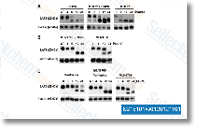
Click to enlarge |
Rating |
|
Source |
Mol Cell Proteomics, 2012, 11(12), 1898-1912 . MLN9708 purchased from Selleck |
Method |
Western Blot |
Cell Lines |
NB4 cells |
Concentrations |
5 μM |
Incubation Time |
30 min |
Results |
In these experiments, the presence of MLN9708 caused an accumulation of LAT2 after ODPC (Fig. B)or perifosine (Fig. C) treatment, confirming that LAT2 is degraded by proteasomes after treatment with APL. |
Product Citations (1)
詢價 / 洽詢此產品


