
Antibodies


MK-4827 is a selective inhibitor of PARP1/2 with IC50 of 3.8 nM/2.1 nM, with great activity in cancer cells with mutant BRCA-1 and BRCA-2. It is >330-fold selective against PARP3, V-PARP and Tank1. Phase 3.
| Availability |
|---|
The item is temporarily out of stock. Please leave your email address and we will inform you when we have it in stock. Just click the Arrival Notice and leave your email address to get 10% off. Arrival Notice |
 Distributor Tel: +886-2-2827-1197jimmy@new.abscience.com.tw
| Description | MK-4827 is a selective inhibitor of PARP1/2 with IC50 of 3.8 nM/2.1 nM, with great activity in cancer cells with mutant BRCA-1 and BRCA-2. It is >330-fold selective against PARP3, V-PARP and Tank1. Phase 3. | |||||
|---|---|---|---|---|---|---|
| Targets | PARP1 | PARP2 | ||||
| IC50 | 3.8 nM | 2.1 nM [1] | ||||
| In vitro | MK-4827 displays excellent PARP 1 and 2 inhibition with IC(50) = 3.8 and 2.1 nM, respectively, and in a whole cell assay, it inhibits PARP activity with EC(50) = 4 nM and inhibits proliferation of cancer cells with mutant BRCA-1 and BRCA-2 with CC(50) in the 10-100 nM range. [1] | |||||
| In vivo | MK-4827 is well tolerated in vivo and demonstrates efficacy as a single agent in a xenograft model of BRCA-1 deficient cancer. [1] In addition, MK-4827 strongly enhances the effect of radiation on a variety of human tumor xenografts, both p53 wild type and p53 mutant. The enhancement of radiation response is observed in clinically relevant radiation-dose fractionation schedules. The therapeutic window during which time MK-4827 interacts with radiation lasts for several hours. These biological attributes make translation of this therapeutic combination treatment feasible for translation to the treatment of a variety of human cancers. [2] | |||||
| Features | ||||||
| PARP-1 SPA Assay | Enzyme assay is conducted in buffer containing 25 mM Tris, pH 8.0, 1 mM DTT, 1 mM spermine, 50 mM KCl, 0.01% Nonidet P-40, and 1 mM MgCl2. PARP reactions contains 0.1 μCi [3H] NAD+ (200 000 DPM), 1.5 μM NAD+, 150 nM biotinylated NAD+, 1 μg/mL activated calf thymus, and 1-5 nM PARP-1. Autoreactions utilizing SPA bead-based detection are carried out in 50 μL volumes in white 96-well plates. Compounds are prepared in 11-point serial dilution in 96-well plate, 5 μL/well in 5% DMSO/H2O (10×concentrated). Reactions are initiated by adding first 35 μL of PARP-1 enzyme in buffer and incubating for 5 min at room temperature and then 10 μL of NAD+ and DNA substrate mixture. After 3 h at room temperature, these reactions are terminated by the addition of 50 μL of streptavidin-SPA beads (2.5 mg/mL in 200 mM EDTA, pH 8). After 5 min, they are counted using a TopCount microplate scintillation counter. IC50 data is determined from inhibition curves at various substrate concentrations. |
|---|
| Cell lines | MDA-MB-436, CAPAN-1 cells, human prostate epithelial, human mammary epithelial |
|---|---|
| Concentrations | 0-5 mM |
| Incubation Time | 7 days |
| Method | Proliferation assays are conducted in 96-well black viewplates, and 300 cells/well (250 cell/well for BRCA-1 wt) in culture medium, 190 μL/well (DMEM containing 10% FCS, 0.1 mg/mL penicillin-streptomycin, and 2 mM L-glutamine), are plated and incubated for 4 h at 37 °C under 5% CO2 atmosphere. Inhibitors are then added with serial dilutions, 10 μL/well to obtain the desired final compound concentration in 0.5% DMSO. The cells are then incubated for 7 days at 37 °C in 5% CO2 after which time viability is assessed. Briefly, with CellTiter-Blue solution prediluted 1:10 in medium, 100 μL/well is added and the cells left for 45 min at 37 °C under 5% CO2and then a further 15 min at room temperature in the dark. The number of living cells is determined by reading the plate at fluorimeter, excitation at 550 nm and emission at 590 nm. Cell growth is expressed as the percentage growth with respect to vehicle treated cells. The concentration required to inhibit cell growth by 50% (CC50) is determined. |
| Animal Models | Xenograft model of BRCA-1 deficient cancer |
|---|---|
| Dosages | 100 mg/kg q.d. or 50 mg/kg b.i.d |
| Administration | Orally |
| NCT Number | Recruitment | Conditions | Sponsor /Collaborators | Start Date | Phases |
|---|---|---|---|---|---|
| NCT01110603 | Terminated | Cancer: Solid Tumors | Merck | 2010-07 | Phase 1 |
| NCT01226901 | Terminated | Neoplasms|Solid Tumors | Merck | 2010-11 | Phase 1 |
| NCT01227941 | Terminated | Ovarian Cancer | Merck | 2010-11 | Phase 1 |
| NCT01244009 | Withdrawn | Lymphoma|Mantle-Cell | Merck | 2010-12 | Phase 2 |
| NCT01294735 | Completed | Recurrence of Solid Tumor|Glioblastoma Multiforme|Melanoma | Merck | 2011-02 | Phase 1 |
Download MK-4827 (Niraparib) SDF
| Molecular Weight (MW) | 320.39 |
|---|---|
| Formula | C19H20N4O |
| CAS No. | 1038915-60-4 |
| Storage | 3 years -20℃Powder |
|---|---|
| 6 months-80℃in DMSO | |
| Syonnyms | N/A |
| Solubility (25°C) * | In vitro | DMSO | mg/mL (<1 mM) |
|---|---|---|---|
| Water | mg/mL (<1 mM) | ||
| Ethanol | mg/mL (<1 mM) | ||
| * <1 mg/ml means slightly soluble or insoluble. * Please note that Selleck tests the solubility of all compounds in-house, and the actual solubility may differ slightly from published values. This is normal and is due to slight batch-to-batch variations. | |||
| Chemical Name | (S)-2-(4-(piperidin-3-yl)phenyl)-2H-indazole-7-carboxamide |
|---|
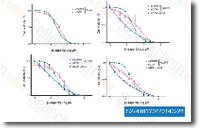 Click to enlarge | Rating | |
| Source | Oncogene, 2013, 32(47):5377-87. MK-4827 (Niraparib) purchased from Selleck | |
| Method | long-term colony-formation assays | |
| Cell Lines | ERCC1-proï¬cient cells | |
| Concentrations | ||
| Incubation Time | 5 d | |
| Results | PARP1 siRNA transfection rescued PARP1/2 inhibitor sensitivity in ERCC1-deï¬cient clones, but PARP1 depletion did not affect the sensitivity of ERCC1-proï¬cient cells to PARP inhibition. |
