
Antibodies


MK-1775 is a potent and selective Wee1 inhibitor with IC50 of 5.2 nM; hinders G2 DNA damage checkpoint. Phase 2.
| Size | Price | Stock | Quantity | ||||||||||||||||||||
|---|---|---|---|---|---|---|---|---|---|---|---|---|---|---|---|---|---|---|---|---|---|---|---|
| |||||||||||||||||||||||
 Distributor Tel: +886-2-2827-1197jimmy@new.abscience.com.tw
| Description | MK-1775 is a potent and selective Wee1 inhibitor with IC50 of 5.2 nM; hinders G2 DNA damage checkpoint. Phase 2. | |||||
|---|---|---|---|---|---|---|
| Targets | Wee1 | |||||
| IC50 | 5.2 nM [1] | |||||
| In vitro | MK-1775 inhibits Wee1 kinase in an ATP-competitive manner. Compared to Wee1, MK-1775 displays 2- to 3-fold less potency against Yes with IC50 of 14 nM, 10-fold less potency against seven other kinases with >80% inhibition at 1 μM, and >100-fold selectivity over human Myt 1, another kinase that inhibits cyclin-dependent kinase 1 (CDC2) by phosphorylation at an alternative site (Thr14). By abrogating the DNA damage checkpoint via blockade of Wee1 activity in WiDr cells bearing mutated p53, MK-1775 treatment inhibits the basal phosphorylation of CDC2 at Tyr15 (CDC2Y15) with EC50 of 49 nM, and suppresses gemcitabine-, carboplatin- or cisplatin-induced phosphorylation of CDC2 and cell cycle arrest in a dose-dependent manner, with EC50 of 82 nM and 81 nM, 180 nM and 163 nM, as well as 159 nM and 160 nM, respectively. MK-1775 treatment alone at 30-100 nM has no significant antiproliferative effect in WiDr and H1299 cells, whereas MK-1775 at 300 nM, sufficient to inhibit Wee1 by >80%, displays moderate but significant antiproliferative effects by 34.1% in WiDr cells and 28.4% in H1299 cells. [1] | |||||
| In vivo | MK-1775 treatment alone at ~20 mg/kg displays minimal antitumor effects against WiDr xenografts in rats with T/C of 69% at day 3. Antitumor efficacy by MK-1775 alone in the nude rat HeLa-luc and TOV21G-shp53 xenograft models models is also moderate. [1] | |||||
| Features | The first reported Wee1 inhibitor. | |||||
| In vitro kinase assays | Recombinant human Wee1 is used. Kinase reaction is conducted with 10 μM ATP, 1.0 μCi of [γ-33P]ATP, and 2.5 μg of poly(Lys, Tyr) as a substrate in the presence of increasing concentrations of MK-1775 at 30°C for 30 minutes. Radioactivity incorporated into the substrate is trapped on MultiScreen-PH plates and is counted on a liquid scintillation counter. |
|---|
| Cell lines | WiDr, NCI-H1299, TOV21G, and HeLa |
|---|---|
| Concentrations | Dissolved in DMSO, final concentrations ~10 μM |
| Incubation Time | 24 hours |
| Method | Cells are treated with or without gemcitabine for 24 hours, then with MK-1775 for an additional 24 hours. Cell viability is determined with a WST-8 kit using SpectraMax. Cellular caspase-3/7 activities are determined with a Caspase-3/7 Glo kit. |
| Animal Models | Immunodeficient nude rats (F344/NJcl-rnu) bearing WiDr, HeLa-luc, or TOV21G-shp53 tumors |
|---|---|
| Dosages | ~20 mg/kg/day |
| Administration | Orally |
| Solubility | 0.5% methylcellulose, 30 mg/mL |
| NCT Number | Recruitment | Conditions | Sponsor /Collaborators | Start Date | Phases |
|---|---|---|---|---|---|
| NCT01164995 | Recruiting | Epithelial Ovarian Cancer | The Netherlands Cancer Institute|Merck | 2010-07 | Phase 2 |
| NCT01357161 | Recruiting | Ovarian Cancer | Merck | 2011-07 | Phase 2 |
| NCT01748825 | Recruiting | Neoplasms|Lymphoma | National Institutes of Health Clinical Center (CC)|National Cancer Institute (NCI) | 2012-11 | Phase 1 |
| NCT01827384 | Not yet recruiting | Neoplasms | National Institutes of Health Clinical Center (CC)|National Cancer Institute (NCI) | 2013-03 | Phase 2 |
| NCT01849146 | Not yet recruiting | Adult Giant Cell Glioblastoma|Adult Glioblastoma|Adult Gliosarcoma|Recurrent Adult Brain Tumor | National Cancer Institute (NCI) | 2013-04 | Phase 1 |
| Molecular Weight (MW) | 500.6 |
|---|---|
| Formula | C27H32N8O2 |
| CAS No. | 955365-80-7 |
| Storage | 3 years -20℃Powder |
|---|---|
| 6 months-80℃in DMSO | |
| Syonnyms | N/A |
| Solubility (25°C) * | In vitro | DMSO | 80 mg/mL (159 mM) |
|---|---|---|---|
| Water | 0.0001 mg/mL (<1 mM) | ||
| Ethanol | <1 mg/mL (<1 mM) | ||
| In vivo | 0.5% methylcellulose, | 30 mg/mL | |
| * <1 mg/ml means slightly soluble or insoluble. * Please note that Selleck tests the solubility of all compounds in-house, and the actual solubility may differ slightly from published values. This is normal and is due to slight batch-to-batch variations. | |||
| Chemical Name | 2-allyl-1-(6-(2-hydroxypropan-2-yl)pyridin-2-yl)-6-(4-(4-methylpiperazin-1-yl)phenylamino)-1,2-dihydropyrazolo[3,4-d]pyrimidin-3-one |
|---|
| Stock Solution (1ml DMSO) | 1mM | 10mM | 20mM | 30mM |
|---|---|---|---|---|
| Mass(mg) | 0.5006 | 5.006 | 10.012 | 15.018 |
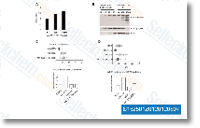 Click to enlarge | Rating | |
| Source | MK-1775 purchased from Selleck | |
| Method | Fow cytometry/Western blotting | |
| Cell Lines | U2OS cells | |
| Concentrations | 300/1000 nM | |
| Incubation Time | 1 h | |
| Results | Inhibition of WEE1 kinase by MK-1775 led to increased uptake of the nucleoside analog EdU during the 30 to 90 min after MK-1775 addition (Fig. A). MK-1775 also led to decreased tyrosine 15 inhibitory phosphorylation on CDK1 and increased phosphorylation of CDK substrates. We found that inhibition of WEE1 markedly reduced the replication fork rates (Fig. C). depletion of CDT1 could normalize fork speed in response to WEE1 inhibition by MK-1775. |
MK1775, a selective Wee1 inhibitor, shows single-agent antitumor activity against sarcoma cells. [Kreahling JM, et al. Mol Cancer Ther 2011;11(1):174-82]
Dovitinib induces mitotic defects and activates the G2 DNA damage checkpoint. [Man WY, et al. J Cell Mol Med 2013;18(1):143-55]
Wee1 inhibition by MK-1775 leads to tumor inhibition and enhances efficacy of gemcitabine in human sarcomas. [Kreahling JM, et al. PLoS One 2013;8(3):e57523]
