
Antibodies


Lenalidomide (CC-5013) is a TNF-α secretion inhibitor with IC50 of 13 nM.
| Size | Price | Stock | Quantity | ||||||||||||
|---|---|---|---|---|---|---|---|---|---|---|---|---|---|---|---|
| |||||||||||||||
 Distributor Tel: +886-2-2827-1197jimmy@new.abscience.com.tw
| Description | Lenalidomide (CC-5013) is a TNF-α secretion inhibitor with IC50 of 13 nM. | |||||
|---|---|---|---|---|---|---|
| Targets | TNF-α | |||||
| IC50 | 13 nM [1] | |||||
| In vitro | Lenalidomide strongly induces IL-2 and sIL-2R production. Lenalidomide-induced tyrosine phosphorylation of CD28 on T cells is followed by a down-stream activation of NF-κB. [2] Lenalidomide and pomalidomide inhibits autoubiquitination of CRBN in HEK293 T cells expressing thalidomide-binding competent wild-type CRBN, but not thalidomide-binding defective CRBN(YW/AA). Overexpression of CRBN wild-type protein, but not CRBN(YW/AA) mutant protein, in KMS12 myeloma cells, amplifies pomalidomide-mediated reductions in c-myc and IRF4 expression and increases in p21(WAF-1) expression. Long-term selection for Lenalidomide resistance in H929 myeloma cell lines is accompanied by a reduction in CRBN, while in DF15R myeloma cells resistant to both pomalidomide and Lenalidomide, CRBN protein is undetectable. [3] Lenalidomide prevents induction of defects by down-regulating tumor cell inhibitory molecule expression. Lenalidomide prevents induction of tumor-induced T cell lytic synapse dysfunction. Lenalidomide treatment blocks CLL cell-induced T cell actin synapse dysfunction, mimicks antibody blockade, and down-regulates expression of CLL inhibitory ligands and their receptors on T cells. Lenalidomide treatment prevents tumor-induced immune suppression in FL, DLBCL, HL, MM, SCC, and OC and down-regulates immunosuppressive ligand expression on all tumor cells examined. CTL killing function significantly increases following antibody blockade of CLL inhibitory ligands or Lenalidomide treatment compared to control treatments. Treatment of autologous CLL-T cell co-cultures with Lenalidomide reverses impaired CD8+ T cell lytic synapse formation and granzyme B trafficking. [4] | |||||
| In vivo | The induction of angiogenesis by bFGF is significantly inhibited by oral treatment of Lenalidomide in a dose-dependent manner. Lenalidomide significantly decreases the percentage of vascularized area from 5.16% (control group) to 2.58% (50 mg/kg). Lenalidomide significantly reduces the calculated total MVL from 21.07 (control) to 8.11 (50 mg/kg). Lenalidomide significantly inhibites HUVEC migration through the fibronectin-coated membranes towards 0.1 ng/mL of bFGF at 100 μM, 1 ng/mL of VEGF at concentrations of 10 μM and 100 μM. [5] | |||||
| Features | ||||||
| Assay for inhibition of TNF synthesis by human PBMCs | Human PBMCs from normal donors are obtained by Ficoll−Hypaque density centrifugation. Cells (106cells/mL) are cultured in RPMI supplemented with 10 AB+ serum, 2 mM l-glutamine, 100 U/mL penicillin, and 100 μg/mL streptomycin. Lenalidomide is dissolved in DMSO at 20 mg/mL; further dilution is done with culture medium. The final DMSO concentration in all assays including the controls is 0.25%. Lenalidomide is added to cells 1 hour prior to the addition of LPS. PBMCs (106 cells/mL) are stimulated with 1 μg/mL of LPS from Salmonella minnesota R595. Cells, in triplicate, are incubated with LPS for 18−20 hours at 37 °C in 5% CO2. Supernatants are then harvested and assayed for cytokine levels. In some experiments, supernatants are kept frozen at −70 °C until use. Cell viability is assayed by Trypan blue exclusion dye method. The concentration of TNFα in the culture supernatants is determined by ELISA. Lenalidomide is assayed in a minimum of three separate experiments. Percent inhibition is determined as 100 × [1 − (cytokine(experimental)/cytokine(control))]. |
|---|
| Animal Models | Adult male Sprague-Dawley rats bearing HUVECs cells |
|---|---|
| Dosages | 50 mg/kg and 250 mg/kg |
| Administration | Administered via i.p. |
| Solubility | 30% PEG400/0.5% Tween80/5% propylene glycol, 5 mg/mL |
| NCT Number | Recruitment | Conditions | Sponsor /Collaborators | Start Date | Phases |
|---|---|---|---|---|---|
| NCT02004275 | Not yet recruiting | Multiple Myeloma in Relapse | Alliance for Clinical Trials in Oncology|Celgene Corporation|Millennium Pharmaceuticals, Inc. | 2014-01 | Phase 1|Phase 2 |
| NCT01996865 | Not yet recruiting | Lymphoma, Non-Hodgkin | Celgene Corporation | 2014-02 | Phase 3 |
| NCT01924169 | Not yet recruiting | Hematologic Disorder | M.D. Anderson Cancer Center|Celgene Corporation | 2014-02 | Phase 2 |
| NCT01927718 | Not yet recruiting | Myeloma | M.D. Anderson Cancer Center|Celgene Corporation | 2014-02 | |
| NCT02018523 | Not yet recruiting | Carcinoma, Non-Small-Cell Lung | Baylor College of Medicine|Jun Zhang|Celgene Corporation | 2014-02 | Phase 1 |
Download Lenalidomide (CC-5013) SDF
| Molecular Weight (MW) | 259.26 |
|---|---|
| Formula | C13H13N3O3 |
| CAS No. | 191732-72-6 |
| Storage | 3 years -20℃Powder |
|---|---|
| 6 months-80℃in DMSO | |
| Syonnyms | CC-5013 |
| Solubility (25°C) * | In vitro | DMSO | 52 mg/mL (200 mM) |
|---|---|---|---|
| Water | <1 mg/mL (<1 mM) | ||
| Ethanol | <1 mg/mL (<1 mM) | ||
| In vivo | 30% PEG400/0.5% Tween80/5% propylene glycol, | 5 mg/mL | |
| * <1 mg/ml means slightly soluble or insoluble. * Please note that Selleck tests the solubility of all compounds in-house, and the actual solubility may differ slightly from published values. This is normal and is due to slight batch-to-batch variations. | |||
| Chemical Name | 3-(4-amino-1-oxoisoindolin-2-yl)piperidine-2,6-dione |
|---|
| Stock Solution (1ml DMSO) | 1mM | 10mM | 20mM | 30mM |
|---|---|---|---|---|
| Mass(mg) | 0.25926 | 2.5926 | 5.1852 | 7.7778 |
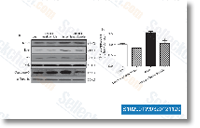 Click to enlarge | Rating | |
| Source | Obesity (Silver Spring), 2012, 20(11), 2174-85. Lenalidomide (CC-5013) purchased from Selleck | |
| Method | Western Blot | |
| Cell Lines | ob/ob mice | |
| Concentrations | 50 mg/kg/day | |
| Incubation Time | 3 d | |
| Results | Although lenalidomide itself did not exert any effect on the expression of these proteins, it significantly attenuated or ablated obesity-induced upregulation of TNF-α, IL-6, Fas, and cleaved caspase-3 without any effect on FasL. |
A novel small molecule inhibitor of deubiquitylating enzyme USP14 and UCHL5 induces apoptosis in multiple myeloma and overcomes bortezomib resistance. [Tian Z, et al. Blood 2013;10.1182/blood-2013-05-500033]
Potent in vitro and in vivo activity of an Fc-engineered humanized anti-HM1.24 antibody against multiple myeloma via augmented effector function. [Tai YT, et al. Blood 2012;119(9):2074-82]
Anti-myeloma activity of a multi targeted kinase inhibitor,AT9283, via potent Aurora Kinase and STAT3 inhibition either alone or in combination with lenalidomide. [Santo L, et al. Clin Cancer Res 2011;17(10):3259-71]
