
Antibodies


BSI-201 (Iniparib, SAR240550) is a PARP1 inhibitor with demonstrated effectiveness in triple-negative breast cancer (TNBC). Phase 3.
| Size | Price | Stock | Quantity | ||||||||||||||||
|---|---|---|---|---|---|---|---|---|---|---|---|---|---|---|---|---|---|---|---|
| |||||||||||||||||||
 Distributor Tel: +886-2-2827-1197jimmy@new.abscience.com.tw
| Description | BSI-201 (Iniparib, SAR240550) is a PARP1 inhibitor with demonstrated effectiveness in triple-negative breast cancer (TNBC). Phase 3. | |||||
|---|---|---|---|---|---|---|
| Targets | ||||||
| IC50 | ||||||
| In vitro | BSI-201 is described as a prodrug of 4-iodo-3-nitrosobenzamide, an agent that covalently inhibits PARP1 by binding to its first zinc finger under cell-free conditions. Treatment of 120 μM BSI-201 plus buthionine sulfoximine (BSO) induces a 95% cell death among 855-2 cells, and displays a similar effect in other human cancer cells. [1] BSI-201 inhibits the growth of E-ras 20 cells, the effect of which can be augmented 4-fold when BOS is added. [2] Recently BSI-201 shows no ability to inhibit PARP enzymatic or cellular activity, but can non-selectively modify cysteine-containing proteins in tumor cells, suggesting the mechanism of action for BSI-201 is likely not via inhibition of PARP activity. [3] BSI-201 (100 μM) inhibits ionizing radiation-induced single-strand breaks (SSBs) repair in human lymphoid cell lines based on large endogenous Epstein–Barr virus (EBV) circular episomes assay, resulting in 55% repair by 2 hours, which can be reversed surprisingly by knockdown of PARP1, indicating that the mechanism of inhibition does not involve trapping PARP at SSBs. [4] BSI-201 is not able to selectively kill homologous recombination (HR)-deficient cells between BRCA2-deficient PEO1 and BRCA2-revertant PEO4, or ATM-deficient GM16666 and ATM-restored GM16667 fibroblasts. BSI-201 is cytotoxic to a variety of cell lines at concentrations above 40 μM reflecting a mechanism independent of PARP. [5] | |||||
| In vivo | ||||||
| Features | ||||||
| Cell lines | MDA-MB-231, and MDA-MB-436 |
|---|---|
| Concentrations | Dissolved in DMSO, final concentrations ~10 μM |
| Incubation Time | 5, and 9 days |
| Method | Cells are exposed to various concentrations of BSI-201 for 5, and 9 days in the presence or absence of buthionine sulfoxamide (BSO). After treatment, cell proliferation is measured by CellTiter-Glo assay. |
| NCT Number | Recruitment | Conditions | Sponsor /Collaborators | Start Date | Phases |
|---|---|---|---|---|---|
| NCT01204125 | Active, not recruiting | Breast Cancer Female | Sanofi|SOLTI Breast Cancer Research Group | 2010-09 | Phase 2 |
| NCT01213381 | Completed | Advance Solid Tumors | Sanofi | 2010-09 | Phase 1 |
| NCT01455532 | Recruiting | Neoplasm Malignant | Sanofi | 2011-11 | Phase 1 |
| NCT01593228 | Recruiting | Solid Tumors | Sanofi | 2012-05 | Phase 3 |
| NCT01551680 | Recruiting | Brain Metastases | Centre Val d’Aurelle - Paul Lamarque | 2012-09 | Phase 1 |
Download Iniparib (BSI-201) SDF
| Molecular Weight (MW) | 292.03 |
|---|---|
| Formula | C7H5IN2O3 |
| CAS No. | 160003-66-7 |
| Storage | 3 years -20℃Powder |
|---|---|
| 6 months-80℃in DMSO | |
| Syonnyms | SAR240550 |
| Solubility (25°C) * | In vitro | DMSO | 58 mg/mL (198 mM) |
|---|---|---|---|
| Water | <1 mg/mL (<1 mM) | ||
| Ethanol | 28 mg/mL (95 mM) | ||
| * <1 mg/ml means slightly soluble or insoluble. * Please note that Selleck tests the solubility of all compounds in-house, and the actual solubility may differ slightly from published values. This is normal and is due to slight batch-to-batch variations. | |||
| Chemical Name | 4-iodo-3-nitrobenzamide |
|---|
| Stock Solution (1ml DMSO) | 1mM | 10mM | 20mM | 30mM |
|---|---|---|---|---|
| Mass(mg) | 0.29203 | 2.9203 | 5.8406 | 8.7609 |
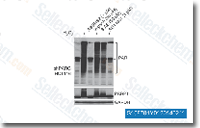 Click to enlarge | Rating | |
| Source | Nat Methods, 2013, 10(10):981-4. Iniparib (BSI-201) purchased from Selleck | |
| Method | Immunoblot analysis | |
| Cell Lines | HCT116 | |
| Concentrations | 50 uM | |
| Incubation Time | 40 min | |
| Results | Immunoblot analysis of PARylation after treatment with AIniparib.The asterisk indicates a nonspecific band. |
Site-specific characterization of the Asp- and Glu-ADP-ribosylated proteome. [Zhang Y, et al. Nat Methods 2013;10(10):981-4]
Tumor necrosis factor-like weak inducer of apoptosis and fibroblast growth factor-inducible 14 mediate cerebral ischemia-induced poly(ADP-ribose) polymerase-1 activation and neuronal death. [Hailea WB, et al. Neuroscience 2010;171(4):1256-64]
Cardamonin inhibits angiotensin II-induced vascular smooth muscle cell proliferation and migration by downregulating p38 MAPK, Akt, and ERK phosphorylation. [Shen YJ J Nat Med 2014;10.1007/s11418-014-0825-0]
