
Antibodies


Imatinib is a multi-target inhibitor of v-Abl, c-Kit and PDGFR with IC50 of 0.6 μM, 0.1 μM and 0.1 μM, respectively.
| Size | Price | Stock | Quantity | ||||||||||||
|---|---|---|---|---|---|---|---|---|---|---|---|---|---|---|---|
| |||||||||||||||
 Distributor Tel: +886-2-2827-1197jimmy@new.abscience.com.tw
| Description | Imatinib is a multi-target inhibitor of v-Abl, c-Kit and PDGFR with IC50 of 0.6 μM, 0.1 μM and 0.1 μM, respectively. | |||||
|---|---|---|---|---|---|---|
| Targets | v-Abl | PDGFR | c-Kit | |||
| IC50 | 600 nM | 100 nM [1] | 100 nM [2] | |||
| In vitro | In vitro assays for inhibition of a panel of tyrosine and serine/threonine protein kinases show that Imatinib inhibits the v-Abl tyrosine kinase and PDGFR potently with an IC50 of 0.6 and 0.1 μM, respectively. [1] Imatinib inhibits the SLF-dependent activation of wild-type c-kit kinase activity with a IC50 for these effects of approximately 0.1 μM, which is similar to the concentration required for inhibition of PDGFR. [2] Imatinib exhibits growth-inhibitory activity on the human bronchial carcinoid cell line NCI-H727 and the human pancreatic carcinoid cell line BON-1 with an IC50 of 32.4 and 32.8 μM, respectively. [3] A recent study shows that Imatinib has the potential to exert its antileukemia effects in chronic myelogenous leukemia by down-regulating hERG1 K(+) channels, which are highly expressed in leukemia cells and appear of exceptional importance in favoring leukemogenesis. [4] | |||||
| In vivo | Imatinib produces a different antitumor effect on three xenografted tumors derived from surgical samples of fresh human small cell lung cancers, with 80%, 40% and 78% growth inhibition of SCLC6, SCLC61 and SCLC108 tumors, respectively, and no significant inhibition of SCLC74 growth. [5] In high fat fed ApoE(-/-) mice, Imatinib significantly reduces the high fat-induced lipid staining area by 30%, 27% and 35% compared to high-fat diet untreated controls when dosed by gavage at 10, 20 and 40 mg/kg, respectively, and suppresses carotid artery lipid accumulation. [6] | |||||
| Features | ||||||
| PDGF receptor kinase activity | PDGF receptor is immunoprecipitated from BALB/c 3T3 cell extracts with rabbit antiserum to the murine PDGF receptor for 2 hours on ice. Protein A-Sepharose beads are used to collect the antigen-antibody complexes. The immunoprecipitates are washed twice with TNET (50 mM Tris, pH 7.5, 140 mM NaCl, 5 mM EDTA, 1% Triton X-100), once with TNE (50 mM Tris, pH 7.5, 140 mM EDTA), and once with kinase buffer (20 mM Tris, pH 7.5,10 mM MgCl2). After stimulation with PDGF (50 ng/mL) for 10 minutes at 4 °C, different concentrations of drug are added to the reaction mixture. PDGF receptor kinase activity is determined by incubation with 10 μCi [7-33P]-ATP and l μM ATP for 10 minutes at 4 °C. Immune complexes are separated by SDS-PAGE on 7.5% gels. |
|---|
| Cell lines | BON-1 cells and NCI-H727 cells |
|---|---|
| Concentrations | ~100 μM |
| Incubation Time | 48 hours |
| Method | BON-1 cells and NCI-H727 cells are seeded into flat-bottomed 96-well plates in triplicate and allowed to adhere overnight in 10% fetal bovine serum-supplemented DMEM or RPMI 1640 complete medium, respectively; the medium is then exchanged for serum-free medium (negative control) or serum-free medium containing serial dilutions of Imatinib. After 48 hours (control cultures do not reach confluence), the number of metabolically active cells is determined by the 3-(4,5-dimethylthiazol-2-yl)-2,5-diphenyltetrazolium bromide assay, and absorbance is measured in a Packard Spectra microplate reader at 540 nm. Growth inhibition is calculated using the following formula: inhibition rate = (1 − a / b) × 100%, where a and b are the absorbance values of the treated and control groups, respectively. |
| Animal Models | SCLC6, SCLC61, SCLC 74 and SCLC108 small cell lung cancers are injected into Swiss mice (nu/nu, female). |
|---|---|
| Dosages | 70 or 100 mg/kg |
| Administration | Administered via i.p. |
| Solubility | 30% propylene glycol, 5% Tween 80, 65% D5W, 30 mg/mL |
| NCT Number | Recruitment | Conditions | Sponsor /Collaborators | Start Date | Phases |
|---|---|---|---|---|---|
| NCT01650467 | Not yet recruiting | Leukemia, Myeloid, Chronic-Phase | Centre Hospitalier Universitaire de Nmes | 2013-10 | |
| NCT01781975 | Not yet recruiting | Diabetes Mellitus, Type I|Diabetes Mellitus, Insulin-Dependent, 1|Type 1 Diabetes Mellitus|Insulin-Dependent Diabetes Mellitus 1|IDDM | University of California, San Francisco | 2013-11 | Phase 2 |
| NCT01991379 | Recruiting | Gastrointestinal Stromal Tumor (GIST) | Memorial Sloan-Kettering Cancer Center|Novartis | 2013-11 | Phase 1|Phase 2 |
| NCT02013089 | Recruiting | Gastrointestinal Cancers | Sun Yat-sen University | 2013-12 | |
| NCT02001818 | Not yet recruiting | Chronic Myeloid Leukaemia | Australasian Leukaemia and Lymphoma Group|Merck Sharp & Dohme (Australia) Pty Limited|Novartis Pharmaceuticals | 2014-06 | Phase 2 |
Download Imatinib (STI571) SDF
| Molecular Weight (MW) | 493.6 |
|---|---|
| Formula | C29H31N7O |
| CAS No. | 152459-95-5 |
| Storage | 3 years -20℃Powder |
|---|---|
| 6 months-80℃in DMSO | |
| Syonnyms | Glivec |
| Solubility (25°C) * | In vitro | DMSO | 3 mg/mL (6 mM) |
|---|---|---|---|
| Water | <1 mg/mL (<1 mM) | ||
| Ethanol | <1 mg/mL (<1 mM) | ||
| In vivo | 30% propylene glycol, 5% Tween 80, 65% D5W, | 30 mg/mL | |
| * <1 mg/ml means slightly soluble or insoluble. * Please note that Selleck tests the solubility of all compounds in-house, and the actual solubility may differ slightly from published values. This is normal and is due to slight batch-to-batch variations. | |||
| Chemical Name |
|---|
 Click to enlarge | Rating | |
| Source | Leukemia Research 36 (2012) 1311– 1314. Imatinib (STI571) purchased from Selleck | |
| Method | Thymidine uptake Uptake assay | |
| Cell Lines | K562, MEG-01 cells | |
| Concentrations | 0.1-10 uM | |
| Incubation Time | 20 min | |
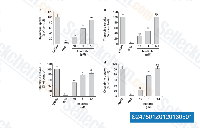
| Results | The effect of imatinib on nucleoside transport was first examined with thymidine. At a 10-M concentration, imatinib was able to inhibit the entry of radiolabeled thymidine in K562 cells by 76%. Imatinib was still efficient and blocked by 43% the entry of thymidine at 1 uM, but its effect on thymidine transport at 0.1 uM was not significant (Fig. 1a). |
Decoupling of tumor-initiating activity from stable immunophenotype in HoxA9-Meis1-driven AML. [Gibbs KD Jr, et al. Cell Stem Cell 2012;10(2):210-7]
Pharmacokinetic impact of SLCO1A2 polymorphisms on imatinib disposition in patients with chronic myeloid leukemia. [Yamakawa Y, et al. Clin Pharmacol Ther 2011;90(1):157-63]
Cannabidiol causes activated hepatic stellate cell death through a mechanism of endoplasmic reticulum stress-induced apoptosis. [Lim MP, et al. Cell Death Dis 2011;2:e170]
