
Antibodies


GSK461364 inhibits purified Plk1 with Ki of 2.2 nM. It is more than 1000-fold selective against Plk2/3. Phase 1.
| Size | Price | Stock | Quantity | ||||||||||||||||
|---|---|---|---|---|---|---|---|---|---|---|---|---|---|---|---|---|---|---|---|
| |||||||||||||||||||
 Distributor Tel: +886-2-2827-1197jimmy@new.abscience.com.tw
| Description | GSK461364 inhibits purified Plk1 with Ki of 2.2 nM. It is more than 1000-fold selective against Plk2/3. Phase 1. | |||||
|---|---|---|---|---|---|---|
| Targets | Plk1 | |||||
| IC50 | 2.2 nM (Ki) [1] | |||||
| In vitro | GSK461364 inhibits cancer cell line proliferation from multiple origins with minimal toxicity in nondividing human cells. [1] RNA silencing of WT p53 increases the antiproliferative activity of GSK461364. As many cancer therapies tend to be more effective in p53 WT patients, the higher sensitivity of p53-deficient tumors toward GSK461364 could potentially offer an opportunity to treat tumors that are refractory to other chemotherapies as well as early line therapy for these genotypes. GSK461364 is a thiophene amide that inhibits purified Plk1 enzyme in vitro with a Ki of 2 nM and has >100-fold selectivity for Plk1 compared with Plk2 and Plk3. GSK461364 is a potent inhibitor of cell proliferation causing 50% growth inhibition (GI50) below 100 nM in most of the cell lines tested with limited toxicity against human nonproliferating cells. Inhibition of cell cycle progression is concentration dependent with initial delay at G2 phase at high GSK461364 concentrations and arrest at M phase at lower concentrations. Currently, GSK461364 is in a dose-escalation first-time-in-human trial. Cell lines with mutations in the TP53 gene tended to be more sensitive to GSK461364, and that inhibiting the p53 response by RNA silencing confers increased sensitivity in some p53 wild-type (WT) cells. Furthermore, these more sensitive cell lines also have increased levels of chromosome instability, a characteristic associated with TP53 mutations. [2] In preclinical testing, GSK461364 shows antiproliferative activity against multiple (>120) tumor cell lines and potently inhibits the proliferation of greater than 83% and 91% of these cell lines, with IC50 values lower than 50 and 100 nM, respectively. [3] | |||||
| In vivo | Cell culture growth inhibition by GSK461364 can be cytostatic or cytotoxic but leads to tumor regression in xenograft tumor models under proper dose scheduling. GSK461364 shows clear antitumor activity in human tumor xenograft models. [1] GSK461364 shows a dose-dependent mitotic arrest in mouse xenografts, which correlates with effects on tumor growth. [2] Intraperitoneal administration of GSK461364 causes regression or tumor growth delay in different xenograft models, including Colo205 xenografts. Suppression of Plk1 in vivo by using GSK461364 results in mitotic arrest with aberrant mitotic figures consisting of monopolar or collapsed mitotic spindles. [3] | |||||
| Features | Demonstrates >390-fold selectivity for Plk1 relative to Plk2 and Plk3. | |||||
| Enzyme assays | Kinase reactions are performed in a final assay volume of 10 μL using the Z-Lyte Assay kit (Ser/Thr peptide 16). Briefly, reactions contains 50 mM HEPES (pH 7.5), 10 mM MgCl2, 1 mM EGTA, 1 mM DTT, 0.01% Brij 35, 0.01 mg/mL casein, 200 μM ATP, 200 μM Polo Box peptide (NH2-MAGPMQS[pT]PLNGAKK-OH), and 6 nM recombinant Plk1 (H6-tev-PLK 1-603). Plk1 is preincubated for 60 minutes with 0 to 1 μM GSK461364. Reactions are then initiated by the addition of 2 μM peptide. After 15 minutes at 23 °C, reactions are quenched and processed according the Z′-Lyte protocol and read on an EnVision plate reader. Raw fluorescence values are converted to concentration of product formed using substrate and product standards. Because the potency of inhibition for GSK461364 is observed to vary as a function of the ATP concentration in a manner consistent with an ATP-competitive mode of inhibition, an upper limit for the Ki for GSK461364 is determined. |
|---|
| Cell lines | Prostate(LNCap,PC3), Cervix(HeLa), Pancreas(ASPC1), Sarcoma(Saos-2)Ovary(OVCAR8), Stomach(NCI-N87), Melanoma(SKMEL3,A431, MALME3M), Colon(Colo205,SW620,HCT116), Breast(SKBR3,MDA-MB-453,MCF7), Lung(NCI-H82,MV522,NCI-H522), etc. |
|---|---|
| Concentrations | 10 nM |
| Incubation Time | 72 hours |
| Method | Cancer cell lines are seeded into 384-well microtiter plates. After seeding, the cells are incubated at 37 °C in 5% CO2 for 24 hours. GSK461364 is added to each cell line at 10 nM with a nontreated control. A zero-time (T = 0) value is read for each cell line. After 72 hours, the medium containing GSK461364 or DMSO control is aspirated from all of the remaining cells and the cell nuclei are stained with 4′,6-diamidino-2-phenylindole and the fluorescent intensity measured using an InCell1000 High Content Analyzer. The percent intensity of the 4′,6-diamidino-2-phenylindole stain at 72 hours, relative to intensity at time zero, is calculated for each concentration of GSK461364 in each of the triplicate wells. |
| Animal Models | Nude mice bearing Colo205 (colorectal) xenograft tumors |
|---|---|
| Dosages | 25, 50, and 100 mg/kg |
| Administration | Administered via i.p.(every 2 days or every 4 days) |
| Solubility | 1% DMSO/30% polyethylene glycol/1% Tween 80, 30 mg/mL |
| NCT Number | Recruitment | Conditions | Sponsor /Collaborators | Start Date | Phases |
|---|---|---|---|---|---|
| NCT00536835 | Completed | Advanced Solid Tumor|Lymphoma, Non-Hodgkin|Non-Hodgkin’s Lymphoma | GlaxoSmithKline | 2007-08 | Phase 1 |
| Molecular Weight (MW) | 543.6 |
|---|---|
| Formula | C27H28F3N5O2S |
| CAS No. | 929095-18-1 |
| Storage | 3 years -20℃Powder |
|---|---|
| 6 months-80℃in DMSO | |
| Syonnyms | N/A |
| Solubility (25°C) * | In vitro | DMSO | 10 mg/mL (18 mM) |
|---|---|---|---|
| Water | <1 mg/mL (<1 mM) | ||
| Ethanol | 30 mg/mL (55 mM) | ||
| In vivo | 1% DMSO/30% polyethylene glycol/1% Tween 80, | 30 mg/mL | |
| * <1 mg/ml means slightly soluble or insoluble. * Please note that Selleck tests the solubility of all compounds in-house, and the actual solubility may differ slightly from published values. This is normal and is due to slight batch-to-batch variations. | |||
| Chemical Name | 5-(6-((4-methylpiperazin-1-yl)methyl)-1H-benzo[d]imidazol-1-yl)-3-((R)-1-(2-(trifluoromethyl)phenyl)ethoxy)thiophene-2-carboxamide |
|---|
| Stock Solution (1ml DMSO) | 1mM | 10mM | 20mM | 30mM |
|---|---|---|---|---|
| Mass(mg) | 0.5436 | 5.436 | - | - |
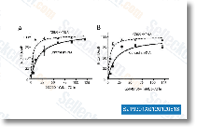 Click to enlarge | Rating | |
| Source | THE JOURNAL OF BIOLOGICAL CHEMISTRY, 2012.GSK461364 purchased from Selleck | |
| Method | Cell death assay | |
| Cell Lines | HeLa cells | |
| Concentrations | 0-120nM | |
| Incubation Time | 72 h | |
| Results | Similar to BI 2536, cells lacking GRK5 were 4.5-fold more sensitive to GSK461364 compared with control cells. |
Targeting Sonic Hedgehog-Associated Medulloblastoma through Inhibition of Aurora and Polo-like Kinases. [Markant SL, et al. Cancer Res 2013;73(20):6310-22]
A guide to picking the most selective kinase inhibitor tool compounds for pharmacological validation of drug targets. [Uitdehaag JC, et al. Br J Pharmacol 2012;166(3):858-76]
A high-content small molecule screen identifies sensitivity of glioblastoma stem cells to inhibition of polo-like kinase 1. [Danovi D, et al. PLoS One 2013;8(10):e77053]
