
- 貨號 Cat. No.
- S1230
- 規格 Size
- 5~200mg
- 品牌 Brand
- Selleckchem
Description
Flavopiridol HCl
Flavopiridol competes with ATP to inhibit CDKs including CDK1, CDK2, CDK4 and CDK6 with IC50 of ~ 40 nM. It is 7.5-fold more selective for CDK1/2/4/6 than CDK7. Flavopiridol is initially found to inhibit EGFR and PKA. Phase 1/2.
Size |
Price |
Stock |
Quantity |
|
|---|
10mM/1mLIn DMSO |
USD 126 |
In stock |
0
1
2
3
4
5
6
7
8
9
10
|
10mg |
USD 138 |
In stock |
0
1
2
3
4
5
6
7
8
9
10
|
25mg |
USD 277 |
In stock |
0
1
2
3
4
5
6
7
8
9
10
|
50mg |
USD 478 |
In stock |
0
1
2
3
4
5
6
7
8
9
10
|
100mg |
USD 856 |
In stock |
0
1
2
3
4
5
6
7
8
9
10
|
200mg |
USD 1486 |
In stock |
0
1
2
3
4
5
6
7
8
9
10
|
|
 Distributor Tel: +886-2-2827-1197jimmy@new.abscience.com.tw
Biological Activity
Description |
Flavopiridol competes with ATP to inhibit CDKs including CDK1, CDK2, CDK4 and CDK6 with IC50 of ~ 40 nM. It is 7.5-fold more selective for CDK1/2/4/6 than CDK7. Flavopiridol is initially found to inhibit EGFR and PKA. Phase 1/2. |
|---|
Targets |
CDK1 |
CDK2 |
CDK4 |
CDK6 |
CDK7 |
|
|---|
IC50 |
40 nM |
40 nM |
40 nM |
40 nM |
300 nM [1] |
|
|---|
In vitro |
Flavopiridol is initially found to inhibit the epidermal growth factor receptor and protein kinase A (IC50 = 21 and 122 μM). Flavopiridol is later shown to inhibit cell proliferation, at more physiologically relevant concentrations (IC50 = 66 nM) when Flavopiridol is tested in the National Cancer Institute Development Therapeutics Program panel of 60 human tumor cell lines. [1] Flavopiridol induces G1 arrest with inhibition of CDK2 and CDK4 in human breast carcinoma cells in a time and concentration dependent manner. [2] Short time treatment of Flavopiridol (~12 hours) induce apoptosis in hematopoietic cell lines including SUDHL4, SUDHL6 (B-cell lines), Jurkat and MOLT4 (T-cell lines ), and HL60 (myeloid). [3] In the clonogenic assay, Flavopiridol functions as a highly potent cytotoxic compound with a mean IC70 with 8 ng/mL in 23 human tumor models. [4] A recent study shows Flavopiridol treatment induces a substantial AKT-Ser473 phosphorylation in human glioblastoma T98G cell line. [5] |
|---|
In vivo |
At the maximal tolerated dose of 10 mg/kg/day administered p.o. on days 1-4 and 7-11, Flavopiridol effects tumor regression in PRXF1337 and tumor stasis lasting for 4 weeks in PRXF1369. [4] After treatment with 7.5 mg/kg Flavopiridol bolus intravenous (IV) or intraperitoneal on each of 5 consecutive days, 11 out of 12 advanced stage subcutaneous (s.c.) human HL-60 xenografts undergo complete regressions, and animals remain disease-free several months after one course of Flavopiridol treatment. SUDHL-4 s.c. lymphomas treated with flavopiridol at 7.5 mg/kg bolus IV for 5 days undergo either major (two out of eight mice) or complete (four out of eight mice) regression, with two animals remaining disease-free for more than 60 days. The overall growth delay is 73.2%. Daily IV or IP administration of flavopiridol results in peak plasma levels of about 7 µM, followed by a progressive decline to approximately 100 nM in 8 hours.[6] |
|---|
Features |
|
|---|
Protocol(Only for Reference)
Kinase Assay: [1]
Recombinant CDKs Kinase Reactions |
CDKs activities are determined in microtiter plates as follows. Forty μg Gst-Rb are mixed with different amounts of Flavopiridol and unlabeled ATP. Reactions are then started by the addition of an ammonium sulfate cut of the S100 fraction obtained from insect cells expressing recombinant human CDKs. The final reaction conditions are 10 mM MgCl2, 50 mM Tris-HCl (pH 7.5), and 1 mM DTT. The final concentration of ATP is adjusted accordingly. Radiolabeled ATP is used as a phosphoryl donor. The reaction is carried out for 2.5 minutes at 30 °C after addition of enzyme and then terminated with the addition of EDTA. The Gst-Rb is then captured with glutathione-Sepharose and the incorporated radioactivity is determined by liquid scintillation counting. |
|---|
Cell Assay: [2]
Cell lines |
SUDHL4, SUDHL6, Jurkat, MOLT4, and HL60 |
|---|
Concentrations |
0, 100 500, 5000 nM |
|---|
Incubation Time |
14 hours |
|---|
Method |
Cells grown at a density of 1 × 10⁶ cells/mL are exposed to Flavopiridol for different concentrations and time periods. DNA is extracted. Briefly, cells are washed once with cold phosphate-buffered saline (PBS) and lysed with 3 mL lysis buffer (5 mM Tris-HCL [pH 7.5]; 20 mM EDTA; 0.5% Triton X-100) for 15 minutes at 4 °C. The chromatin of the cell lysates is isolated by centrifugation (20 minutes at 26,000g, 4 °C). The supernatants containing small DNA fragments are extracted sequentially with phenol, phenol:chloroform (1:1), and chloroform. Nucleic acids are precipitated in 0.5 M NaCl, 90% ethanol at -20 °C overnight. RNA is then digested by bovine RNAaseA (60 μg/mL). After sequential reextraction and reprecipitation, DNA is dissolved in 10 mM Tris-HCL (pH 7.5), 1 mM EDTA, 0.5% sodium dodecyl sulfate (SDS) before electrophoresis on 1.6% agarose gel. |
|---|
Animal Study: [4] [6]
Animal Models |
Human prostate cancer xenografts, PRXFI337 and PRXFI369, grown s.c. in nude mice [4] Human promyelocytic leukemia HL-60, human B-cell follicular lymphoma SUDHL-4, and acquired immunodeficiency syndrome (AIDS)-related human B-cell lymphoma AS283 xenografts in mice. [6] |
|---|
Dosages |
10 mg/kg/d [4]; 7.5 mg/kg/d [6] |
|---|
Administration |
p.o.[4]; i.p. or i.v. [6] |
|---|
Solubility |
30% propylene glycol, 5% Tween 80, 65% D5W, 30 mg/mL |
|---|
1
References
Clinical Trial Information( data from http://clinicaltrials.gov)
NCT Number |
Recruitment |
Conditions |
Sponsor
/Collaborators |
Start Date |
Phases |
|---|
NCT00991952 |
Active, not recruiting |
Adenocarcinoma of the Gastroesophageal Junction|Diffuse Adenocarcinoma of the Stomach|Intestinal Adenocarcinoma of the Stomach|Mixed Adenocarcinoma of the Stomach|Recurrent Gastric Cancer|Stage IIIA G |
National Cancer Institute (NCI) |
2009-09 |
Phase 2 |
NCT01076556 |
Active, not recruiting |
B-cell Chronic Lymphocytic Leukemia|Contiguous Stage II Small Lymphocytic Lymphoma|Noncontiguous Stage II Small Lymphocytic Lymphoma|Prolymphocytic Leukemia|Recurrent Small Lymphocytic Lymphoma|Refrac |
National Cancer Institute (NCI) |
2010-08 |
Phase 1 |
NCT01413880 |
Active, not recruiting |
Acute Myelogenous Leukemia |
Sidney Kimmel Comprehensive Cancer Center |
2011-05 |
Phase 2 |
NCT01349972 |
Recruiting |
Acute Myeloid Leukemia With Multilineage Dysplasia Following Myelodysplastic Syndrome|Adult Acute Minimally Differentiated Myeloid Leukemia (M0)|Adult Acute Monoblastic Leukemia (M5a)|Adult Acute Mono |
National Cancer Institute (NCI) |
2011-08 |
Phase 2 |
NCT00957905 |
Active, not recruiting |
Recurrent Extragonadal Germ Cell Tumor|Recurrent Extragonadal Non-seminomatous Germ Cell Tumor|Recurrent Extragonadal Seminoma|Recurrent Malignant Testicular Germ Cell Tumor|Recurrent Ovarian Germ Cel |
National Cancer Institute (NCI) |
2013-05 |
Phase 2 |
Download Flavopiridol HCl SDF
Molecular Weight (MW) |
438.3 |
|---|
Formula |
C21H20ClNO5.HCl
|
|---|
CAS No. |
131740-09-5 |
|---|
Storage |
3 years -20℃Powder |
|---|
6 months-80℃in DMSO |
Syonnyms |
HMR-1275, L86-8275 |
|---|
Solubility (25°C) * |
In vitro |
DMSO |
88 mg/mL (200 mM) |
|---|
Water |
<1 mg/mL (<1 mM) |
Ethanol |
<1 mg/mL (<1 mM) |
In vivo |
30% propylene glycol, 5% Tween 80, 65% D5W, |
30 mg/mL |
* <1 mg/ml means slightly soluble or insoluble.
* Please note that Selleck tests the solubility of all compounds in-house, and the actual solubility may differ slightly from published values. This is normal and is due to slight batch-to-batch variations. |
Chemical Name |
2-(2-chlorophenyl)-5,7-dihydroxy-8-((3S,4R)-3-hydroxy-1-methylpiperidin-4-yl)-4H-chromen-4-one hydrochloride |
|---|
Stock Solution (1ml DMSO) |
1mM |
10mM |
20mM |
30mM |
|---|
Mass(mg) |
0.4383 |
4.383 |
8.766 |
13.149 |
Customer Reviews (1)
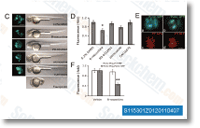
Click to enlarge |
Rating |
|
Source |
PNAS 2011.May 108:8417. Flavopiridol HCl purchased from Selleck |
Method |
Fluorescent Microscopy/Confocal Imaging |
Cell Lines |
Tg:Pomc-Pttg embryo, Pomc-eGFP embryo |
Concentrations |
50 μM |
Incubation Time |
18-48 h |
Results |
Although flavopiridol retarded early embryonic development before corticotroph ontogeny occurred, in vivo treatment of zebraï¬sh embryos with R-roscovitine, olomoucine, PD-0332991, and CAY10572 starting at 18 hpf caused no apparent growth defect by 40 hpf. Strikingly, R-roscovitine-treated embryos exhibited approximately 40% reduction in pituitary POMC-eGFP expression compared with controls. |
Product Citations (1)
詢價 / 洽詢此產品


