
Antibodies


DAPT (GSI-IX) is a novel γ-secretase inhibitor, which inhibits Aβ production with IC50 of 20 nM in HEK 293 cells.
| Size | Price | Stock | Quantity | ||||||||||||||||||||
|---|---|---|---|---|---|---|---|---|---|---|---|---|---|---|---|---|---|---|---|---|---|---|---|
| |||||||||||||||||||||||
 Distributor Tel: +886-2-2827-1197jimmy@new.abscience.com.tw
| Description | DAPT (GSI-IX) is a novel γ-secretase inhibitor, which inhibits Aβ production with IC50 of 20 nM in HEK 293 cells. | |||||
|---|---|---|---|---|---|---|
| Targets | Aβ | |||||
| IC50 | 20 nM [1] | |||||
| In vitro | In human primary neuronal cultures, DAPT also shows inhibitory effects on Aβ production with IC50 of 115 nM and 200 nM respectively for Aβ total and Aβ42, which is 5-10-fold lower than is observed in HEK 293 cells. [1] A recent study shows that DAPT inhibits the proliferation of SK-MES-1 cells in a concentration-dependent manner with IC50 of 11.3 μM. In addition, DAPT also induces caspase-dependent and caspase-independent apoptosis in lung squamous cell carcinoma cells by inhibiting Notch receptor signaling pathway. [2] | |||||
| In vivo | DAPT administration (100mg/kg) leads to a robust and sustained pharmacodynamic effect in PDAPP mice that DAPT levels in the brain exceeds 100 ng/g within 1 hour and persists up to 18 hours after administration, with peak levels of 490 ng/g observed after 3 hour. And during the period, DAPT (100 mg/kg) also reduces the cortical total Aβ and Aβ42 in a dose-dependent manner with a 50% reduction. [1] In rat cerebral cortexes, DAPT (40 mg/kg) suppresses the LPS-induced activity of γ-secretase and increases the cell apoptosis with the prolonged neuroinflammation. [3] | |||||
| Features | ||||||
| In vitro Aβ reduction assays | Human embryonic kidney cells (American Type Culture Collection CRL-1573), transfected with the gene for APP751 (HEK 293) are used for routine Aβ reduction assays. Cells are plated in 96-well plates and allowed to adhere overnight in Dulbecco’s modified Eagle medium (DMEM) supplemented with 10% heat-inactivated fetal bovine serum. DAPT are diluted from stock solutions in dimethylsulfoxide (DMSO) to yield a final concentration equal to 0.1% DMSO in media. Cells are pre-treated for 2 hours at 37 °C with DAPT, media are aspirated off and fresh compound solutions applied. After an additional 2-hour treatment period, conditioned media is drawn off and analyzed by a sandwich ELISA (266–3D6) specific for total Aβ. Reduction of Aβ production is measured relative to control cells treated with 0.1% DMSO and expressed as a percentage inhibition. Data from at least six doses in duplicate are fitted to a four-parameter logistical model using XLfit software in order to determine potency. Human and PDAPP mouse neuronal cultures are grown in serum-free media to enhance their neuronal characteristics, and appeared to be greater than 90% neurons after maturation prior to use. Conditioned media to establish baseline Aβ values are collected by adding fresh media to each well and incubated for 24 hours at 37 °C in the absence of DAPT. Cultures are then treated with fresh media containing DAPT at the desired range of concentrations for an additional 24 hours at 37 °C, and conditioned media collected. For the measurement of total Aβ, samples are analyzed with the same ELISA (266–3D6) as used for the HEK 293 cell assays. Analyses of samples for Aβ42 production are performed by a separate ELISA (21F12–3D6) that utilizes a capture antibody specific for the Aβ42 C-terminus. Inhibition of production for both total Aβ and Aβ42 are determined by the difference between the values for the compound treatment and baseline periods. After plotting percentage inhibition versus DAPT concentration, data are analyzed with XLfit software, as above, to determine potency. |
|---|
| Cell lines | SK-MES-1 |
|---|---|
| Concentrations | 2.5 μM to 160 μM |
| Incubation Time | 72 hours |
| Method | Cells are seeded into 96-well plates and exposed to 0.1% DMSO or DAPT at concentrations in the range of 2.5 μM–160 μM for 72 hours. Cytotoxicity is determined with 3-(4, 5)-dimethylthiahiazo-(-z-y1)-3, 5-di-phenytetrazoliumromide (MTT) dye reduction assay with minor modifications. Briefly, after incubation with DAPT, 20 μL MTT solution (5 mg/mL in PBS) is added to 180 μL medium in each well and plates are incubated for 4 hours at 37 °C, and subsequently 150 μL DMSO is added to each well, and mixed by shaking at room temperature for 15 minutes. Absorption is measured by an enzyme-linked immunosorbent assay at 490 nm to determine absorbance values. α-MEM supplemented with the same amount of MTT solution and solvent is used as blank solution. The IC50 value is calculated using PROBIT program in SPSS. |
| Animal Models | Heterozygous PDAPP transgenic mice overexpressing the APPV717F mutant form of the amyloid precursor protein. |
|---|---|
| Dosages | ≤100 mg/kg |
| Administration | Administered via p.o. |
| Solubility | 5% DMSO/95% Corn oil, 30 mg/mL |
| NCT Number | Recruitment | Conditions | Sponsor /Collaborators | Start Date | Phases |
|---|---|---|---|---|---|
| NCT01925027 | Active, not recruiting | Coronary Artery Disease | Lepu Medical Technology (Beijing) Co.,Ltd | 2013-07 | Phase 4 |
| NCT01794949 | Recruiting | Coronary Artery Disease | Emory University | 2013-09 | |
| NCT01995370 | Recruiting | Noncardioembolic Cerebral Infarction | Japan Cardiovascular Research Foundation|Otsuka Pharmaceutical Co., Ltd. | 2013-10 | Phase 3 |
| NCT01955200 | Not yet recruiting | Coronary Artery Disease | The First Hospital of Nanjing Medical University|National Natural Science Foundation of China | 2013-10 | Phase 4 |
| NCT01648829 | Not yet recruiting | Coronary Artery Disease | University of Roma La Sapienza | 2014-01 | Phase 4 |
| Molecular Weight (MW) | 432.46 |
|---|---|
| Formula | C23H26F2N2O4 |
| CAS No. | 208255-80-5 |
| Storage | 3 years -20℃Powder |
|---|---|
| 6 months-80℃in DMSO | |
| Syonnyms | GSI-IX |
| Solubility (25°C) * | In vitro | DMSO | 86 mg/mL (198 mM) |
|---|---|---|---|
| Water | <1 mg/mL (<1 mM) | ||
| Ethanol | 50 mg/mL (115 mM) | ||
| In vivo | 5% DMSO/95% Corn oil, | 30 mg/mL | |
| * <1 mg/ml means slightly soluble or insoluble. * Please note that Selleck tests the solubility of all compounds in-house, and the actual solubility may differ slightly from published values. This is normal and is due to slight batch-to-batch variations. | |||
| Chemical Name | (S)-tert-butyl 2-((S)-2-(2-(3,5-difluorophenyl)acetamido)propanamido)-2-phenylacetate |
|---|
| Stock Solution (1ml DMSO) | 1mM | 10mM | 20mM | 30mM |
|---|---|---|---|---|
| Mass(mg) | 0.43246 | 4.3246 | 8.6492 | 12.9738 |
 Click to enlarge | Rating | |
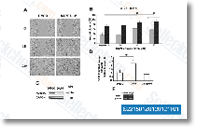
| Source | IOVS, 2012, Vol. 53, No. 12 . DAPT (GSI-IX) purchased from Selleck | |
| Method | In Vitro Scratch Assay | |
| Cell Lines | Primary human corneal epithelial cells/HCE-T cell line | |
| Concentrations | 0.1-50 μM | |
| Incubation Time | 48 h | |
| Results | Notch inhibition using DAPT and using Notch1-shRNA both enhanced in vitro migration in scratch and transwell migration assays. |
Kindlin-1 controls Wnt and TGF-β availability to regulate cutaneous stem cell proliferation. [Rognoni E Nat Med 2014;20(4):350-9]
A mouse model for inducible overexpression of Prdm14 results in rapid-onset and highly penetrant T-cell acute lymphoblastic leukemia (T-ALL). [Carofino BL, et al. Dis Model Mech 2013;6(6):1494-506]
Notch Inhibition during Corneal Epithelial Wound Healing Promotes Migration. [Wasag B, et al. Exp Hematol 2011;53(12):7476-83]
