
- 貨號 Cat. No.
- S1462
- 規格 Size
- 5~200mg
- 品牌 Brand
- Selleckchem
Description
AZD6482
AZD6482 is a PI3Kβ inhibitor with IC50 of 10 nM, 8-, 87- and 109-fold more selective to PI3Kβ than PI3Kδ, PI3Kα and PI3Kγ. Phase 1.
Size |
Price |
Stock |
Quantity |
|
|---|
5mg |
USD 214 |
In stock |
0
1
2
3
4
5
6
7
8
9
10
|
10mg |
USD 403 |
In stock |
0
1
2
3
4
5
6
7
8
9
10
|
50mg |
USD 1222 |
In stock |
0
1
2
3
4
5
6
7
8
9
10
|
|
 Distributor Tel: +886-2-2827-1197jimmy@new.abscience.com.tw
Biological Activity
Description |
AZD6482 is a PI3Kβ inhibitor with IC50 of 10 nM, 8-, 87- and 109-fold more selective to PI3Kβ than PI3Kδ, PI3Kα and PI3Kγ. Phase 1. |
|---|
Targets |
PI3Kβ |
PI3Kα |
PI3Kγ |
PI3Kδ |
|
|
|---|
IC50 |
10 nM |
870 nM |
1090 nM |
80 nM [1] |
|
|
|---|
In vitro |
AZD6482 also inhibits PI3Kα, γ, and δ, with IC50 of 80 nM to 1.09 μM, which are significantly lower than its (+)-enantiomer (S-form). AZD6482 is an antiplatelet agent; it blocks platelet activation adhesion/aggregation and promotes platelet disaggregation in assay of washed platelet aggregation (WPA), with an IC50 value of 6 nM. Furthermore, by targeting PI3Kβ, AZD6482 specifically inhibits thrombosis without interfering with normal haemostasis. Therefore, AZD6482 is used as an anti-thrombotic drug for the prophylaxis of thrombotic disorders. [1] |
|---|
In vivo |
|
|---|
Features |
|
|---|
Protocol(Only for Reference)
Kinase Assay: [1]
Assay of PI3K enzyme inhibition |
The inhibition of PI3Kβ, PI3Kα, PI3Kγ, and PI3Kδ is evaluated in an AlphaScreen based enzyme activity assay using human recombinant enzymes. The assay measures PI3K-mediated conversion of PIP2 to PIP3. Biotinylated PIP3, a GST-tagged pleckstrin homology (PH) domain and the two AlphaScreen beads form a complex that elicits a signal upon laser excitation at 680 nm. The PIP3 formed in the enzyme reaction competes with the biotinylated PIP3 for binding to the PH domain thus reducing the signal with increasing enzyme product. The AZD6482 is dissolved in DMSO and added to 384 well plates. PBKβ, PBKα, PBKγ, or PBKδ is added in a Tris buffer (50 mM Tris pH 7.6, 0.05% CHAPS, 5 mM DTT, and 24 mM MgCl2) and allowed to preincubate with AZD6482 for 20 minutes prior to the addition of substrate solution containing PIP2 and ATP. The enzyme reaction is stopped after 20 minutes by addition of stop solution containing EDTA and biotin-PIP3, followed by addition of detection solution containing GST-grpl PH and AlphaScreen beads. Plates are left for a minimum of 5 hours in the dark prior to analysis. The final concentration of DMSO, ATP and PIP2 in the assay are, 0.8%, 4 μM, and 40 μM, respectively. IC50 values are calculated according to the equation, y = {a+[(b-a)/(l+(x/IC50)s)]}, where y = % inhibition; a = 0%; b = 100%; s = the slope of the concentration-response curve; x = AZD6482 concentration. |
|---|
Cell Assay: [1]
Cell lines |
Human platelet pellet |
|---|
Concentrations |
0–60 nM, dissolved in DMSO |
|---|
Incubation Time |
5 min |
|---|
Method |
For assay of washed platelet aggregation (WPA), the platelet pellets are isolated from human blood and re-suspended to 2 × 10¹⁵/L in Tyrodes buffer (TB) containing 1 μM hirudin and 0.02 U/mL apyrase. Then, the platelet suspension is left to rest at room temperature for 30 min. Just prior to time for assay, CaCl2 is added to a final concentration of 2 mM. AZD6482, dissolved in DMSO, is added to a 96-well plate prior to the addition of the washed platelet suspension. The platelet suspension is preincubated with AZD6482 for 5 min. Light absorption at 650 nm is recorded before and after a 5 min plate shake and referred to as recording 0 (R0) and Rl. A mouse anti-human CD9 antibody is added (at a donor specific concentration) to each well prior to next 10 min plate shake and light absorption recording; R2. For data analysis, light absorbance in wells with TB are subtracted from all readings before percent aggregation is calculated according the formula: [(R1-R2)/R1] × 100 = % aggregation. Spontaneous aggregation or pro-aggregatory effect of the inhibitor is evaluated by the same formula, [(R0-Rl)/R0] × 100 = % aggregation. IC50 values are calculated according to the equation, y = {a+[(b-a)/(l+(x/IC50)s)]}, where y = % inhibition; a = 0%; b = 100%; s = the slope of the concentration-response curve; x = AZD6482 concentration. |
|---|
1
References
Clinical Trial Information( data from http://clinicaltrials.gov)
NCT Number |
Recruitment |
Conditions |
Sponsor
/Collaborators |
Start Date |
Phases |
|---|
NCT00688714 |
Completed |
Antiplatelet Effect |
AstraZeneca |
2008-01 |
Phase 1 |
NCT00853450 |
Completed |
Antiplatelet Effect |
AstraZeneca |
2009-02 |
Phase 1 |
Download AZD6482 SDF
Molecular Weight (MW) |
408.45 |
|---|
Formula |
C22H24N4O4
|
|---|
CAS No. |
1173900-33-8 |
|---|
Storage |
3 years -20℃Powder |
|---|
6 months-80℃in DMSO |
Syonnyms |
N/A |
|---|
Solubility (25°C) * |
In vitro |
DMSO |
82 mg/mL (200 mM) |
|---|
Water |
<1 mg/mL (<1 mM) |
Ethanol |
10 mg/mL (24 mM) |
In vivo |
30% PEG400/0.5% Tween80/5% propylene glycol, |
30 mg/mL |
* <1 mg/ml means slightly soluble or insoluble.
* Please note that Selleck tests the solubility of all compounds in-house, and the actual solubility may differ slightly from published values. This is normal and is due to slight batch-to-batch variations. |
Chemical Name |
(R)-2-(1-(7-methyl-2-morpholino-4-oxo-4H-pyrido[1,2-a]pyrimidin-9-yl)ethylamino)benzoic acid |
|---|
Stock Solution (1ml DMSO) |
1mM |
10mM |
20mM |
30mM |
|---|
Mass(mg) |
0.40845 |
4.0845 |
8.169 |
12.2535 |
Customer Reviews (2)
Click to enlarge |
Rating |
|
Source |
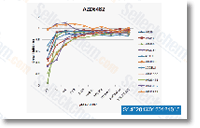
One customer. AZD6482 purchased from Selleck |
Method |
Cell growth inhibition assay |
Cell Lines |
Melanoma cell lines |
Concentrations |
0.00000512-10 μM |
Incubation Time |
72 h |
Results |
AZD6482 treatment inhibited Melanoma cells growth in a does-dependent manner. |
Product Citations (1)
詢價 / 洽詢此產品


