
Antibodies


Aurora A Inhibitor I is a novel, potent, and selective inhibitor of Aurora A with IC50 of 3.4 nM. It is 1000-fold more selective for Aurora A than Aurora B.
| Size | Price | Stock | Quantity | ||||||||||||||||
|---|---|---|---|---|---|---|---|---|---|---|---|---|---|---|---|---|---|---|---|
| |||||||||||||||||||
 Distributor Tel: +886-2-2827-1197jimmy@new.abscience.com.tw
| Description | Aurora A Inhibitor I is a novel, potent, and selective inhibitor of Aurora A with IC50 of 3.4 nM. It is 1000-fold more selective for Aurora A than Aurora B. | |||||
|---|---|---|---|---|---|---|
| Targets | Aurora A | Aurora B | Aurora C | |||
| IC50 | 3.4 nM | 3.4 μM [1] | 0.432 μM [2] | |||
| In vitro | Aurora A Inhibitor I is a 2,4-dianilinopyrimidine that selectively and potently inhibits Aurora A. Aurora A Inhibitor I effectively inhibits the proliferation of HCT116 and HT29 cells, with IC50 of 190 nM and 2.9 μM, respectively. The Aurora A selectivity of Aurora A Inhibitor I against Aurora B depends on a single amino acid (Thr217) of Aurora A.[1] In KCL-22 cells, Aurora A Inhibitor I (1-5 μM) increases G2/M cell fraction, induces histone H3 serine 10 phosphorylation, and suppresses mitotic Aurora A autophosphorylation on Thr288. Aurora A Inhibitor I (0.5-5 μM) also suppresses cell proliferation in KCL-22 cells, as well as BCR-ABL-negative leukemia cell lines KG-1 and HL-60. Aurora A Inhibitor I effectively induces apoptosis in KCL-22 cells at 5 μM. [2] In a recent study, Aurora A Inhibitor I is also found to inhibit cell growth of HCT116, HT29, and HeLa cells, with IC50 of 377.6 nM, 5.6 μM, and 416 nM. [3] | |||||
| In vivo | ||||||
| Features | Aurora A Inhibitor I is a novel, potent, and selective inhibitor to Aurora A. | |||||
| Auroras A and B Inhibition Assays | Both Auroras A and B are assayed in ELISA format using a GST fusion (pGEX-4T) of the N-terminus of Histone H3 (aa 1−18) as substrate. Plates are coated with 2 μg/mL substrate in PBS then blocked with 1 mg/mL I-block in PBS. Kinase reactions are run for 40 min with 5 ng/mL (0.16 nM) Aurora A or 45 ng/mL (1.1 nM) Aurora B at 30 μM ATP (~ Km) in kinase buffer. Final DMSO concentration is 4%. Product is detected by incubation with antiphosphohistone H3 (Ser10) 6G3 mouse monoclonal antibody and sheep-anti-mouse HRP conjugate, followed by washing and addition of TMB substrate. After quenching with 1 M phosphoric acid, plates are read at 450 nM. |
|---|
| Cell lines | HCT116 and HT29 cells |
|---|---|
| Concentrations | 0.1 nM - 10 μM, dissolved in medium lacking serum and glutamine (dissolved in DMSO as stock solution) |
| Incubation Time | 72 hours |
| Method | Cells are seeded in 384-well plates on day 0 in 50 μL of complete medium and incubated overnight in a 5% CO2 atmosphere at 37 °C. On day 1, 10 μL of Aurora A Inhibitor I is added. On day 4, plates are allowed to reach room temperature, and 30 μL Cell Titer-Glo reagent is added to each well to measure total ATP levels. Plates are read after shaking 15 min at room temperature. |
Download Aurora A Inhibitor I SDF
| Molecular Weight (MW) | 588.07 |
|---|---|
| Formula | C31H31ClFN7O2 |
| CAS No. | 1158838-45-9 |
| Storage | 3 years -20℃Powder |
|---|---|
| 6 months-80℃in DMSO | |
| Syonnyms | N/A |
| Solubility (25°C) * | In vitro | DMSO | 118 mg/mL (200 mM) |
|---|---|---|---|
| Water | <1 mg/mL (<1 mM) | ||
| Ethanol | <1 mg/mL (<1 mM) | ||
| * <1 mg/ml means slightly soluble or insoluble. * Please note that Selleck tests the solubility of all compounds in-house, and the actual solubility may differ slightly from published values. This is normal and is due to slight batch-to-batch variations. | |||
| Chemical Name | N-(2-chlorophenyl)-4-(2-(4-(2-(4-ethylpiperazin-1-yl)-2-oxoethyl)phenylamino)-5-fluoropyrimidin-4-ylamino)benzamide |
|---|
| Stock Solution (1ml DMSO) | 1mM | 10mM | 20mM | 30mM |
|---|---|---|---|---|
| Mass(mg) | 0.58807 | 5.8807 | 11.7614 | 17.6421 |
 Click to enlarge | Rating | |
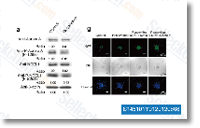
| Source | The Journal of Neuroscience, 2012, 32(32):11050-11066.Aurora A Inhibitor I purchased from Selleck | |
| Method | Western Blot/immunofluoresence | |
| Cell Lines | Isolated granular neurons | |
| Concentrations | 20 uM | |
| Incubation Time | 24 h | |
| Results | Application of roscovitine significantly suppressed T288 phosphorylation of Aurora-A associated with reduction of S251 phosphorylation of NDEL1, which was confirmed by Western blotting and immunocytochemistry. |
Activation of Aurora-A Is Essential for Neuronal Migration via Modulation of Microtubule Organization. [Takitoh T, et al. J Neurosci 2012;32(32):11050-66]
Overcoming CML acquired resistance by specific inhibition of Aurora A kinase in the KCL-22 cell model. [Yuan H, et al. Carcinogenesis 2012;33(2):285-93]
Profiling of the kinome of cytomegalovirus-infected cells reveals the functional importance of host kinases Aurora A, ABL and AMPK. [Hutterer C, et al. Antiviral Res 2013;99(2):139-48]
