
Antibodies


17-AAG is a potent HSP90 inhibitor with IC50 of 5 nM, having a 100-fold higher binding affinity for HSP90 derived from tumour cells than HSP90 from normal cells.
| Size | Price | Stock | Quantity | ||||||||||||||||
|---|---|---|---|---|---|---|---|---|---|---|---|---|---|---|---|---|---|---|---|
| |||||||||||||||||||
 Distributor Tel: +886-2-2827-1197jimmy@new.abscience.com.tw
| Description | 17-AAG is a potent HSP90 inhibitor with IC50 of 5 nM, having a 100-fold higher binding affinity for HSP90 derived from tumour cells than HSP90 from normal cells. | |||||
|---|---|---|---|---|---|---|
| Targets | HSP90 | |||||
| IC50 | 5 nM [1] | |||||
| In vitro | 17-AAG, an analog of geldanamycin, exhibits greater than 100 times higher binding affinity for Hsp90 derived from HER-2-overexpressing cancer cells (BT474, N87, SKOV3 and SKBR3) or BT474 breast carcinoma cells with IC50 values of 5-6 nM. [1] 17-AAG causes the degradation of HER2, HER3, Akt, and both mutant and wild-type androgen receptor (AR), leading to the RB-dependent G1 growth arrest of prostate cancer cells such as LNCaP, LAPC-4, DU-145, and PC-3 with IC50 values of 25-45 nM. [2] In addition to inducing apoptosis of Ba/F3 cells transformed with wild-type BCR-ABL with an IC50 of 5.2 μM, 17-AAG has the ability to induce apoptosis of cells transformed with imatinib mesylate-resistant T315I and E255K BCR-ABL mutants with IC50 values of 2.3 μM and 1.0 μM, respectively, by inducing the degradation of both wild-type BCR-ABL protein and mutants. [3] | |||||
| In vivo | 17-AAG displays significantly higher binding affinity for Hsp90 from 3T3-src, B16 or CT26 xenografts in nude mice with IC50 values of 8-35 nM as compared with that from the normal tissues with IC50 values of 200-600 nM. [1] Administration of 17-AAG (~50 mg/kg) causes significant decline in AR, HER2, HER3, and Akt expression in a dose-dependent manner with >50% decline at dose of 50 mg/kg, resulting in the dose-dependent inhibition of androgen-dependent (CWR22) and -independent (CWR22R and CWRSA6) prostate cancer xenografts growth by 67%, 80% and 68% at dose of 50 mg/kg, respectively. [2] | |||||
| Features | Displays very low toxicity toward normal cells. | |||||
| Hsp90 binding assays | Purified native Hsp90 protein or cell lysates from HER-2-overexpressing cancer cells (BT474, N87, SKOV3 and SKBR3) or BT474 breast carcinoma cells in lysis buffer (20 mM HEPES, pH 7.3, 1 mM EDTA, 5 mM MgCl2, 100 mM KCl) are incubated with various concentrations of 17-AAG for 30 minutes at 4 °C, and then incubated with biotin-GM linked to BioMag streptavidin magnetic beads for 1 hour at 4 °C. Tubes are placed on a magnetic rack, and the unbound supernatant removed. The magnetic beads are washed three times in lysis buffer and heated for 5 minutes at 95 °C in SDS–PAGE sample buffer. Samples are analysed on SDS protein gels, and western blots done using indicated antibodies. Bands in the western blots are quantified using the Bio-rad Fluor-S MultiImager, and the percentage inhibition of binding of Hsp90 to the biotin-GM is calculated. The IC50 reported is the concentration of 17-AAG needed to cause half-maximal inhibition of binding. |
|---|
| Cell lines | BT474, SKBR3, N87, SKOV3, MCF7, MDA468, Hs578T, Hs578Bst, A549, HT29, U87, SKMG3, HT1080, RPTEC, NDF, HMVEC, HMEC, HUVEC, and PBMC cells |
|---|---|
| Concentrations | Dissolved in DMSO, final concentrations ~10 μM |
| Incubation Time | 5 days |
| Method | Cells are seeded in 96-well plates at 2,000 cells per well in a final culture volume of 100 μL for 24 hours before the addition of increasing concentrations of 17-AAG that is incubated for 5 days. Viable cell number is determined using the Celltiter 96 AQueous Nonradioactive Cell Proliferation Assay. The value of the background absorbance at 490 nm (A490) of wells not containing cells is subtracted. Percentage of viable cells = (A490 of 17-AAG treated sample/A490 untreated cells) × 100. The IC50 is defined as the concentration that gave rise to 50% viable cell number. |
| Animal Models | Male nu/nu athymic mice inoculated s.c. with androgen-dependent CWR22 xenograft, and female nu/nu athymic mice inoculated s.c. with androgen-independent xenografts CWR22R and CWRSA6 |
|---|---|
| Dosages | ~50 mg/kg |
| Administration | Injection i.p. |
| Solubility | 1% DMSO/30% polyethylene glycol/1% Tween 80, 15 mg/mL |
| NCT Number | Recruitment | Conditions | Sponsor /Collaborators | Start Date | Phases |
|---|---|---|---|---|---|
| NCT01193491 | Terminated | Hematologic Malignancies | Infinity Pharmaceuticals, Inc. | 2010-06 | Phase 1 |
| NCT01228435 | Terminated | Lung Cancer|Stage IIIb Lung Cancer|Stage IV Lung Cancer | Massachusetts General Hospital|Dana-Farber Cancer Institute|Infinity Pharmaceuticals, Inc. | 2010-10 | Phase 2 |
| NCT01362400 | Active, not recruiting | Non Small Cell Lung Cancer | Infinity Pharmaceuticals, Inc. | 2011-05 | Phase 2 |
| NCT01427946 | Recruiting | Non-small Cell Lung Cancer | Infinity Pharmaceuticals, Inc. | 2011-07 | Phase 1|Phase 2 |
| NCT00820768 | Withdrawn | Solid Tumor | Celgene Corporation | 2012-04 | Phase 1 |
Download 17-AAG (Tanespimycin) SDF
| Molecular Weight (MW) | 585.69 |
|---|---|
| Formula | C31H43N3O8 |
| CAS No. | 75747-14-7 |
| Storage | 3 years -20℃Powder |
|---|---|
| 6 months-80℃in DMSO | |
| Syonnyms | CP127374 |
| Solubility (25°C) * | In vitro | DMSO | 117 mg/mL (199 mM) |
|---|---|---|---|
| Water | <1 mg/mL (<1 mM) | ||
| Ethanol | 5 mg/mL (8 mM) | ||
| In vivo | 1% DMSO/30% polyethylene glycol/1% Tween 80, | 15 mg/mL | |
| * <1 mg/ml means slightly soluble or insoluble. * Please note that Selleck tests the solubility of all compounds in-house, and the actual solubility may differ slightly from published values. This is normal and is due to slight batch-to-batch variations. | |||
| Chemical Name | Geldanamycin, 17-demethoxy-17-(2-propenylamino)- |
|---|
| Stock Solution (1ml DMSO) | 1mM | 10mM | 20mM | 30mM |
|---|---|---|---|---|
| Mass(mg) | 0.58569 | 5.8569 | 11.7138 | 17.5707 |
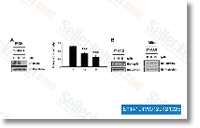 Click to enlarge | Rating | |
| Source | THE JOURNAL OF BIOLOGICAL CHEMISTRY, 2012, 287(53), pp. 44109–44120. 17-AAG (Tanespimycin) purchased from Selleck | |
| Method | Western Blot | |
| Cell Lines | Dopaminergic Neuronal Cell lines | |
| Concentrations | 10-20uM | |
| Incubation Time | ||
| Results | As expected, both complex IV activity and Hsp60 levels exhibited a dose-dependent decrease in response to treatment with 17-AAG (Fig. 4A). However, 17-AAG treatment did not alter levels of Hsp90 and LRPPRC levels |
Genetic resistance to JAK2 enzymatic inhibitors is overcome by HSP90 inhibition. [Weigert O, et al. J Exp Med 2012;209(2):259-73]
Therapeutic strategies to overcome crizotinib resistance in non-small cell lung cancers harboring the fusion oncogene EML4-ALK. [Katayama R, et al. Proc Natl Acad Sci U S A 2011;108(18):7535-40]
SUMO-2/3 conjugates accumulating under heat shock or MG132 treatment result largely from new protein synthesis. [ÄŒastorálová M, et al. Biochim Biophys Acta 2012;1823(4):911-9]
